In Genesis 1:20-23: And God said, “Let the water teem with living creatures, and let birds fly above the earth across the expanse of the sky.” 21 So God created the great creatures of the sea and every living thing with which the water teems and that moves about in it, according to their kinds, and every winged bird according to its kind. And God saw that it was good. 22 God blessed them and said, “Be fruitful and increase in number and fill the water in the seas, and let the birds increase on the earth.” 23 And there was evening, and there was morning—the fifth day. It was now time for animal life to be created. There was plenty of carbohydrates in the form of algae and phytoplankton and enough oxygen generated by the plant life. One of the most important was the creation of krill.
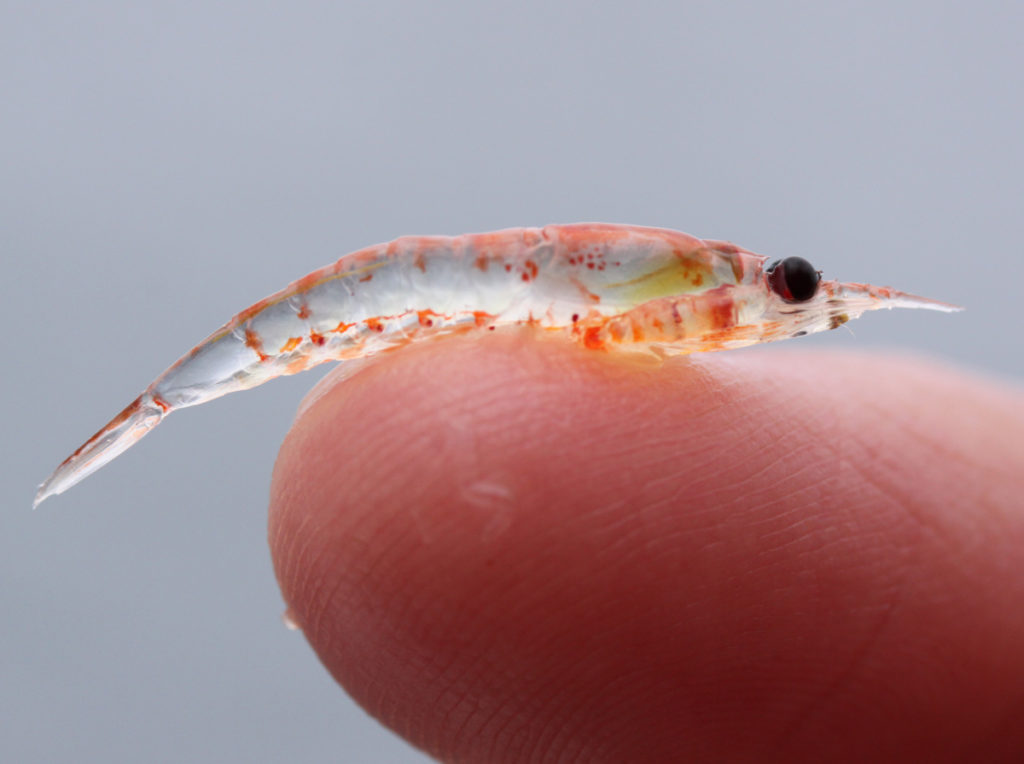
It does not use hemoglobin for oxygen transport to metabolize but uses an open circulatory system. They do eat algae and most phytoplanktons. In fact a blue whale can eat up to 8000 pounds of krill a day in peak season. It is the major source of food for a variety of fish. Fish have hemoglobin that is similar to human hemoglobin but comes in different forms dependent on water conditions such as varying Ph and temperature. Some fishes are very sensitive to Ph changes, and during the period of acid rain and nearly unrestrained water pollution Lake Erie was unofficially declared dead. Mites, spiders and insects use venting air pockets inside their shells to provide the oxygen necessary for energy production. Birds have hemoglobin similar to human hemoglobin, but some is adapted for high altitudes. The Rüppell’s griffon vulture (Gyps rueppellii) holds the record for the highest-flying bird, having been documented at altitudes of up to 37.000 feet. The air pressure at that altitude is less than one sixth of sea level air pressure, which makes it hard to fly and breathe.
 Len Bilén's blog, a blog about faith, politics and the environment.