January 14, read the Bible in a year in PowerPoint; commented.

In John 10:1-21 Jesus told that he is the good shepherd, the gate for the sheep, there will be one flock and one shepherd, and the sheep hear and know his voice.

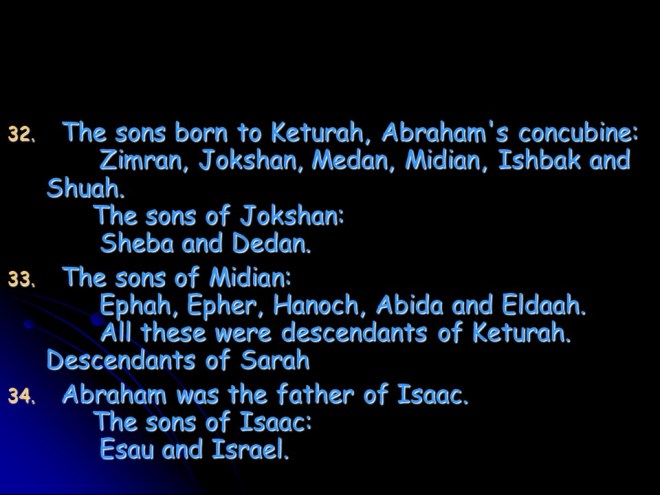
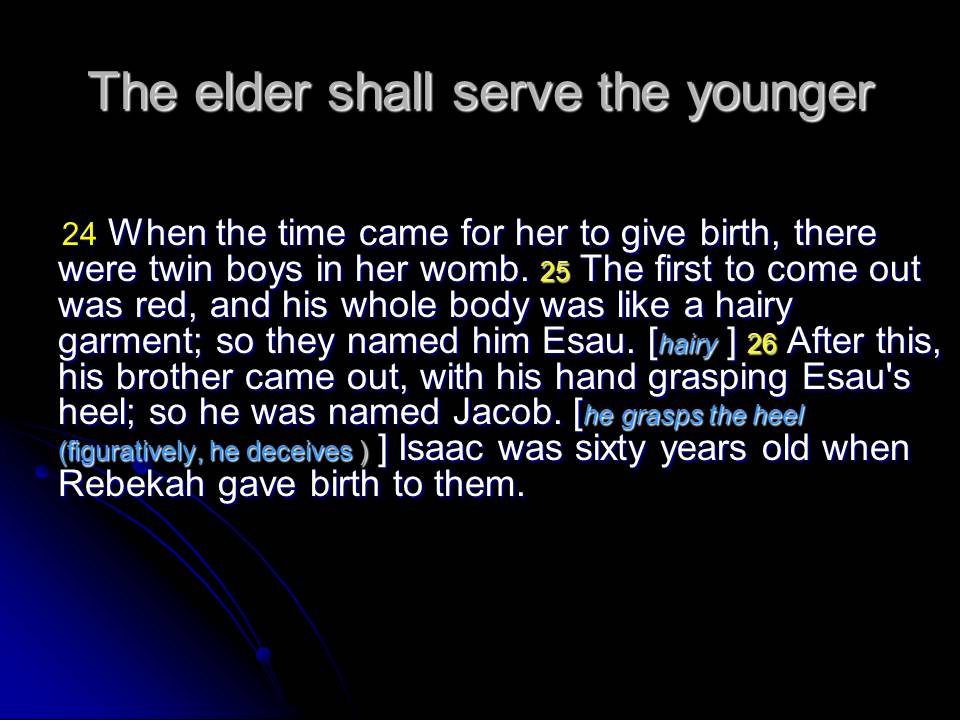
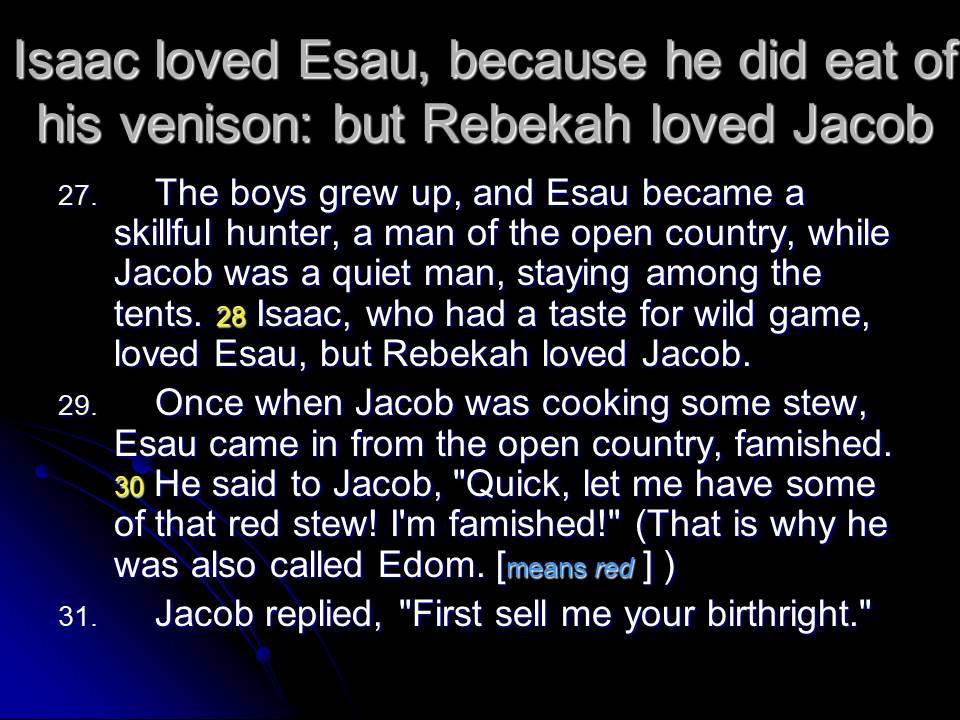
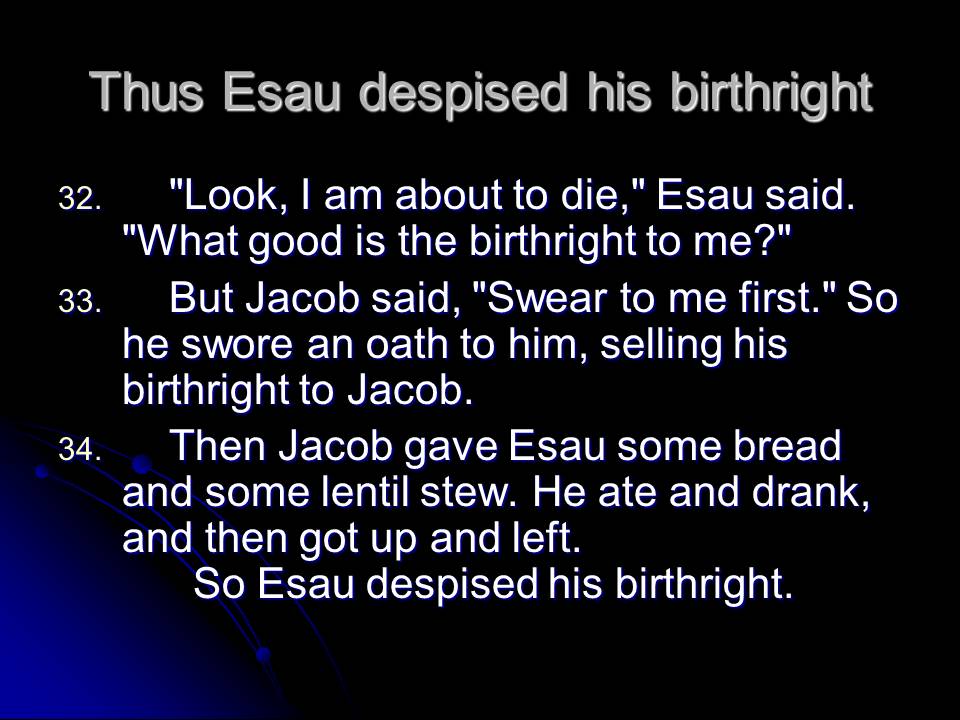
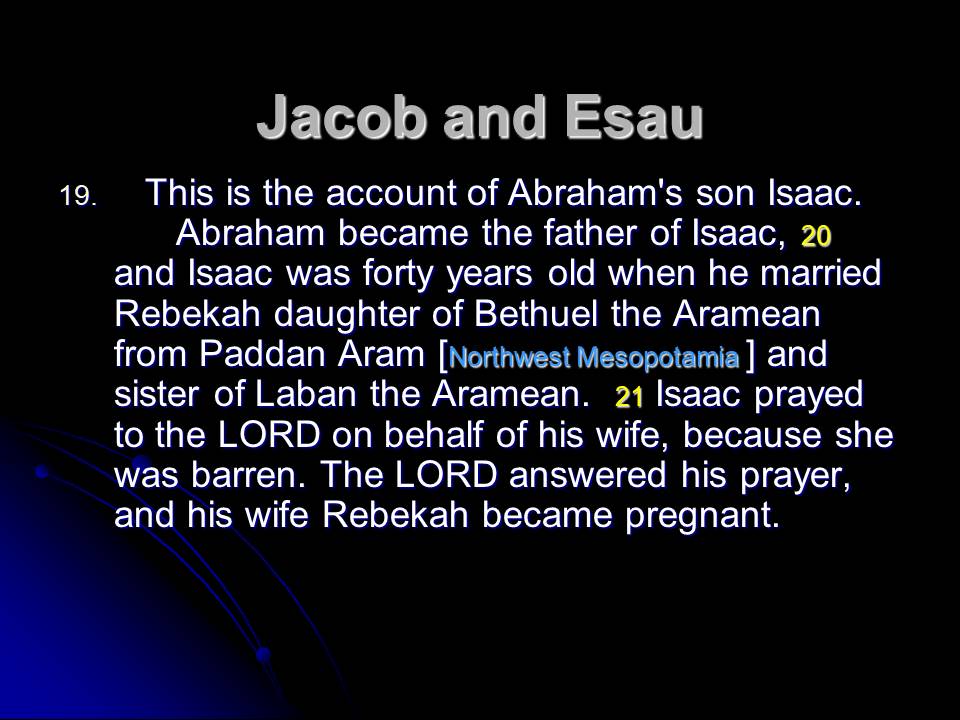
After Sarah’s death, in Genesis 25 Abraham married his concubine Ketorah, who had already borne him six children. Before his death he sent them all away with ample gifts and provisions but his inheritance he gave to Isaac. Isaac and Ishmael buried Abraham, and then Ishmael’s genealogy was written down. Finally is told the story of Jacob and Esau, and how Esau sold his birthright for a bowl of lentil stew and some bread.

Genesis 26 tells of Isaac and Rebekah, how Isaac too said Rebekah was his sister, like father, like son. In spite of that lie God protected them, and the rest of the chapter deals with the eternal Mideast dispute: Water right

Today’s selection of chapters illustrates well the difference between Jesus, the good shepherd and the intrigues in the Old Testament. Jesus gives his sheep protection, pasture and he knows where the good water is. The still waters are often polluted. Abraham married his concubine, but he never let them be part of his inheritance. Isaac and Ishmael buried Abraham, but Abraham never married Hagar even though she gave birth to his firstborn child. Jacob was always a schemer, blackmailed Esau out of his birthright, and told Abimelech Rebekah was his sister, a blatant lie. In spite of that they came to an agreement of water rights.
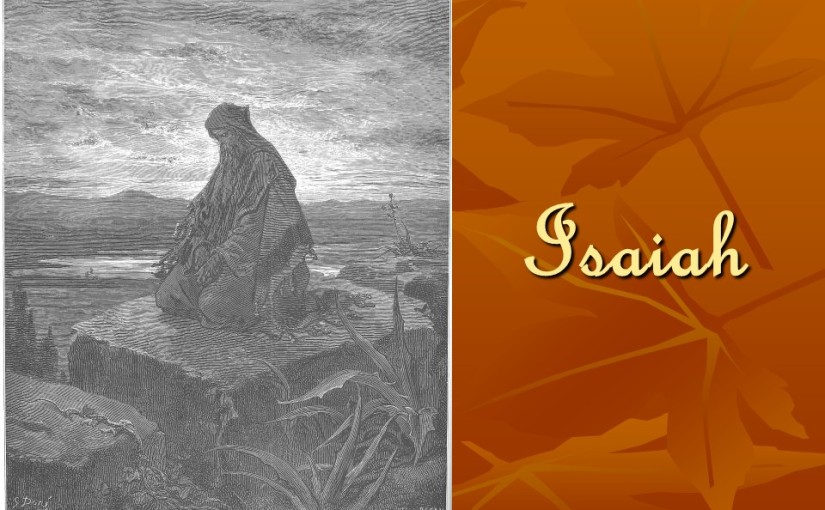
Isaiah 60, arise and shine, the glory of Zion, a millennial prophecy

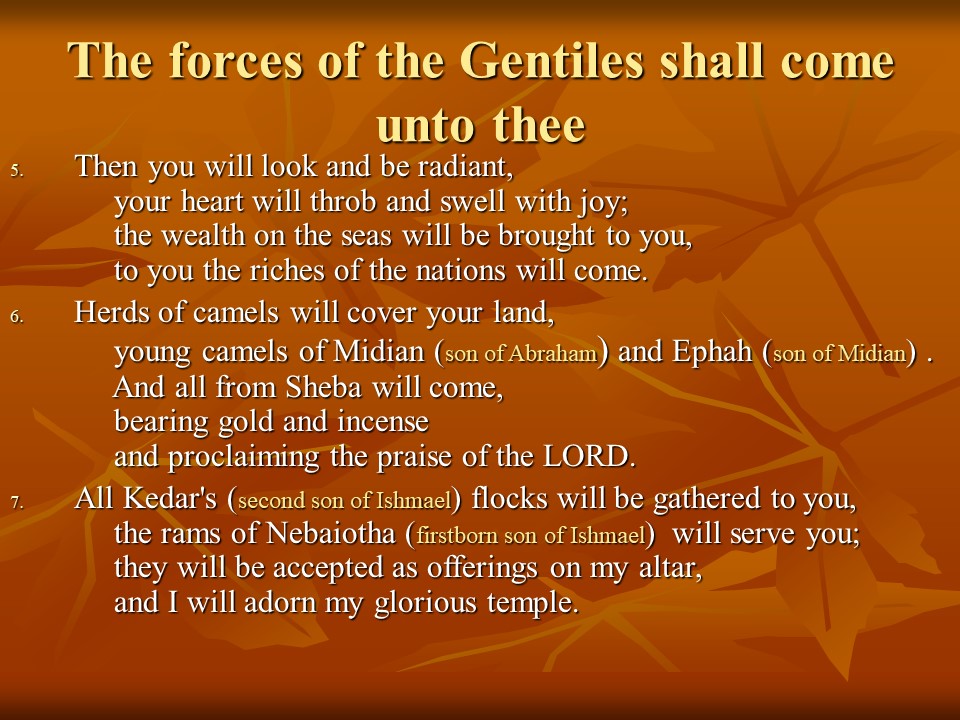
On verse 6: Did you notice that the gift of myrrh is missing? In the first coming of Jesus, the Wise Men from the East brought Gold, frankincense and myrrh, but here at the second coming myrrh is omitted. Jesus sacrifice for our sins was done once for all here on earth.

On verse 7: It is clear that the descendants of Kedar and Nebaiotha settled not too far from Jerusalem, since they provided sheep and rams for the daily sacrifice. They most likely settled in the very northern Levant.

This promise is repeated in Revelation 21:22 And I saw no temple therein: for the Lord God Almighty and the Lamb are the temple of it. 23 And the city had no need of the sun, neither of the moon, to shine in it: for the glory of God did lighten it, and the Lamb is the light thereof. 24 And the nations of them which are saved shall walk in the light of it: and the kings of the earth do bring their glory and honour into it. 25 And the gates of it shall not be shut at all by day: for there shall be no night there. 26 And they shall bring the glory and honour of the nations into it. 27 And there shall in no wise enter into it any thing that defileth, neither whatsoever worketh abomination, or maketh a lie: but they which are written in the Lamb’s book of life.

There may be more famous renditions of this song, but this one moved me.

Isaiah 42, the servant of the LORD, the New Song, The LORD’s promises and Israel’s disobedience.

Where Kedar lives: Kedar was the second son of Ishmael, he settled near the eastern borders of Israel, and among other things supplied sheep and goats for the temple services. Isaiah 60:7  All the flocks of Kedar shall be gathered to you; the rams of Nebaioth shall minister to you; they shall come up with acceptance on my altar, and I will beautify my beautiful house.
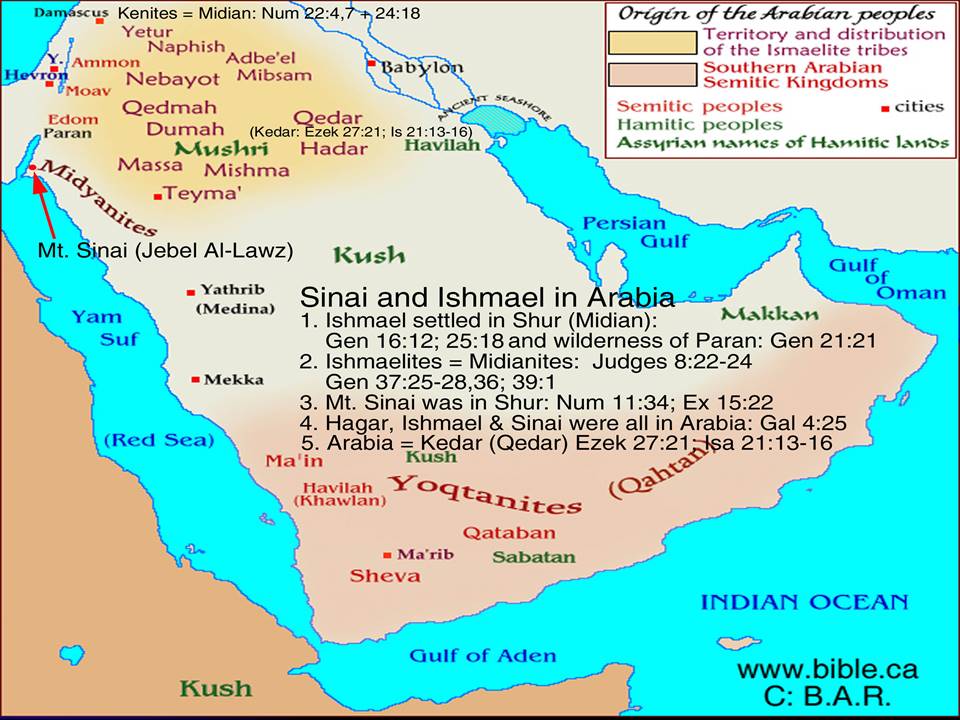
Islamic tradition place Kedar near Mecca, but that does not square with the biblical account, since the sons of Kedar provided sheep for the daily sacrifice in the Temple; therefore the “New song” does not mean the doctrine of Islam.

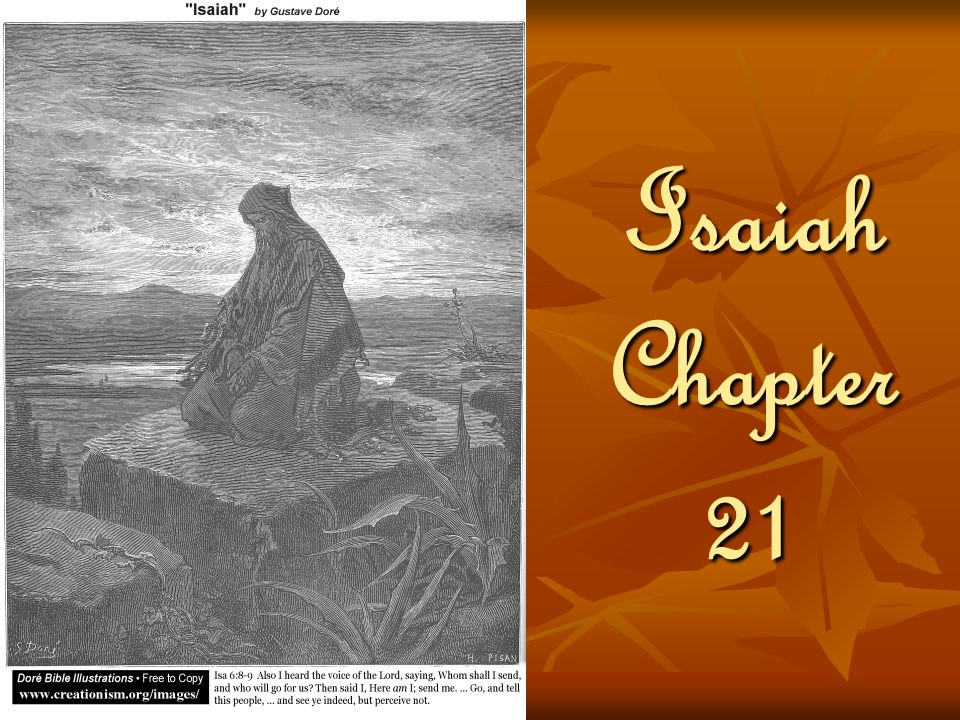
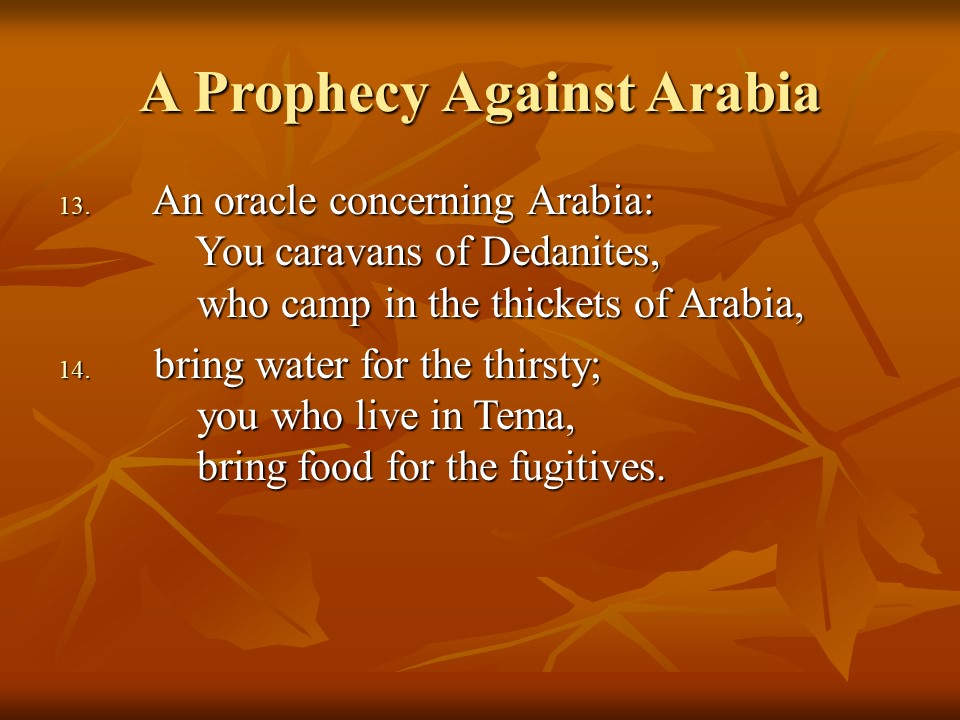
Isaiah 21, prophecies against Babylon, Edom, Arabia.


Elam is another word for ancient Persia, the fall of Babylon is described in https://lenbilen.com/2017/09/24/daniel-5-the-handwriting-on-the-wall/


Tema:  The name of a son of Ishmael (Gen 25:15; 1 Ch 1:30) , also an oasis half-way between Edom and Medina in what is now the Levant part of Saudi Arabia.

Kedar, meaning dark-skinned was the second son of Ishmael (Genesis 25:13) . It was also the name for the nomadic tribes of Arabs, the Bedouins generally (Isa. 21:16; 42:11; 60:7; Jer. 2:10; Ezek. 27:21), who dwelt in the northwest of Arabia. They lived in black hair-tents (Song of Songs 1:5). To “dwell in the tents of Kedar” was to be cut off from the worship of the true God (Psalms 120:5). The Kedarites suffered at the hands of Nebuchadnezzar (Jer. 49:28-29).


Genesis 25, The death of Abraham, his family tree, Esau and Jacob born.

After Sarah’s death Abraham married one of his concubines. Keturah already had six sons with Abraham, according to first Chronicles 1:32-34


Ishmael was there at Abraham’s death, and helped bury Abraham. Thus he had not moved far away yet.

Of particular interest is Ishmael’s second son, Kedar. His name is closely associated with Arabia. But Kedar lived much closer to Jerusalem than what the Muslims suggest. They claim he moved to what is now Mecca, but according to Isaiah 60:7 he must have lived much closer.

All Kedar’s flocks will be gathered to you,
    the rams of Nebaioth will serve you;
they will be accepted as offerings on my altar,
    and I will adorn my glorious temple.

The lambs and other animals used for sacrifices were raised much nearer Jerusalem so they could more easily be driven as herds.


And this is the reason God said: Esau have I hated.  Esau did not consider the spiritual dimension of his birthright.