December 14, read through the Holy Bible in a year in Power-point, with comments.

Today we read one chapter of Revelation and the remaining two chapters of Habakkuk.

December 14: Revelation 5, Habakkuk 2, Habakkuk 3 (click on the chapter to begin reading).

Revelation 5. Worship is continued in heaven and John saw a scroll, Nobody but the Lamb was worthy to take and open the scroll with seven seals. All present broke out in praise, singing a new song, saying, “Thou art worthy to take the book, and to open the seals thereof: for thou wast slain, and hast redeemed us to God by thy blood” and “Blessing, and honour, and glory, and power, be unto him that sitteth upon the throne, and unto the Lamb for ever and ever.  And the four beasts said, Amen. And the four and twenty elders fell down and worshipped him that liveth for ever and ever.

Habakkuk 2. The LORD answered the prophet to his second complaint. It contains this gem, just as valid today as it was then: “The just shall live by his faith“.  On the other hand there was promised more woe to the wicked.

In Habakkuk 3 is recorded Habakkuk’s prayer, a hymn of faith.

December 13, read through the Holy Bible in a year in Power-point, with comments.

Today we read one chapter of Revelation , the last chapter of Nahum and the first chapter of Habakkuk

December 13: Revelation 4, Nahum 3, Habakkuk 1 (click on the chapter to begin reading).

Revelation 4. John was shown the throne room of Heaven. Someone was sitting on the throne. A rainbow was over it, 24 elders were around it, in the front were seven lamps, representing the seven-fold spirit of God. Around it were also four creatures, one like a lion, representing Jesus as king (Matthew), one like an ox representing Jesus as a servant (Mark), one with the face of man representing the humanity of Christ (Luke), and the fourth like an eagle representing Jesus is God (John). All sang or said praises, a true worship.

Nahum 3. The prophet Nahum ended with a “woe to Nineveh.”

Habakkuk 1 begins with the prophet’s first complaint and the LORD’s reply. After that the prophet poured out his second complaint.

December 12, read through the Holy Bible in a year in Power-point, with comments.

Today we read one chapter of Revelation and the two first chapters of Nahum.

December 12: Revelation 3, Nahum 1, Nahum 2 (click on the chapter to begin reading).

Revelation 3 ends the message to the seven churches: To Sardis, the church that claimed to be alive, but in God’s eyes was dead; to Philadelphia, the church that kept its faith, and as a reward will be kept from the hour of trial that is coming; and finally to the church of Laodicea, the church that thought it had it all figured out and prospered, when in reality it had nothing. These can be seen as seven historical churches, which they were, but also as seven types of churches as they exist today and through history. They can also be taken as seven states of the individual believer. However you take it, there is something in it for every believer, even today.

Nahum 1 speaks of God’s wrath on His enemies, in this case the coming destruction of Nineveh.

Nahum 2 prophesies of the coming fall of Nineveh.

December 11, read through the Holy Bible in a year in Power-point, with comments.

Today we read the second chapter of Revelation and the last chapter of Micah.

December 11: Revelation 2, Micah 7 (click on the chapter to begin reading).

Revelation 2 begins the message to the seven churches: Ephesus, the church that lost its first love; Smyrna, the church that stood firm even when it was persecuted;  Pergamos, a church that looked good but compromised itself, and the church of Thyatira, a corrupted church, but with hope of repentance. These can be seen as seven historical churches, which they were, but also as seven types of churches as they exist today and through history. They can also be taken as seven states of the individual believer. However you take it, there is something in it for every believer, even today.

Micah 7. The prophet expressed deep sorrow for Israel’s sins, coupled with the hope that the nation will rise again and that  God will forgive Israel.

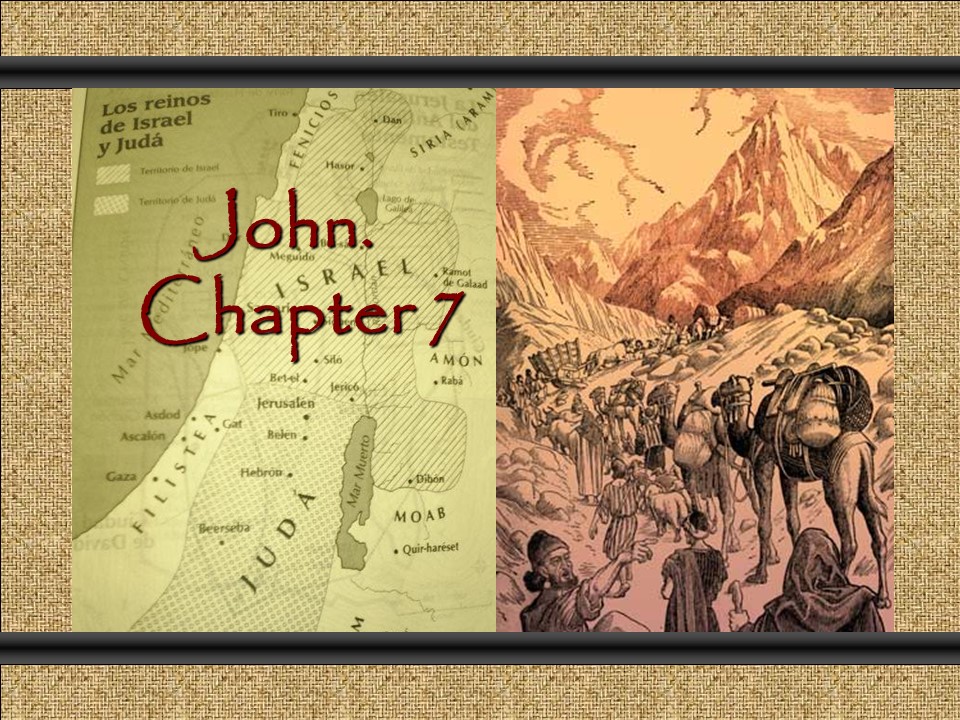
John 7:1-24, Jesus teaching at the feast of tabernacles.

John 7:1-24, Jesus teaching at the feast of tabernacles.

Technically it was Jesus’ half brothers, since Jesus was adopted by Joseph. An alternate explanation, favored by Catholics is that it was his cousins, or sons of Joseph from a previous marriage.

From Leviticus 12:And in the eighth day the flesh of his foreskin shall be circumcised. It was an absolute command, and had to be performed on the eighth day, even if that day was a Sabbath.
December 10, read through the Holy Bible in a year in Power-point, with comments.

Today we read the first chapter of Revelation and one chapter of Micah.

December 10: Revelation 1, Micah 6 (click on the chapter to begin reading).

Revelation 1. The final book of the Bible begins with an introduction and promises a blessing to all who read it and take it to heart. It sends a greeting to the seven Churches followed by the most wonderful vision of the Son of Man.

Micah 6. The LORD laid out His a case against Israel and how He will punish Israel’s injustice. One remedy: “He hath shewed thee, O man, what is good; and what doth the Lord require of thee, but to do justly, and to love mercy, and to walk humbly with thy God?

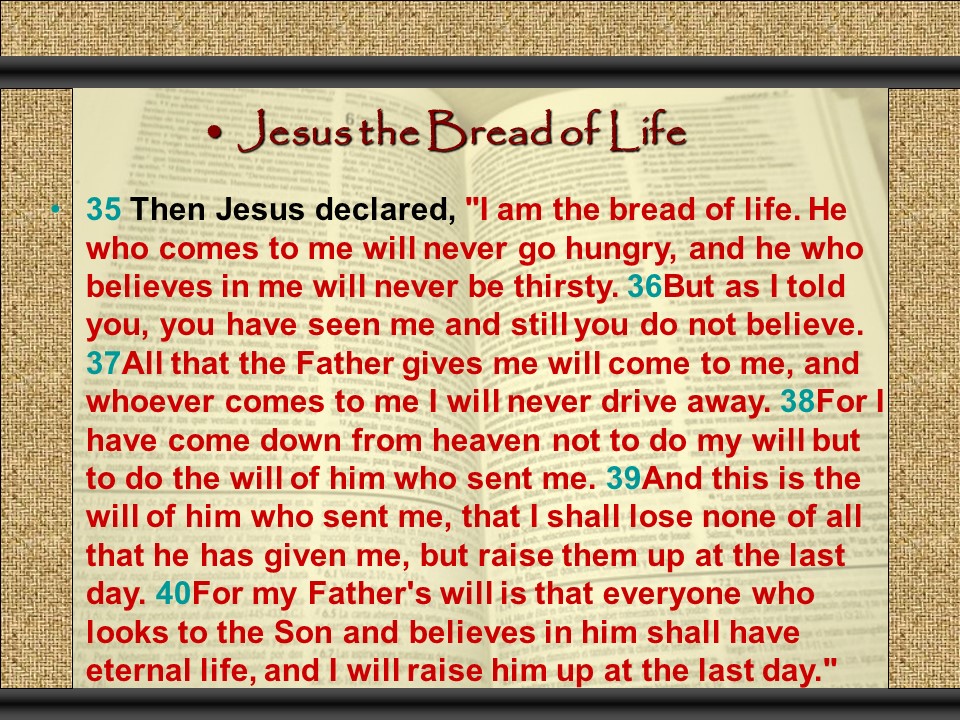
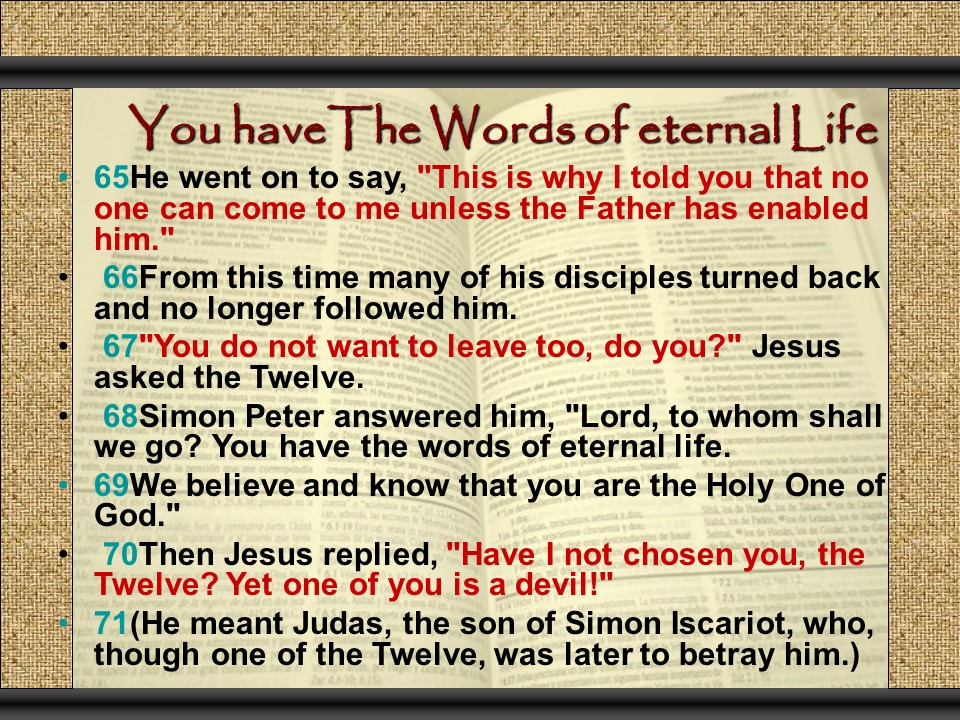
John 6:25-71, Jesus is the bread of life and has the words of eternal life. Many disciples abandon him.

John 6:25-71, Jesus is the bread of life and has the words of eternal life. Many disciples abandon him.

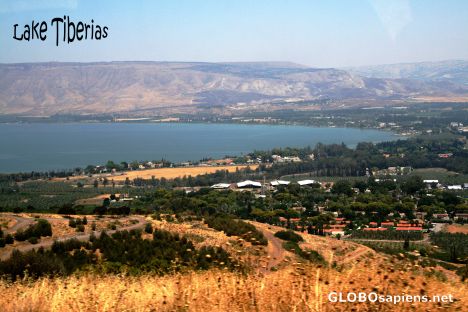
The Sea of Galilee (Lake Tiberias) is about 8 miles wide at its widest point.

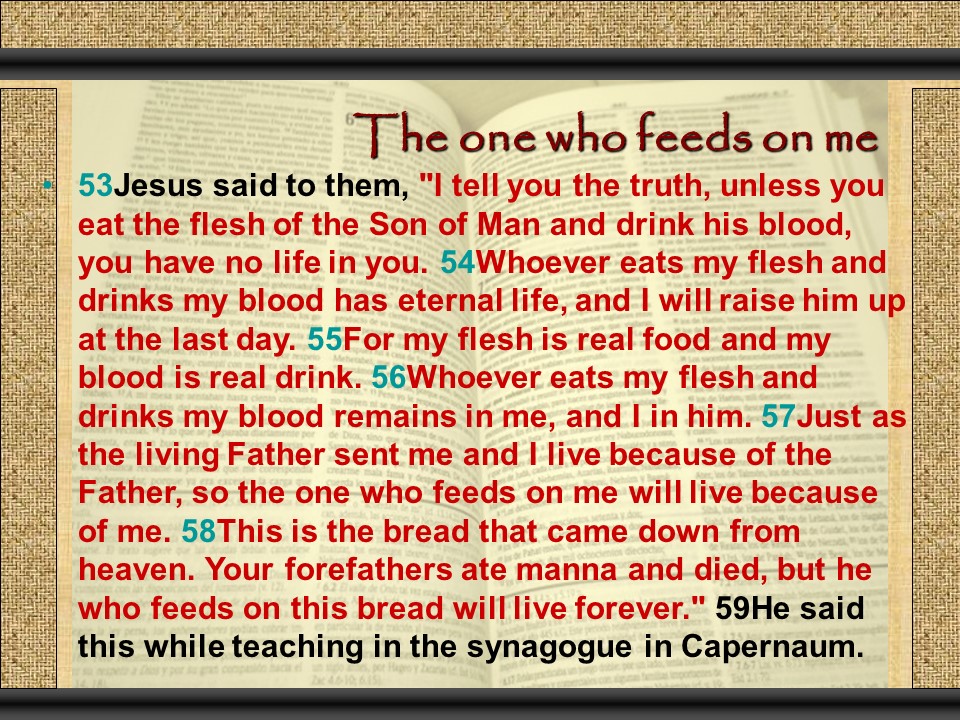
Some comments on “eat of my flesh and drink of my blood.” Jesus explained that the Word was his flesh, but he didn’t explain what the blood meant. The disciples knew from Genesis 9:But flesh with the life thereof, which is the blood thereof, shall ye not eat. And surely your blood of your lives will I require; at the hand of every beast will I require it, and at the hand of man; at the hand of every man’s brother will I require the life of man. Whoso sheddeth man’s blood, by man shall his blood be shed: for in the image of God made he man.

Jesus was clearly pointing to the future complete atonement on the Cross, but this was before the Cross, so how were they to get it? It did not make sense until fifty days after his death, burial and resurrection when the Holy Spirit came “like a mighty wind”.

Then it became clear that His flesh symbolizes the word of God and his blood symbolizes His sacrifice on the cross and saving us from all our sin.