Leg 7, leg 8 and leg 9 of the Transcontinental aqueduct. From the Buffalo Soldier Draw dam to the highest point of the aqueduct 10 miles into Arizona.

Leg 7 is 255 miles. I starts out at 2700′ elevation and ends at 4500′

Leg 7. from Buffalo soldier Draw upper dam to the highest point in Texas

To lift 17,000 cfs of water (4500 – 2700 + 255×2.2) = 2421 feet with a 92% efficiency requires 3.7 GW of power.

Leg 8 is 125 miles. I starts out at 4500′ elevation and ends at 3800′

Leg 7. from the highest point in Texas to crossing the Rio Grande at La Mesa

To release 17,000 cfs of water (4500 – 3800 – 125×2.2) = 425 feet with a 92% efficiency generates 550 MW of power.

Leg 8 is 125 miles. I starts out at 4,500′ elevation and ends at 3,800′
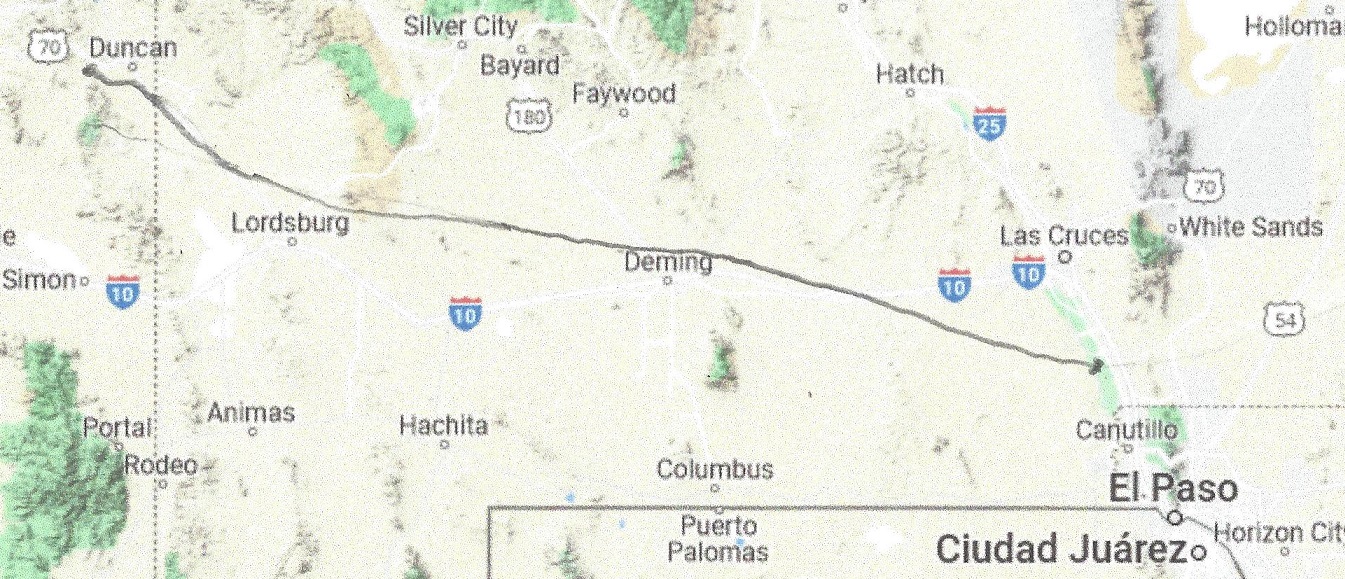
From La Mesa it will climb to the highest pumping station in Arizona, located 10 miles west of the border, at 4,200 feet. The total lift of the water in stage 10 is (4,200 – 3980 + 160×2.2) feet = 572 ft. To lift 17,000 cubic feet per second 592 feet requires 900 MW of power.

The total power needed for these 3 legs of the Transcontinental aqueduct when fully built up is 4.05 GW of power, the bulk of which will be supplied of 40 100 MW LFTR (Liquid Fluoride Thorium Reactors). They are efficient and carbon neutral.

What’s in it for Texas, New Mexico and Arizona? Up to 17,000 cfs of soft water is being delivered to the thirsty south western states. This corresponds to 12 Million Acre-feet per year. The Colorado river contributes 15 MAF/year. The water delivery in the first pass of implementing the Transcontinental Aqueduct is 6,000 MAF per year.

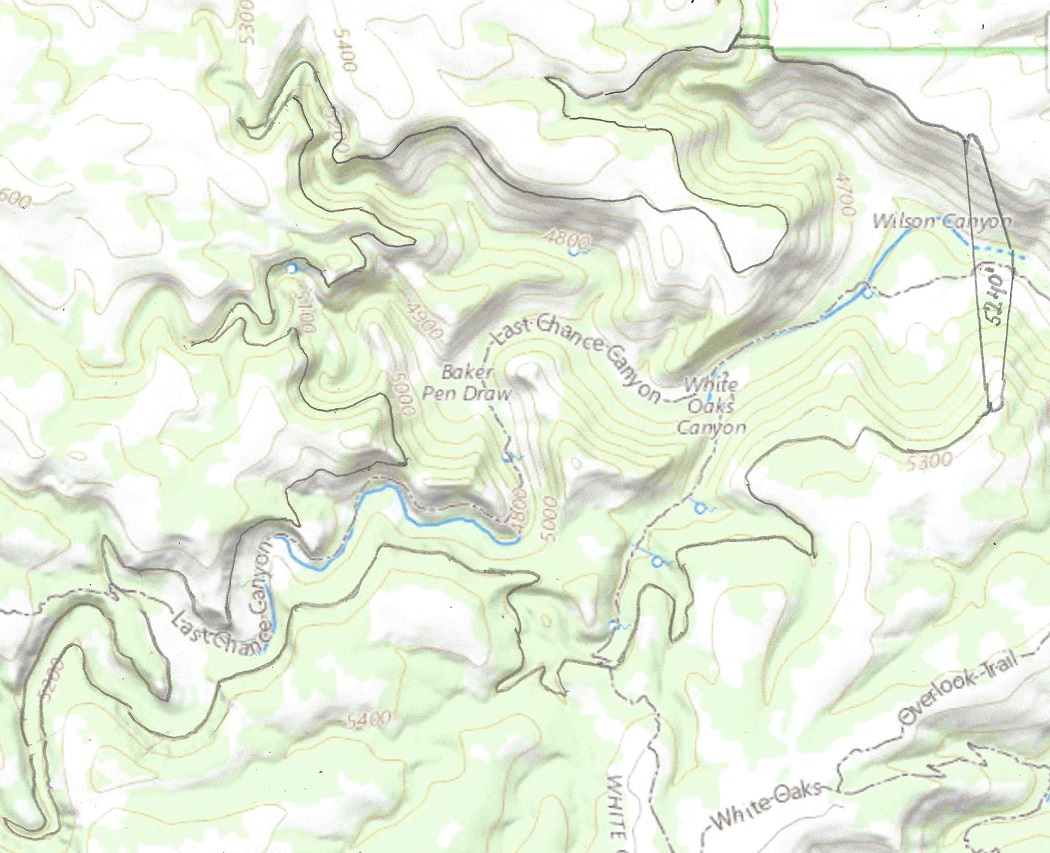
Leg 7 of the Transcontinental aqueduct. From the Buffalo Soldier Draw dam to the White Oaks Canyon dam and pumped storage power plant.

Leg 7 of the Transcontinental aqueduct is 90 mils in Texas, rising from 2800′ to 3640′. From there it flows 115 miles in New Mexico rising to 5200′.

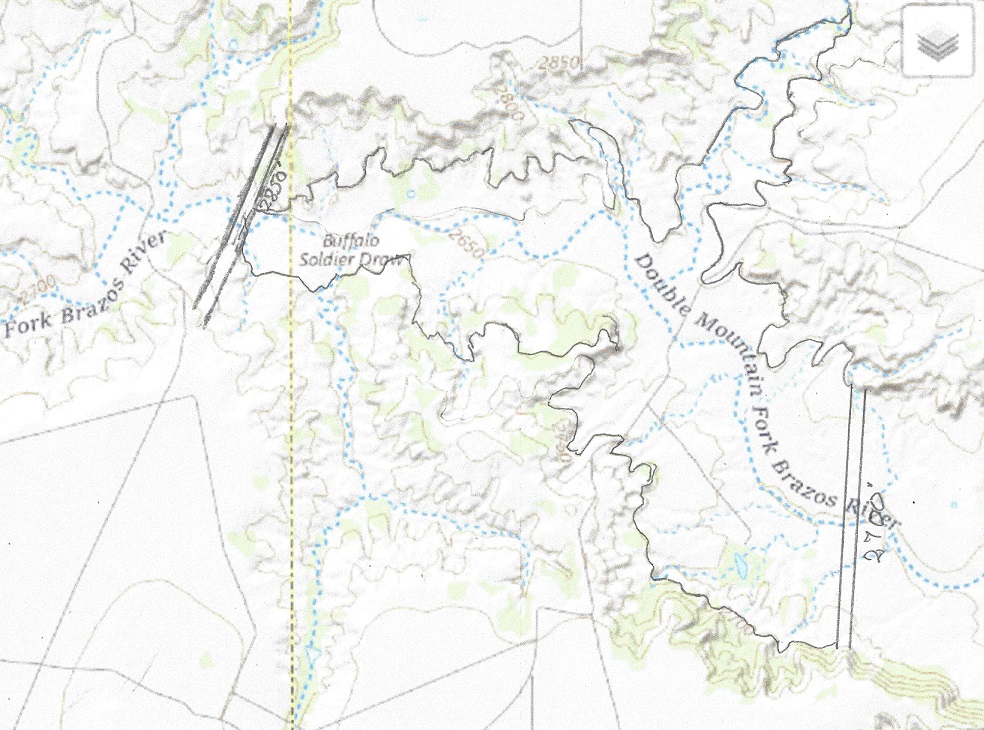
The upper dam of Soldier Mountain Draw, capacity 40,000 acre-ft.

The elevation at the buffalo Soldier Draw dam will top out at 2,850 feet with maximum water level at 2,830 feet. The White Oaks Canyon dam is 560 feet high and will top out at 5,240 feet with an average water level at 5,000 feet. The total lift of the water in stage 5 is (5,000 – 2,800 + 205×2) feet = 2610 ft. To lift 21,600 cubic feet per second 2610 feet requires fifty 100 MW LFTR nuclear reactors, twenty on the Texas Grid and thirty on the Western national grid. The White Oaks Canyon Lake will contain about 130,000 Acre-ft of water when full, about three days of storage. For 5 hours per day these fifty reactors used in this stage can provide 5.0 GW of peak power to the grid instead of pumping water, thus acting as a virtual hydroelectric peak power storage. 2 GW of this will be used by the Texas Power Grid, and 3 GW by the Western U.S. Power grid, and they have to be coordinated.The White Oaks dam will look like this:

What’s in it for Texas? Wind power is already 22% of the source for the Texas power grid, but Texas has up to now no pumped water storage, and until this is fixed coal and natural gas backup must be provided when the wind doesn’t blow. This leg will provide 2 GW of virtual hydro-power generation to the Texas power grid by not pumping water for up to 5 hours and thus provide 10 GWh of peak power daily. This will greatly help stabilize the Texas power grid, and facilitate the phasing out of coal power and help the transition to electric vehicles, which will add stress to the stability of the grid by their uneven recharging patterns.

What’s in it for New Mexico? This leg will provide 3 GW of virtual hydro-power generation by not pumping water for up to 5 hours and thus provide 15 GWh of peak power daily.

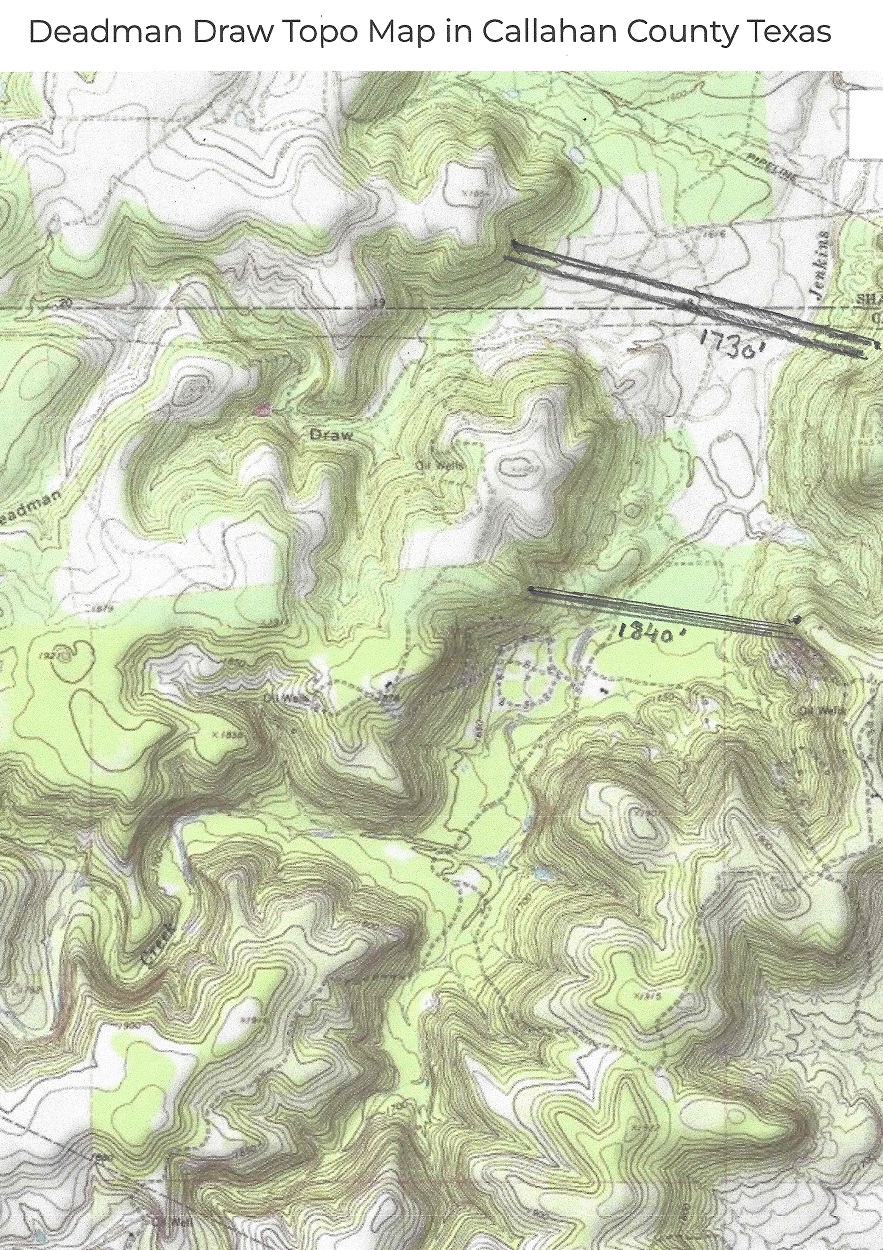
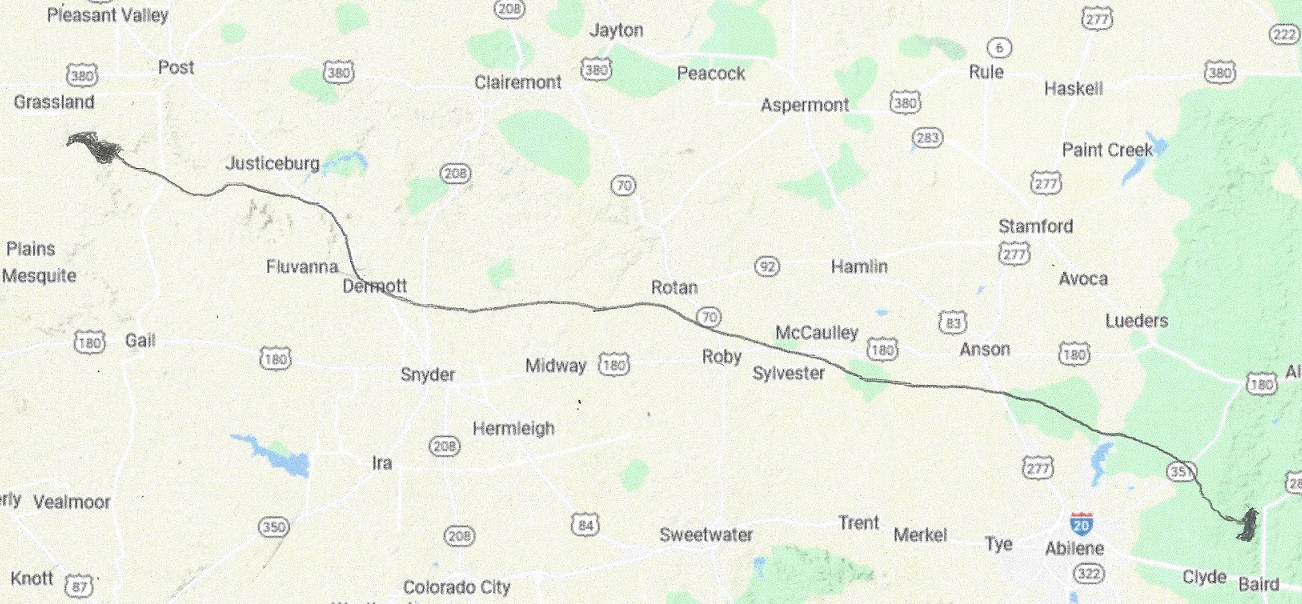
Leg 6 of the Transcontinental aqueduct. From Deadman Draw dam and pumped storage power plant to Buffalo Soldier Draw dam and optional pumped storage plant.

This leg has the freedom to pump water at 21,800 cfs or less, including stopping for up to 5 hrs/day to provide virtual peak hydro-power for the Texas grid. This must be coordinated with leg 5 and leg 7. Total distance of the aqueduct is 135 miles, from elevation 1830′ to elevation to 2840′.

From Deadman Draw dam to Buffalo Soldier Draw dam, a distance of 135 miles.

The water elevation at Deadman Draw dam is nominally 1,830 feet. The Buffalo Soldier Draw dam yet to be built will top out at 2,850 feet with maximum water level at 2,840 feet. The total lift of the water in stage 3 is (2,840 – 1,830 + 135×2) feet = 1,280 ft. To lift 21,800 cubic feet per second 1,280 feet requires twenty-five 100 MW LFTR nuclear reactors The upper reservoir will contain about 40,000 Acre-ft when full, about one day worth of storage. For 5 hours per day these twenty-five 100 MW reactors can provide 2.5 GW of peak power to the grid.

There will be a lower dam to provide hydroelectric power storage of 4.5 GWh, or 900 MW for 5 hours. After each use the lower dam will be re-emptied by pumping back the water to the upper dam, using 5.4 GWh of power, hopefully using surplus wind or solar power.

The aqueduct will go thru and dug sown at 1590’elevation

What’s in it for Texas? Wind power is already 22% of the source for the Texas power grid, but Texas has up to now no pumped water storage, and until this is fixed coal and natural gas backup must be provided when the wind doesn’t blow. This leg will provide 4.5 GWh of peak power per day from the pumped water storage. In addition the 2.3 GW of Nuclear power can provide virtual hydro-power generation by not pumping water for up to 5 hours and thus provide 6 GWh of peak power daily. This will greatly help stabilize the Texas power grid, and facilitate the phasing out of coal power and help the transition to electric vehicles, which will add stress to the stability of the grid by their uneven recharging patterns. I addition, the City of Lubbock can purchase water from the aqueduct, to be negotiated.