October 12, read the Bible in a year in PowerPoint; with comments

2 Timothy 2:14-26. The Apostle Paul defended his motives and his conduct, they were all pure. Then he gave thanks to God for the conversion of the Thessalonians and mentioned his longing to see them.

Lamentations 1. It was written as dirge poetry at the time when Jerusalem was afflicted and captured. It is a true acrostic, which means the twenty-two letters of the Hebrew alphabet are used in succession to begin the lines and sections of those songs.

Lamentations 2. It too is dirge poetry written in an acrostic form emphasizing God’s anger over Jerusalem.

Psalm 91. The author is anonymous. Charles Spurgeon commented: “In the whole collection there is not a more cheering Psalm, its tone is elevated and sustained throughout, faith is at its best, and speaks nobly.” He also quoted (in English) Siméon Marotte deMuis: “It is one of the most excellent works of this kind which has ever appeared. It is impossible to imagine anything more solid, more beautiful, more profound, or more ornamented.”

Psalm 92. A Song for the Sabbath day. Give thanks to the LORD. God judges His enemies, and He makes His people flourish.

October 12, read the Bible in a year; in PowerPoint, with comments.

2 Timothy 2:14-26. The Apostle Paul defended his motives and his conduct, they were all pure. Then he gave thanks to God for the conversion of the Thessalonians and mentioned his longing to see them.

Lamentations 1. It was written as dirge poetry at the time when Jerusalem was afflicted and captured. It is a true acrostic, which means the twenty-two letters of the Hebrew alphabet are used in succession to begin the lines and sections of those songs.

Lamentations 2. It too is dirge poetry written in an acrostic form emphasizing God’s anger over Jerusalem.

Psalm 91. The author is anonymous. Charles Spurgeon commented: “In the whole collection there is not a more cheering Psalm, its tone is elevated and sustained throughout, faith is at its best, and speaks nobly.” He also quoted (in English) Siméon Marotte deMuis: “It is one of the most excellent works of this kind which has ever appeared. It is impossible to imagine anything more solid, more beautiful, more profound, or more ornamented.”

Psalm 92. A Song for the Sabbath day. Give thanks to the LORD. God judges His enemies, and He makes His people flourish.

Day 285 of reading the Holy Bible in 365 days.

2 Timothy 2:14-26. The Apostle Paul defended his motives and his conduct, they were all pure. Then he gave thanks to God for the conversion of the Thessalonians and mentioned his longing to see them.

Lamentations 1. It was written as dirge poetry at the time when Jerusalem was afflicted and captured. It is a true acrostic, which means the twenty-two letters of the Hebrew alphabet are used in succession to begin the lines and sections of those songs.

Lamentations 2. It too is dirge poetry written in an acrostic form emphasizing God’s anger over Jerusalem.

Psalm 91. The author is anonymous. Charles Spurgeon commented: “In the whole collection there is not a more cheering Psalm, its tone is elevated and sustained throughout, faith is at its best, and speaks nobly.” He also quoted (in English) Siméon Marotte deMuis: “It is one of the most excellent works of this kind which has ever appeared. It is impossible to imagine anything more solid, more beautiful, more profound, or more ornamented.”

Psalm 92. A Song for the Sabbath day. Give thanks to the LORD. God judges His enemies, and He makes His people flourish.
Day 284 of reading the Holy Bible in 365 days.

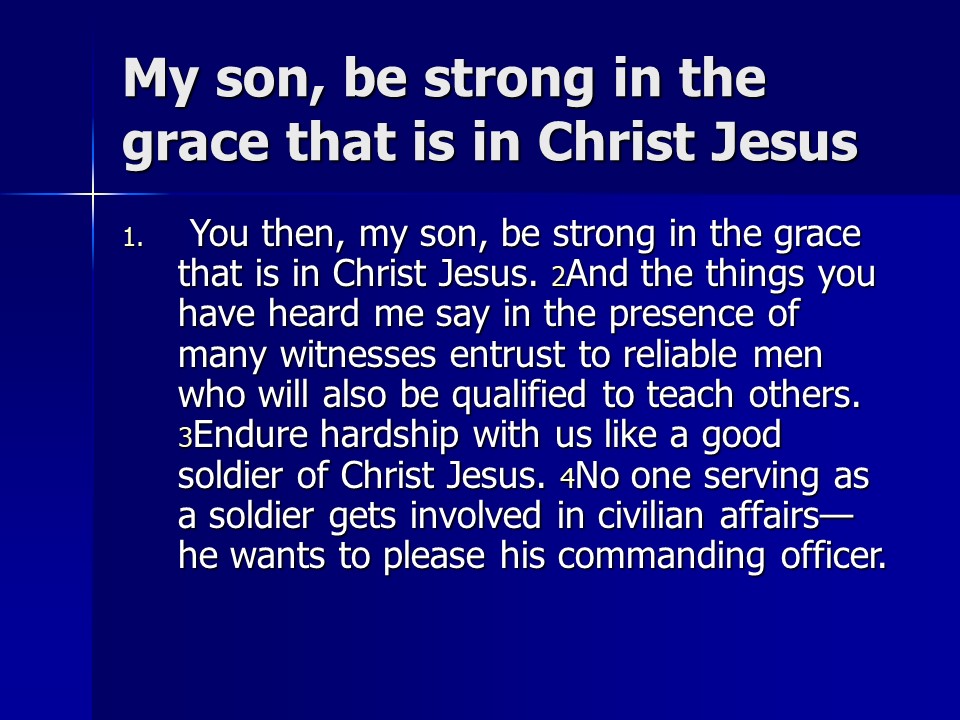
2 Timothy 2:1-16. God, through the apostle Paul gave advice to the young Timothy, such as: Be strong in grace, be not ashamed of the truth as you are an approved worker.

Proverbs 16, Proverbs of Solomon. God looks at the heart, take heed and do what is right in the eyes of the Lord, not men.

Psalm 89, of Ethan the Ezrahite. “I will sing of the mercies of the LORD forever“. A Psalm of praise to God and His covenant with David, His glory and holiness, His faithfulness to deliver His promises, but also the trouble with the unfaithful. It ends up with a plea for a speedy restoration.

Psalm 90, a Prayer of Moses, the Man of God. This is his prayer in the wilderness, and is the only song of Moses in the Psalms, but there are two others in the Pentateuch (Exodus 15 and Deuteronomy 32-33).

October 12: Reading the Holy Bible in a year.

2 Timothy 2:14-26. The Apostle Paul defended his motives and his conduct, they were all pure. Then he gave thanks to God for the conversion of the Thessalonians and mentioned his longing to see them.

Lamentations 1. It was written as dirge poetry at the time when Jerusalem was afflicted and captured. It is a true acrostic, which means the twenty-two letters of the Hebrew alphabet are used in succession to begin the lines and sections of those songs.

Lamentations 2. It too is dirge poetry written in an acrostic form emphasizing God’s anger over Jerusalem.

Psalm 91. The author is anonymous. Charles Spurgeon commented: “In the whole collection there is not a more cheering Psalm, its tone is elevated and sustained throughout, faith is at its best, and speaks nobly.” He also quoted (in English) Siméon Marotte deMuis: “It is one of the most excellent works of this kind which has ever appeared. It is impossible to imagine anything more solid, more beautiful, more profound, or more ornamented.”

Psalm 92. A Song for the Sabbath day. Give thanks to the LORD. God judges His enemies, and He makes His people flourish.
October 11: Reading the Holy Bible in a year.

2 Timothy 2:1-16. God, through the apostle Paul gave advice to the young Timothy, such as: Be strong in grace, be not ashamed of the truth as you are an approved worker.

Proverbs 16, Proverbs of Solomon. God looks at the heart, take heed and do what is right in the eyes of the Lord, not men.

Psalm 89, of Ethan the Ezrahite. “I will sing of the mercies of the LORD forever“. A Psalm of praise to God and His covenant with David, His glory and holiness, His faithfulness to deliver His promises, but also the trouble with the unfaithful. It ends up with a plea for a speedy restoration.

Psalm 90, a Prayer of Moses, the Man of God. This is his prayer in the wilderness, and is the only song of Moses in the Psalms, but there are two others in the Pentateuch (Exodus 15 and Deuteronomy 32-33).

2 Timothy 2:14-26, Approved Workers, Paul’s advise to Timothy.

2 Timothy 2:14-26, Approved Workers, Paul’s advise to Timothy.

AWANA: Approved Workers Are Not Ashamed

Yes, that is true. God’s only advise when it comes to sexual temptation is to flee.