March 4, read through the Bible in a year.

Today there are four chapters to read.

March 4: Mark 4, Numbers 23, Numbers 24, Numbers 25, (click on the chapter to begin reading)

Mark 4 starts out with the parable of the sower, and Jesus provides the explanation of it, the key to the parables. Then the parable of the lamp on a stand, not under a bushel, then the parable of the seed in the ground, or the faith of a mustard seed, all parables relating to the Kingdom of God. Finally Jesus calms the storm and chastises the disciples for their lack of faith.

Numbers 23 tells of Balaam’s first oracle, his second oracle, and the beginning of his third oracle.

Numbers 24 continues with Balaam’s third oracle, his fourth, and his final oracle.

Numbers 25 finally tells how Israel went astray in Moab.

When will we be ready for electric cars?

Are we finally ready for the electric car?

Boy are we advancing in leaps and bounds:

Here is the Roberts electric car, built 1896.

It gets 40 miles to the charge.

Let us see, where does our electricity come from? In 2017 the sources were:

Coal, oil and gas 62%, Nuclear 20%, Hydroelectric 7%, Wind 6%, Solar 2% and all other sources, geothermal, wood and other biomass 3%.

Coal, and natural gas are the staples of electricity generation and will remain so for the foreseeable future until a suitable replacement has been developed.

Hydroelectric power is mostly built up and will not provide much more generation capacity. However, many dams can be augmented with peak storage capacity to even out the supply. Many of these improvements are highly profitable since they buy surplus power at low cost and sell back peak power at peak power price.

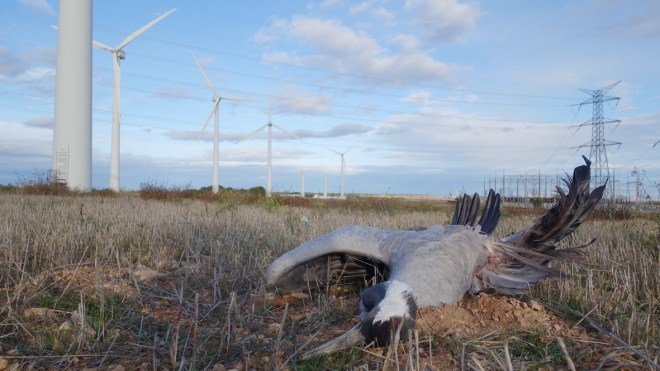
Wind power is at 7%, but there is a cost associated with that. The annual bird kill associated with wind turbines is about 1.3 million birds, the bald eagle and other large birds may again be threatened or endangered if we increase wind power substantially. Already some rare bats are endangered. The Audubon society has given it its blessing, after all, in their opinion climate change is more of a danger than the extinction of bird species.

Solar power shows some promise. The large solar concentrator power plants kill all birds that come near the hot spot, and have some other problems. Photovoltaic cells on the south facing roofs fulfill an important role. In a case of failure of the grid they can provide a limited emergency power and  they are already important for people living off the grid like the Amish and mountain dwellers. Putting up large solar farms in the desert seems like a good idea, but they need a good supply of water to be cleaned or they will be dirtied up, lowering their efficiency. Fully built up solar power can supply up to 10% of the electricity needs but that is about the practical limit.

Geothermal provides less than 1/2% of our power supply. Unfortunately geothermal energy is most abundant in geologically unstable regions.

Wood and biomass power is no real solution if you are concerned about CO2 emissions. It is better to build houses from wood, trapping the cellulose forever.

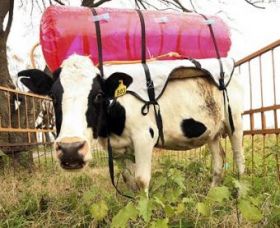
There is an old technology we can learn from the North Koreans. They enclose the cow dung and other compost and use the generated Methane for stove fuel. Recovering Methane from landfills can produce 0.1 to 0.4% of our energy.

Why am I down on electric cars? First, the energy to drive the car must have been produced somehow. As long as we use coal to produce electricity there will be more CO2 in the air with electric cars than with diesel powered cars. Second, electric cars are heavier than corresponding gasoline powered cars and have less room. Third, it takes an awful lot of mining to produce all the rare materials that goes into a modern battery. The energy used  to mine and refine all the raw materials that goes into an electec car is more than can be saved during the lifetime of the car. This too takes a lot of energy and leaves scars on the landscape. Finally, batteries last only so long and are expensive, leading to a much more expensive car to purchase and maintain.

The same arguments can be raised against solar and wind power. It takes more energy to mine and refine the materials than the equipment generate since they generate the electricity when they want, not when the need is there.

Are we doomed? Not at all. As oil and gas is becoming depleted, we should build up the nuclear power plants, not with old Uranium based nuclear plants with all their nuclear waste, but with small, distributed Thorium based plants.

Why Thorium?

We are a net importer of Uranium, even before we sold 20% of our Uranium ore to Russia. With Thorium there is a million years supply available, and it requires no extra mining since it is found in rare earth metal ores, which will bear the mining costs. They have 0.01% as much nuclear waste as uranium based plants and are earthquake safe and much less vulnerable to sabotage. They also respond much better to demand fluctuations. As the plants would be more distributed it would lessen the need for an expanded electric grid, which is unbelievably vulnerable to sabotage. The long and short of it: Go Thorium and when that is fully built up, then develop Electric cars!

In the mean time develop trucks with electric backup so they can accelerate faster in stop and go traffic and regenerate energy when braking rather than use jake brakes. In confined spaces they could then use only electric for maneuvering. . Other candidates: Buses, trolleys and delivery vehicles would also benefit from this technique.

March 3, read through the Bible in a year.

Today there are three chapters to read.

March 3: Mark 3Numbers 21 ,  Numbers 22, (click on the chapter to begin reading)

Again, in Mark 3 Jesus heals on a Sabbath, this time a man with a withered hand. The powers to be hate it, but more and more people follow him. Jesus appoints the 12 apostles, and begin teaching in parables. One warning: All sins can be forgiven except blasphemy against the holy spirit. Jesus mother and brothers try to meet him, but Jesus reminds all “Whoever does God’s will is my brother and sister and mother”.

In Numbers 21 the Canaanites are defeated in Hormath. The people keep speaking against God, so God sends venomous snakes and many died. Moses makes a bronze snake, puts it on a pole and the people looking at it got healed. (Does that remind you of a symbol used even today?) The travels continue.

Numbers 22 tells the story of how Balak sends for Balaam, and how Balaam’s Donkey behaved when he saw the Angel.


March 2, read through the Bible in a year.

Today there are four chapters to read.

March 2: Mark 2Numbers 18 , Numbers 19, Numbers 20, (click on the chapter to begin reading)

In Mark 2 Jesus heals a paralytic man, but he also forgave the man his sins. This caused quite a stir, since nobody can forgive sins but God alone. Then he called Levi, the tax collector, also called Matthew. This was also controversial, since tax collectors were held in disregard, but Jesus assured them he came to save the sinners. Then Jesus is questioned about why he and the disciples do not fast, as they should, and worse yet, they picked food from the head of the grain on a Sabbath! Jesus assures all that he is also Lord of the Sabbath.

Numbers 18 describes duties of Priests and Levites, Offerings for Supporting the Priests, Tithes Supporting the Levites and the Tithe of the Levites. As representatives of the LORD they should get the best part.

Numbers 19 details the laws and procedures of Purification.

In Numbers 20 Moses commits a major error in Kadesh. Thy are short on water, so God tells Moses to speak to the rock. Water comes forth but God punishes Moses and his people so that generation may not enter the promised land. Why this harsh punishment? The rock was to be smitten only once, next time Moses was to speak to the rock. At the end of the chapter Aaron dies.


March 1, read through the Bible in a year.

Today there are three chapters to read.

March 1: Mark 1,  Numbers 16, Numbers 17, (click on the chapter to begin reading)

Mark 1 starts, not with the birth of Jesus, but with the beginning of Jesus’ ministry. John the Baptist prepares the way for Jesus, and Baptizes Jesus.Immediately Jesus is tested in the wilderness for forty days, and Jesus begin calling his disciples. Jesus drives out an evil spirit while teaching in a synagogue. After that Jesus heals many and many people start following him, and as always Jesus prays in a solitary place, but continues to teach and heal many, including a man with leprosy. A chapter full of action.

In Numbers 16 Korah, Dathan and Abiram as well as 250 other men rise up in opposition to Moses. Things do not turn out well for them.

Numbers 17 tells of the budding of Aaron’s rod, a really short chapter.


February 28, read through the Bible in a year.

Today there are three chapters to read.

February 28: Psalm 15, Numbers 14,Numbers 15, (click on the chapter to begin reading)

Psalm 15 is only 5 verses long. I have added 5 references from the New Testament.

In Numbers 14 the people rebel and refuse to go in to the promised land. As a punishment the people will go for forty years in the desert until that generation has passed away. Meanwhile the people try to take on the Amalekites in their own strength, but fail.

Numbers 15 deals with Laws of Grain and Drink Offerings, Laws Concerning Unintentional Sin, Laws concerning Presumptuous Sin, Penalty for Violating the Sabbath, and specifies how to make Tassels on Garments.

February 27, read through the Bible in a year.

Today there are four chapters to read.

February 27: Psalm 13, Psalm 14, Numbers 12, Numbers 13, (click on the chapter to begin reading)

Psalm 13 is only 6 verses, but there is a moving Anglican Chant written and sung. Enjoy.

Psalm 14 is also short. It begins “The fool has said in his heart, there is NO GOD.”

In Numbers 12 Miriam and Aaron oppose Moses and Miriam suffers the consequences.

In Numbers 13 God prepares His people to take the land He has promised them, so they are sending out scouts to survey the land and how best to take it. They come back with a discouraging report; it is a good land flowing with milk and honey, but the people are too strong for them, they felt like grasshoppers in their sight. Only Caleb dissented. (Joshua joined Caleb in the next chapter)


February 26, read through the Bible in a year.

Today there are three chapters to read.

February 26: Proverbs 3, Numbers 10, Numbers 11 (click on the chapter to begin reading)

Proverbs 3 continues to tell of the benefits of wisdom. The verses most often quoted are ” Trust in the Lord with all your heart
    and lean not on your own understanding;
in all your ways submit to him,
    and he will direct your paths.”

Numbers 10 tells of making two silver trumpets and with the blasts from them they finally leave Sinai, still in formation , tribe by tribe.

In Numbers 11 the people complain about eating manna every day, so God puts His spirit on seventy elders to prophecy, but He also sends them quail , a delicious game bird, but after eating quail for a whole month until it comes out their nostrils they got sick, and God punishes the gluttons.

February 25, read through the Bible in a year.

Today there are five chapters to read, but they are all short.

February 25: Psalm 11, Psalm 12, Numbers 7, Numbers 8, Numbers 9 (click on the chapter to begin reading)

Psalm 11 has the phrase “flee as a bird to the mountain”, which bring back memories of songs we used to sing.

Psalm 12 is especially valid for today with all its double speak.

Numbers 7 has 89 verses, but the chapter only seems long since the same offerings for the dedication of the tabernacle are repeated for each of the twelve tribes.

Numbers 8 deals with setting the Levites apart for their duties.

Numbers 9 defines how the Passover shall be celebrated from that time on. It also describes the cloud over the tabernacle, if it lifted they moved on, if it stayed, they stayed.


A clouded future for the Earth? Fear not, that is what is stabilizing the temperature.

The cause of Climate Change is still up in the air.
Sherlock Holmes: “It is a capital mistake to theorize before one has data. Insensibly one begins to twist facts to suit theories instead of theories to suit facts”. From: “Scandal in Bohemia” by A. Conan Doyle.

The first Earth Day in Philadelphia 1970, April 22 (the 100 year anniversary of Lenin’s Birth) featured Ira Einhorn (The Unicorn Killer) as master of Ceremonies. The big environmental scare of the day was the threat of a new Ice Age. The clarion call was: “In the year 2000 temperatures will have fallen 10 degrees”, the culprit was pollution, especially acid rain. The acid rain was so bad in the Adirondacks, Canada, Norway and Sweden that the Rainbow Trout died in droves, and even the oceans were said to be in danger of getting too acid. Regulations were enacted to add scrubbers to power stations, waste water was purified, and – wouldn’t y you know it, the cooling trend reversed itself and was followed by warming.
Since the cooling trend was “obviously man-made” they had to find a reason for the sudden warming. Never mind that around the year 1200 there was at least one farm on South West Greenland that exported, among other things, cheese. How do we know that? They have excavated the ruins of a farm, “Gården under Sanden”, buried under permafrost for five centuries. During these five centuries the Northern Hemisphere experienced what is called “the little ice age” a time when the winters could be so cold that in 1658 the Swedish army, cavalry and artillery crossed the Belts in the southern Baltic over ice and sacked Copenhagen.


Picture left: Gården under sanden excavation.
Picture right: The crossing of the Great Belt 1658.

To predict future climate changes many computer models have been developed dealing with how the earth responds to changes in atmospheric conditions, especially how it responds to rising CO2 levels. Most were developed in the 1970 to 2000 time frame, a time of rapid temperature rise and as such they were all given a large factor for the influence of rising CO2. Since 2000 we have had what is called “the pause”, a time with no statistically significant temperature rise,  so the models cooperated less and less and produced more and more unreliable predictions. It is no wonder then that they all have failed to model the past. None of them have reproduced the medieval warm period or the little ice age. If they cannot agree with the past there is no reason to believe they have any ability to predict the future. The models are particularly bad when it comes to predict cloud cover and also what time of day clouds appear and disappear.
Below is a chart of a number of climate models and their prediction of cloud cover versus observed data. Note especially to the right where they completely fail to notice the clear skies over Antarctica.

Is there a better way to predict future temperature trends? When you go to the doctor for a physical, at some point and without warning he hits you under the knee with a hammer and watches your reaction. He is observing your impulse response. Can we observe impulse responses for the earth? One obvious case is volcanic explosions. Sometimes the earth burps a lot of carbon dioxide or methane. But the most interesting response would be how the earth responds to a solar flare with a sudden change in the amount of cosmic radiation hitting the earth. That would give the best indication how the sun and cosmic radiation affects cloud formation.

A couple of solar flares lately have been giving us a hint how the cloud cover responds to changes in cosmic radiation, and they are consistent with the latest results from the CLOUD project conducted using the CERN particle accelerator, a confirmation of a theory forwarded by the Danish Physicist Henrik Svensmark. He first presented the theory in 1997 and finally got the results verified and published in 2007, but the prevailing consensus has been slow to accept the theory that the sun as the primary driver of climate change.
We have many reasons to be concerned about the well-being of the earth, but rising levels of CO2 is not one of them. In fact, CO2 is our friend. Rising CO2 levels increases crop yields, makes the impact of land use changes less pronounced and the photosynthesis process more efficient, using less water and allowing us to grow crops on land once deemed unprofitable.

James Hansen, a world famous climate science activist/NASA physicist writes in one of his publications, called “Earth’s Energy Imbalance and Implications“.
It contains a quote that fits nicely with Sherlock Holmes observation:
The precision achieved by the most advanced generation of radiation budget satellites is indicated by the planetary energy imbalance measured by the ongoing CERES (Clouds and the Earth’s Radiant Energy System) instrument (Loeb et al., 2009), which finds a measured 5-year-mean imbalance of 6.5 W/m2 (Loeb et al., 2009). Because this result is implausible, instrumentation calibration factors were introduced to reduce the imbalance to the imbalance suggested by climate models, 0.85 W/m2 (Loeb et al., 2009).

There we have it. The observed data does not fit the climate models. Change the observed data! Then use that data to validate the climate models! How convEEnient, as the SNL Churchlady used to say.
Shenanigans like this have been exposed in what has been named “Climategate1.0”, followed by “Climategate2.0” and “Climategate3.0”
This is what happens when politicians take over science and make further funding contingent on obtaining desired results.
James Hansen arrested Aug 29 2011 at a Keystone XL pipeline protest outside the White House.

And now, this is the official basis for enacting the Green New Deal. They have come a long way since then, but the science they claim is settled is not. It is just flawed. Look at the clouds! They provide the negative feedback that keeps the climate from overheating.

Yet I am hopeful that the scientists are catching on to the major fallacy of the models, their failure to correctly model the clouds and their changing behavior with increasing CO2.

This is an excerpt from the IPCC Fifth Assessment.

Box 2.1 | Advances, Confidence and Uncertainty in Modelling the Earth’s Climate System Improvements in climate models since the IPCC Fourth Assessment Report (AR4) are evident in simulations of continental-scale surface temperature, large-scale precipitation, the monsoon, Arctic sea ice, ocean heat content, some extreme events, the carbon cycle, atmospheric chemistry and aerosols, the effects of stratospheric ozone and the El Niño-Southern Oscillation. Climate models reproduce the observed continental-scale surface temperature patterns and multi-decadal trends, including the more rapid warming since the mid-20th century and the cooling immediately following large volcanic eruptions (very high confidence). The simulation of large-scale patterns of precipitation has improved somewhat since the AR4, although models continue to perform less well for precipitation than for surface temperature. Confidence in the representation of processes involving clouds and aerosols remains low. {WGI SPM D.1, 7.2.3, 7.3.3, 7.6.2, 9.4, 9.5, 9.8, 10.3.1}The ability to simulate ocean thermal expansion, glaciers and ice sheets, and thus sea level, has improved since the AR4, but significant challenges remain in representing the dynamics of the Greenland and Antarctic ice sheets. This, together with advances in scientific understanding and capability, has resulted in improved sea level projections in this report, compared with the AR4. {WGI SPM E.6, 9.1.3, 9.2, 9.4.2, 9.6, 9.8, 13.1, 13.4, 13.5}There is overall consistency between the projections from climate models in AR4 and AR5 for large-scale patterns of change and the magnitude of the uncertainty has not changed significantly, but new experiments and studies have led to a more complete and rigorous characterization of the uncertainty in long-term projections. {WGI 12.4}