The best new green deal ever. Save the American South West and make it green! This is how.

President Biden had the U.S. join the Paris accord and we are once again in accord with the IPCC and UN. Unfortunately, if we comply with all the requirements of the Paris accord we will lower the temperature increase by only 0.05C by 2030, and by only 0.17C by 2100. See the reasons why this is so here. How can that be? It is because the real climate change is not mainly caused by increasing CO2 and Methane. No, these are only minor players compared to land use changes such as deforestation, aquifer depletion, urbanization, erosion and so on.

One of the worst consequences of government controlled land use changes is the disappearance of Lake Aral in Asia, the fourth largest lake in the world. It provided a sensitive, but functioning Eco-system for a large portion of South East Soviet Union and western Afghanistan. Then the central planners wanted to improve the productivity of the area through irrigation and changing land management. In the 1960s and 1970s the Soviets started using the Amu Darya and the Syr Darya rivers to irrigate extensive cotton fields in the Central Asian plain. The results can be seen in these 6 Satellite photos
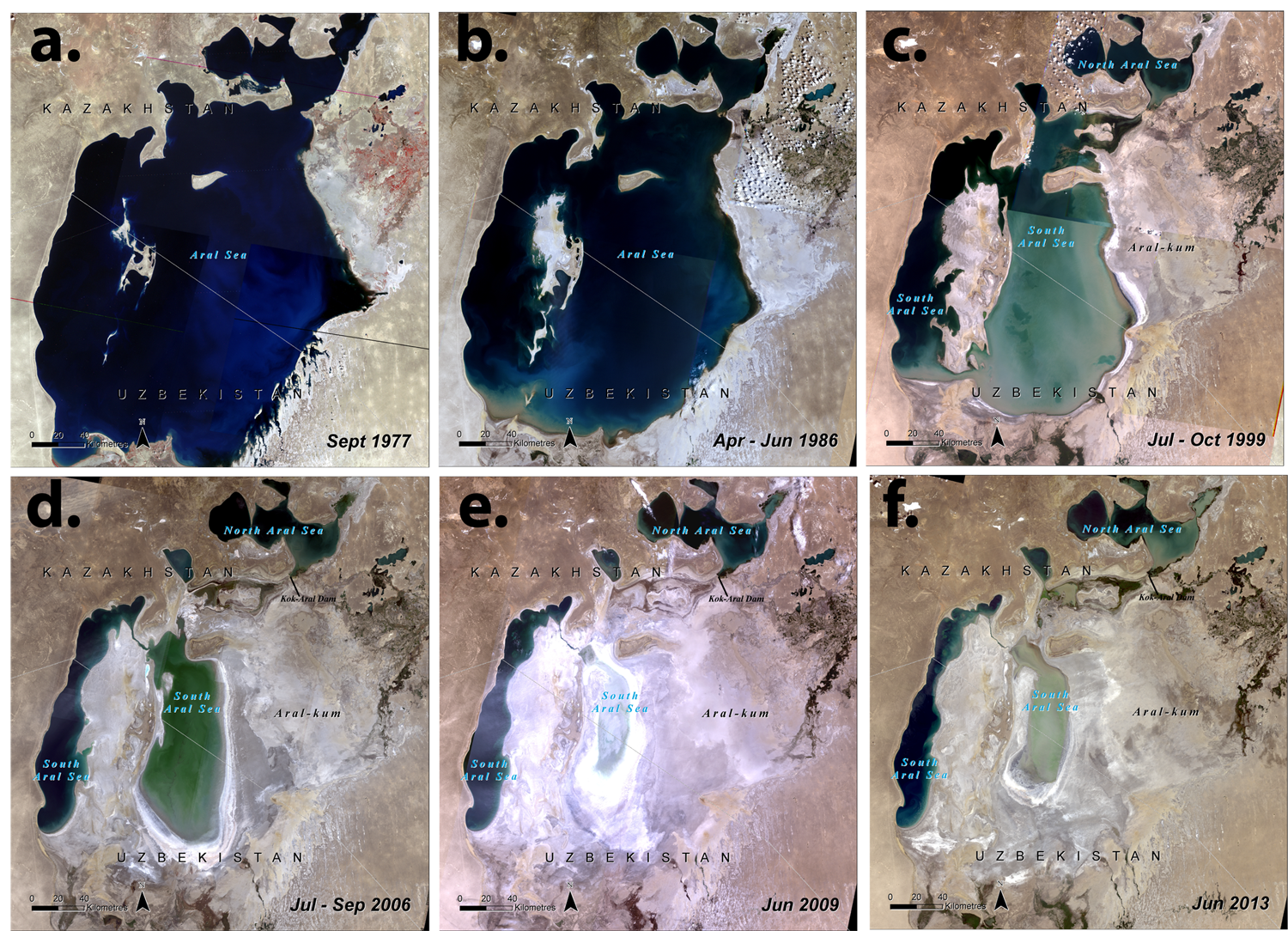
Disaster is a mild word. The lake was the source of the rains that fell up-stream. With the lake gone, the rivers dried up completely, and the whole upland became desert-like. There has been efforts to restore the upper part of the lake with a dam, but that will do nothing to reverse the desertification.

Another land use change is urbanization. This produces an urban heat island that can increase the temperature in the city by as much as 4C compared to forested surroundings.
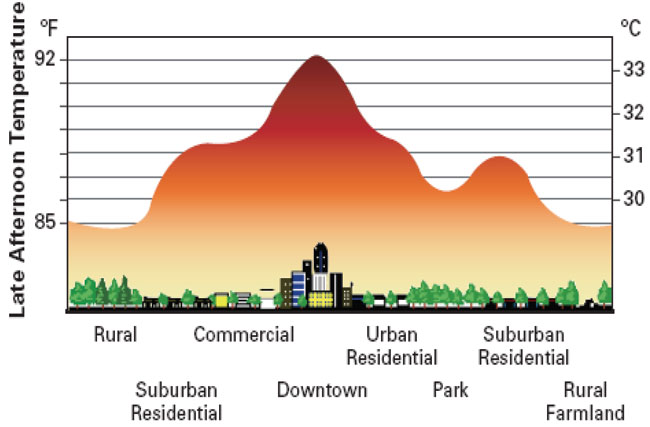
Yes, there is significant climate change for the people living in the downtown areas. It is called urbanization. The globe as a whole does not experience it, but the people living in the asphalt jungles surely do. One could turn off the air conditioners, but their contribution is less than one degree on average. Far bigger is the fact that the albedo changes, the ground dries up, and when it rains it all gets flushed out in the streams or simply evaporates on the burning hot asphalt or concrete. One hour after the rain it is as hot as before.

Another climate change occurs when forested land is cleared but not replanted, or when land is overgrazed down to the roots. In these cases the streams dry out hillsides and floodplains, and flash floods occur instead of steady streams, and erosion causes major damages. And so it is with much of the American Southwest. The average temperature increase from deforestation and overgrazing is usually around 1C. This video explains it much better than may words. There is still hope, but it will take work

Why can’t this be done here in the dry American southwest? It involves water rights. Unless the property owner owns the water rights to the land the owns he has no right to harvest any of the rain that falls on it. If he improves the land with a road or a structure with a roof, all the rain that falls on it must be going to the river, and eventually to Lake Mead to prevent it from going dry. In the Eastern United states water rights are automatic, they are in fact water responsibilities. If you improve the land and build a road, parking lot or a structure with a roof, you must build a catch basin big enough to capture all the extra runoff generated by the rain falling on the improved land. Farmers are encouraged to build swales to minimize erosion and runoff of fertilizer and pesticide. This should also be done in the dry parts of the country, there their erosion problems are even worse. The way to do it is determined by local factors and should be decided at the local or regional level. When the federal government gets involved they tend to mandate one solution for all, and the needs for Arizona is quite different from the needs for Louisiana when it comes to water.

Here is the suggestion: Give this challenge to all local Universities and High School biology departments. Make a competition to come up with the best local solutions to restore the American Southwest if the water rights belonged to the land. The only limits are; you can not dam established creeks and you cannot draw water from the aquifers. The indigenous people once knew how to do it. Unfortunately, the American Southwest can suffer multiyear droughts, and, unlike in India, the monsoons can fail. The greening that occurred in the five projects mentioned in the video above should act as an inspiration. The greening that will occur will lower the temperature, drastically reduce erosion, provide a more permanent water flow in the rivers, and reduce flooding.

When the Hoover dam was built the population in the American south west was around seven million. Now the population dependent on the water from the Colorado river is over 40 million, and growing. Not only is the Colorado River water supply insufficient, but the aquifers are being depleted, and the desertification is starting to set in. Looking at a precipitation map of the U.S. there is one obvious solution.
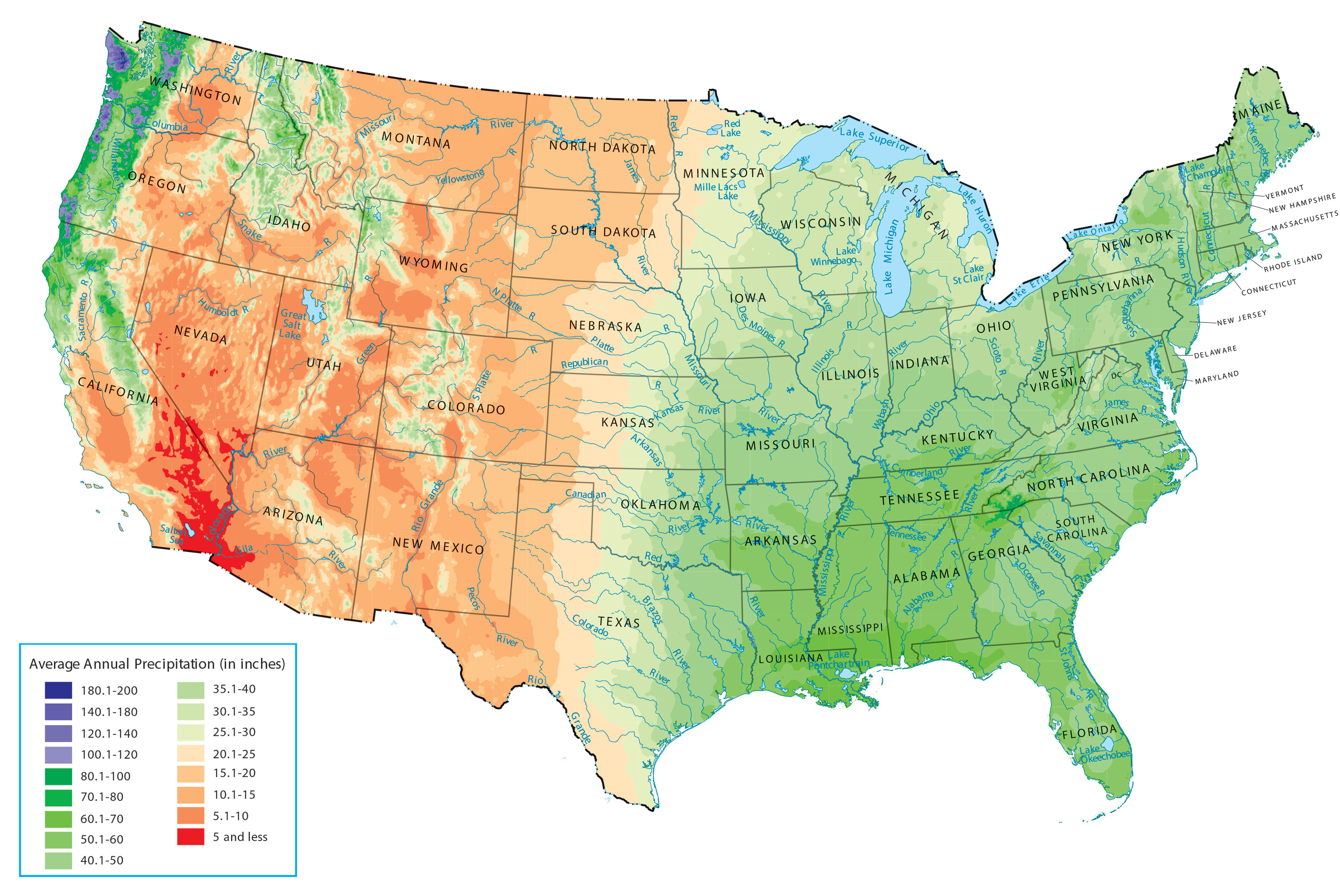
Green areas have enough water, orange, brown or red areas are water sparse.

Bring water from the east to the west! There is only one big problem: The Rocky Mountains are in the way. The water must be lifted around 8,000 feet before it will start to flow downhill again. To lift one acre-ft of water one foot requires about 1.08 kWh. Some energy is regained on the way down, but the net energy needed is around 5,000 kWh per acre-ft of water delivered to the thirsty American South-west.

This proposal is to deliver up to 23.75 million acre-feet of water annually to the thirsty American South-west. It will consist of three aqueducts:

The first one is called the South Platte Aqueduct and will serve Eastern Colorado and help save the High Plains Aquifer, also called the Ogallala Aquifer. It is sketched out here. It is quite modest, only up to 750,000 acre-ft pumped annually, and while the aqueduct will be built to this capacity only 375,000 acre-feet will be initially needed. For now, it will serve about 5 million people.

The second is the Trans-Rocky-Mountain Aqueduct. It will serve the upper Colorado River Basin and the upper Rio Grande Basin. When fully used it will pump 8 million acre-ft yearly from the Mississippi/Arkansas River. It is more fully described here .

The third is the Transcontinental Aqueduct. It will serve the Lower Colorado River Basin, Southern New Mexico and Western Texas. It will pump up to 15 million acre-ft of water annually from the Atchafalaya river (Mississippi river bypass) all the way to southern Colorado River. It is described more fully here.

The total electricity need to accomplish this giant endeavor is about 120 billion kWh annually. or about three percent of the current US electricity demand. In 2020 the US produced 1,586 billion kWh from natural gas, 956 from coal, 337.5 from wind and 90.9 from solar.

For this giant project to have any chance of success there has to be something in it to be gained from every state that will be participating. Here are some of the benefits:

Arizona: Arizona needs more water. The water from Mississippi is less saline and better suited for agriculture and the people growth makes it necessary to provide more water sources. Right now the aquifers are being depleted. Then what? One example: The San Carlos lake is nearly dry half the time and almost never filled to capacity. With the aqueduct supplying water it can be filled to 80 +- 20% of full capacity all the time. In the event of a very large snow melt the lake level can be reduced in advance to accommodate the extra flow. Likewise during Monsoon season the aqueduct flow can be reduced in anticipation of large rain events. Arizona together with New Mexico has the best locations for solar power, but is lacking the water necessary for hydro-power storage. This proposal will add 13.6 GW of hydro-power storage capable of adding 68 GWh of electric peak power daily.

Arkansas: The main benefit for Arkansas is better flood control and river control of the Arkansas River and allowing it to deepen the draft for canal barges from 9,5 feet to 12 feet, which is standard on the Mississippi river.

California: The water aqueduct serving Los Angeles will be allowed to use maximum capacity at all times. Additional water resources will be given the greater San Diego area. The Imperial valley will be given sweet Mississippi water, which will improve agriculture yield. The polluted New River will be cut off at the Mexico border. There will be water allocated to the Salton Sea. There is a proposal to mine the world’s largest Lithium ore, mining the deep brine, rich in Lithium. (about a third of the world supply according to one estimate). This requires water, and as a minimum requirement to allow mining in the Salton Sea the water needs to be cleaned. This requires further investigation, but the area around the Salton Sea is maybe the most unhealthy in the United States. It used to be a great vacation spot.

Colorado: The future water needs from Fort Collins to Colorado Springs metropolitan area will be met. In addition the Pueblo area will be allowed to use more of the Arkansas River water, since the John Martin Reservoir will be filled by the Trans-Rocky Mountain aqueduct.

Kansas: It will get a reliable water supply to serve Wichita and all towns along the Arkansas River in times of drought and to serve additional water needs at all times. It will also improve flood control along the river.

Louisiana: The main benefit for Louisiana is: By siphoning off up to 23.75 million acre-ft/year from the Mississippi river it will lower the flow through the lower Mississippi, especially New Orleans, reducing flood risk. By making these aqueducts the whole Mississippi/Missouri watershed will be incentivized to make sure the river waters are clean enough to be able to use as water supply. This will positively affect 40% of the continental United States landmass.

Mexico: During the negotiations about who was going to get the water in Lake Mead Mexico did not get enough water, so they have been using all remaining water for irrigation, and no water is reaching the ocean anymore. In addition the water is too salty for ideal irrigation. This proposal will provide sweet Mississippi water to Mexico, ensure that some water reaches the Colorado river delta. This will restore the important ecology and restore aquatic life in the delta and the gulf. The town of Mexicali will get some water in exchange for shutting off New River completely.

Nebraska: One of the benefits for Nebraska is that it will help save the Ogallala aquifer. The farmers close to the aqueduct will use pumped water from Missouri rather than draw from the aquifers.

Nevada: Las Vegas is a catastrophe waiting to happen unless Lake Mead is saved. With this proposal there will be ample opportunity to make the desert bloom.

New Mexico: The state is ideally suited for solar panels. In addition to give much needed water to communities along the length of the aqueduct, it will provide 10.5 GW of hydro-power storage to be made available at peak power usage for up to 5 hours a day.

Oklahoma: The main advantage for Oklahoma is a much improved flood control, especially through the City of Tulsa. It will provide the same advantage for river barge traffic as benefits Arkansas.

Texas: The state has a big problem. It has already built up too much wind power and can not give up their coal burning power plants until the electricity is better balanced. They have no hydro-electric power storage at all, and we saw the result of that in last year’s cold snap. This proposal will give the Texas electric grid 18.5 GW of hydro-electric power for up to 5 hours a day.

Utah: The state will no longer be bound to provide water to Lake Mead, but can use all of its water rights for Utah, especially the Salt Lake City region.

Wyoming: The state will be free to use the water in the Green River and all the yearly allocated 1.05 million acre-feet of water can be used by the state of Wyoming.

The cost to do all these aqueducts will be substantial, but it can be done for less than 400 billion dollars in 2021 money, and that includes the cost of providing power generation. Considering it involves 40 million people dependent on the Colorado River now and another 10 million east of the Rocky Mountains, it is well worth doing, much more importand to do than other “green” projects, since it will save the American Southwest from becoming an uninhabitable desert.

This proposed solution cannot be made possible without changing our approach to power generation. The mantra now is to solve all our power needs through renewables. Texas has shown us that too much wind power without any hydroelectric power storage can lead to disaster. In addition, windmills kill birds, even threatening some species, such as the Golden Eagle and other large raptors that like to build their aeries on top of the generators. Solar panels work best in arid, sunny climate, such as Arizona and New Mexico, but the panels need cooling and cleaning to work best, and that takes water. They are even more dependent on hydro-power storage than wind. The transcontinental aqueduct will triple the hydro-electric power storage for the nation, and the Trans-Rocky-Mountain will add to it. Without hydro-electric power storage we still need all the conventional power generation capacity for when the sun doesn’t shine and the wind doesn’t blow.

Conventional Nuclear power plants doesn’t work in most places since they depend on water for their cooling, and most of these aqueducts pump water in near deserts, and there would be too much evaporation losses to use water from the aqueducts for cooling.

The only realistic approach would be to use LFTR power plants. (Liquid Fluoride Thorium Reactors). There are many advantages for using LFTR. Here are 30 reasons why LFTRs is by far the best choice.

For this project to succeed there must be developed a better way to build SMRs (Small Modular Reactors, less than 250 MW) more effectively. The price to build a LFTR plant should be less than $2.50 per watt. While the LFTR science is well understood, the LFTR engineering is not fully developed yet, but will be ready in less than 5 years if we get to it. In the mean time there should be built one or more assembly plants that can mass produce LFTR reactor vessels small enough so they can be shipped on a normal flatbed trailer through the normal highway system. My contention is that a 100 MW reactor vessel can be built this way and the total cost per plant will be less than 250 Million dollars. To save the American Southwest we will need about 350 of them, or 87,5 billion dollars total. This cost is included in the total calculation. There will be many more of these plants produced to produce all the electric power to power all the electric vehicles that are going to be built. This is the way to reduce fossil fuel consumption. Just switching to electric vehicles will not do the trick. The electric energy must come from somewhere. To convert all cars and trucks and with unchanging driving habits will require another 600 GW of generating capacity by 2050, our present “net zero emissions” goal.

To do this project we need cooperation from all states in providing dominant domain access. The Federal government will need to approve LFTR as the preferred Nuclear process and streamline approval from many years to less than one year.

Let’s get going!
Jul 1. The Word for today.

Every day the news is devastating, depressing and seemingly hopeless. Some turn off the TV news altogether, hoping that ignoring the news will make them feel better. But we are called to be in the world, and it is our duty to leave the world a better place than we found it. To do that we must know what is happening. One way is to follow the Apostle Paul’s advice in Philippians 4:8 “Finally, brothers and sisters, whatever is true, whatever is noble, whatever is right, whatever is pure, whatever is lovely, whatever is admirable—if anything is excellent or praiseworthy—think about such things.” (NIV). Then we find that there is much good happening for which to be thankful..

Here are a few examples: The Covid pandemic is finally diminishing, and we have vaccines and effective treatments avilable. HydroxyChloroQuine together with Zinc and maybe Azithromycine is a cure if taken early in more than 60% of the cases. It is even effective in the later stage of the sicness if taken in much larger doses. Ivermectine plus Zinc is even more effective, over 80% success rate if taken early. These are proven facts, but the media is still bound to promote vaccines as the only solution. Thinking positively, vaccines are good for people over 50, under 50 you are better off with either HCQ or Ivermactine, taken in proper doses of course. An overdose of Tylenol can destroy your kidneys and even cause death, yet it is safe and effective in proper doses. The point of all this is that we have learnt so much during this pandemic for which we should be thankful,.. and the proper treatments should be promoted.

I could go on with climate change. Yes, there is climate change, and this is on balance good. When you want hothouses to yield more, you increase the CO2 level, typically double it. This leads to increased yields. Since CO2 levels have increased, we can now feed 2 billion more people than before, and have fewer people starving. The temperatures in the tropics are not increasing, the control mechanism is clouds, they cool by day and warm by night. The control is so good that just one percent change in cloud cover means more than all the increase in the CO2 levels. One place where God’s temperature control doesn’t work perfectly is in deserts. With no clouds, no temperature control. So w must do what we can to prevent more areas from becoming a desert. One way is to plant more trees. This is especially important to lower temperatures in urban areas with all their roads, houses and parking lots.

My dream is to see built a transcontinental aqueduct from the Mississippi river to the Colorado River. It would save the southwest from becoming a desert, save Lake Mead, double the irrigation in the Imperial Valley and Mexico, water the people of Arizona and New Mexico and provide much needed hydroelectric power storage for the state of Texas. At the moment Texas has none, but they have a lot of wind power and no way to store the energy to use when the wind is not blowing. Arizona and New Mexico would like to have solar power, but they do not have the water to provide hydroelectric power storage. The aqueduct will provide the water for the hydroelectric power storage as the water flows down from the highlands. All it takes is twenty-three Liquid Fluor Thorium nuclear Reactors of 500 Megawatt capacity each to power the aqueduct, so it is very doable. Congress is now disussing an infrastructure bill. If there wver was a project worth their consideration this would be it!

The solution to the water shortage in the South-West, and Texas hydro-electric storage problem, eliminating carbon fuel dependence at the same time.

The Hoover dam water is being depleted. We are running out of water in the South-West United States. The water used for irrigation is too salty. The rapidly growing population requires more and more water. Texas needs hydro-electric storage to supplement the power when the wind is not blowing and the sun is not shining.

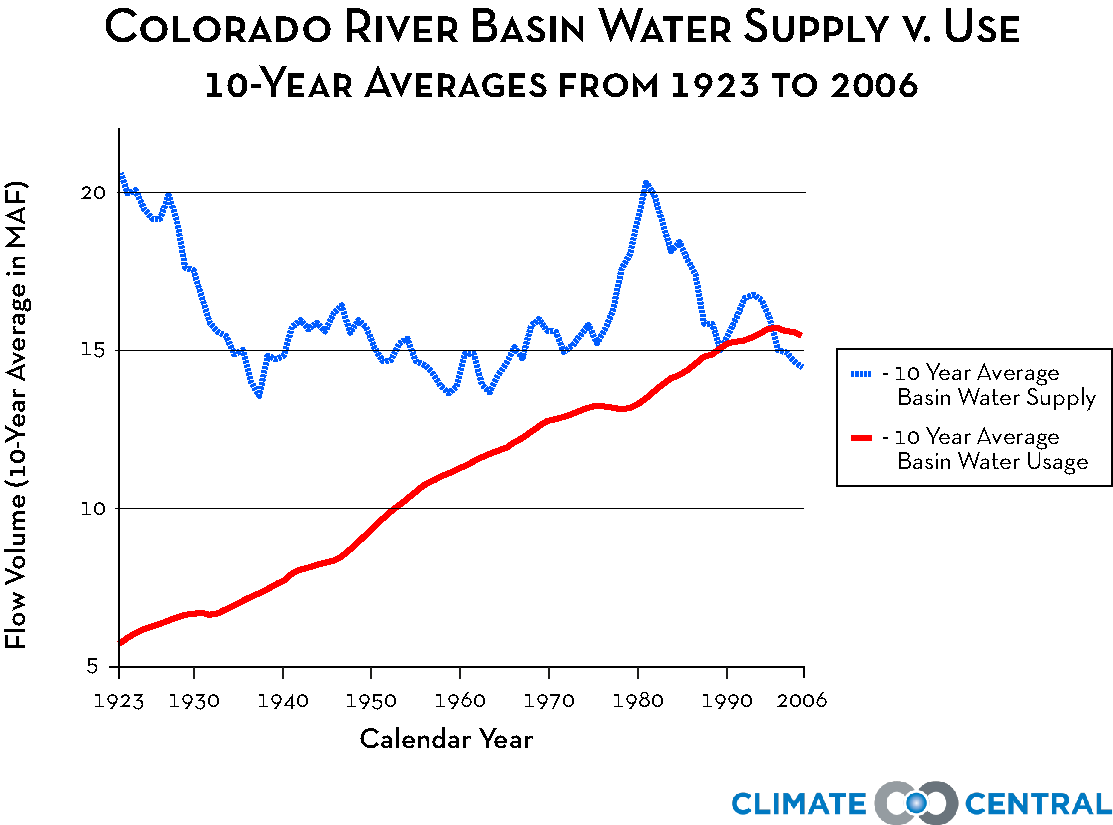
First let us assess the size of the problem. The rainfall reaching the streams in the Colorado River basin is about 15 million acre feet per year, and is not increasing. See figure:

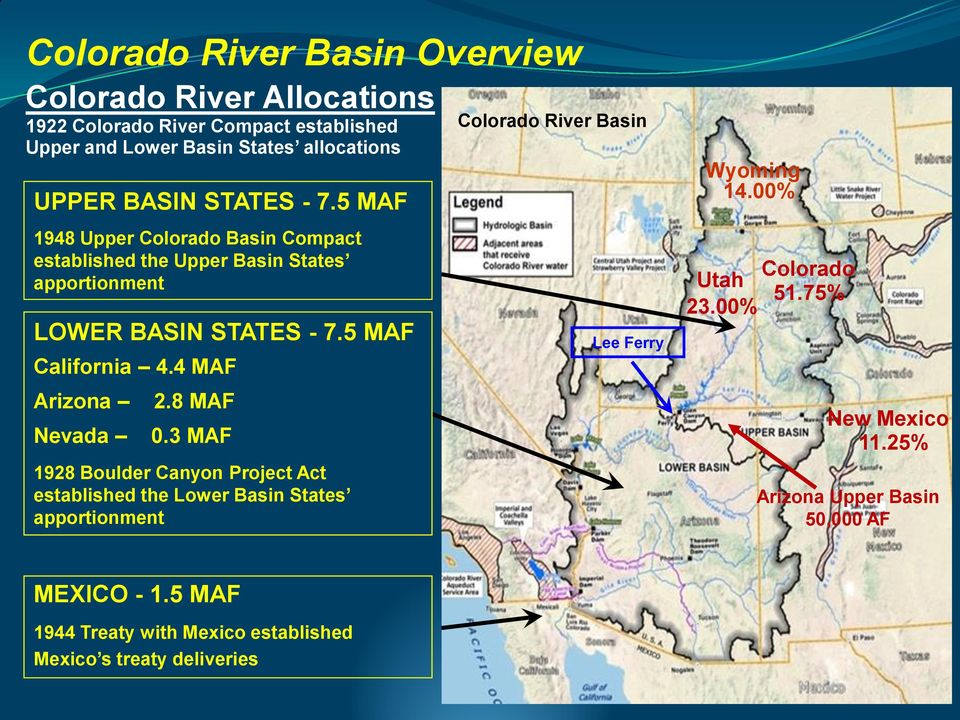
Now let us look at water allocations:

The total allocations come to 16.5 Million Acre Feet per year. This is clearly unsustainable, Lake Mead will be drained by 2 MAF per year and is now at 34% of full pool of 32.3 MAF. If nothing is done it will be drained in 5.5 years. Draining Lake Powell will give us another 4 years, so something must be done in the next 9.5 years.

Texas has a problem, all too well displayed in the big freeze of last winter. The wind farms froze, the sun didn’t shine and the coal fired plants had been shut down for environmental reasons. The only thing that saved the grid from total collapse was Nuclear Power. Even the Natural Gas powered plants ran out of supplies since some pipelines had lost power. And Texas has virtually no hydroelectric storage capacity.

This is my proposal: Build an aqueduct from the Mississippi river to Yuma California, about 1650 miles long, capable of carrying 15 MAF/year of water It will start and end near sea level, and pump water in Texas and New Mexico to more than 4000 feet elevation until it reaches the Gila river near Duncan, NM, then follow the Gila river all the way down to Yuma, AZ. On the way down the Gila River it will generate hydroelectric power, and recover much of the power spent pumping the water upstream in Texas and NM. You may wonder, what would a canal like that look like? Some of the way it would look like this, but be 30% larger, here is the All American canal under construction:

It will have many pumping stations. The size will be about 10 times the capacity of the ones used in the Colorado River aqueduct, shown here. (This aqueduct made it possible for Los Angeles to grow to a megalopolis.)

To pump all this water 4500 feet up will require twenty-two 500 MW electric power generators. The ideal power source for this is Liquid Fluor Thorium Reactors that provide power at all times, most of the time they pump water, but about 6 hours a day they stop pumping and provide peak power, thus functioning as a virtual hydroelectric battery. As all nuclear generators they generate no CO2, and LFTRs are so safe they do not require evacuation zones. If the sun doesn’t shine and the wind doesn’t blow, or it is excessively cold or hot, they can even stop pumping water altogether and provide all the power to the grid. With the water on the downhill leg the opposite is true. It releases most of its water during times of high demand, acting as a normal peak water storage generator facility. Since both start and end points of this aqueduct is near sea level, about 90% of the power is recovered in this way except for the water that is diverted at high altitudes.

Who is going to get all this extra water? Check the current allotment and the new proposed allotment.

There will be no changes to the allotments for the states in the upper Colorado River basin in this proposal.

California will get its allotment increased from 4.4 MAF to 6.4 MAF, all water coming from the new aqueduct.

Arizona will get its allotment increased from 2.8 MAF to 4.3 MAF, all from the new aqueduct.

Nevada will get its allotment increased from 0.3 MAF to 1.3 MAF, the increase will be taken from Lake Mead.

Mexico will get its allotment doubled, to 3.0 MAF. The Colorado river should again be reaching Baja California with a flow of 0.5 MAF. This may restore a modest fishery.

New Mexico will be allotted 1.0 MAF for high elevation irrigation from this new aquifer.

The aqueduct will supply California, Arizona, New Mexico and Mexico with water from the Mississippi river, much better suited for irrigation than the present water which is high in salinity.

This will reduce the outflow from the Hoover dam by 6.9 MAF, and the new aqueduct will supply 10.4 MAF downstream from Lake Mead.. With this reduction in outflow Lake Mead will recover quite well.

When the Hoover dam is near full pool, we should start using it as a peak power supplier by pumping water back from Lake Mohave to Lake Mead during off peak demand.

If there ever was a project worthy of consideration in the Infrastructure bill, this is it. Look what it does:

  1. Saves Lake Mead from being emptied and secures its refilling over time.
  2. The 22 LFTR plants in Texas and New Mexico will provide up to 8 GW of peak power for 5 hours a day, and all 11 GW of power can be commandeered for emergency use for a week.
  3. The downstream dams in Arizona will provide up to 6 GW of peak power.
  4. Once the project is finished, the Hoover dam is converted to a peak power storage with 2 GW peak power available.
  5. the addition of 10.4 MAF water will add 40% to the water supply for over 40 million people.
  6. The Mississippi water is better suited for irrigation than Colorado River water due to much less salinity.
  7. By increasing irrigation by at least 3.5 MAF it will provide a 40% increase in food production from the greater imperial valley and a 40% increase in food production from Mexico.
  8. The electric energy generated by the Nuclear power plants is all carbon free, and because of the peak power generated on the downhill leg, we can build another 19 GW peak power of renewable wind and solar generators. This will allow us to retire 19 GW of Coal fired power plants once the aqueduct is completed

The new name for this canal would be the Transcontinental Aqueduct.

Clouds, water vapor and CO2 – why nearly all climate models fail. – and a Limerick.


Fear spreads up on Capitol Hill

The Climate change will break their will.

AOC: In Ten years

our world disappears!

She acts as a New Green Deal shill.

Quote from Alexandria Occasio-Cortez in January 2019: “Millennials and Gen Z and all these folks that come after us are looking up, and we’re like, ‘The world is going to end in 12 years if we don’t address climate change, and your biggest issue is how are we gonna pay for it?’ ” she said.

I beg to differ.

We live in only one world. As a concerned citizen I realize we have immense environmental challenges before us, with water pollution; from plastics in the ocean, excess fertilizer in the rivers, poison from all kinds of chemicals, including antibiotics, birth control and other medicines flushed down the toilet after going through our bodies, animals fed antibiotics, pest control, weed control and so on. Increasing CO2 is not one of the problems, it will in fact help with erosion control, and allow us to feed more people on less agricultural land with proper management, and require less fertilizer and water to do so. In fact, proper water management is a larger problem, with some rivers no longer even reaching the ocean. All water is already spoken for, especially in the 10 to 40 degrees latitude, where most people live.

Allow me to be somewhat technical and give the background to why I know we will never experience the thermal runaway they are so afraid of.

Many years ago I worked at Hewlett Packard on an Atomic Absorption Detector. It was a huge technical success but a commercial failure, as it was too expensive to use for routine applications. However it found a niche and became the detector of choice when dismantling the huge nerve gas stockpiles remaining from the cold war. I was charged with doing the spectrum analysis and produce the final data from the elements. One day two salesmen came and tried to sell us  a patented device that could identify up to 21 different elements with one analysis. They had a detector that divided the visual band into 21 parts, and bingo, with proper, not yet “fully developed” software you could now analyze up to 21 elements with one gas chromath analysis. What could be better? We could only analyze correctly four or five elements simultaneously. It turns out the elements are absorbing in the same wavelength bands, scientifically speaking they are not orthogonal, so software massaging can only go so far. It turned out that the promised new detector was inferior to what we already had and could only quantify three or 4 elements at the most.

In the atmosphere the two most important greenhouse gases are water vapor and CO2 with methane a distant third. Water vapor is much more of a greenhouse gas everywhere except near the tropopause high above the high clouds and near the poles when the temperature is below 0 F, way below freezing. A chart shows the relationship between CO2 and water vapor:

Image result for h20 and co2 as greenhouse gases

Source: http://notrickszone.com/2017/07/31/new-paper-co2-has-negligible-influence-on-earths-temperature/

Even in Barrow, Alaska water vapor is the dominant greenhouse gas. Only at the South Pole (And North Pole) does CO2 dominate (but only in the winter).

All Climate models take this into account, and that is why they all predict that the major temperature increase will occur in the polar regions with melting icecaps and other dire consequences. But they also predict a uniform temperature rise from the increased forcing from CO2 and the additional water vapor resulting from the increased temperature.

This is wrong on two accounts. First, CO2 and H2O gas are nor orthogonal, that means they both absorb in the same frequency bands. There are three bands where CO2 absorbs more than H2O in the far infrared band, but other than that H2O is the main absorber. If H2O is 80 times as common as CO2 as it is around the equator, water vapor is still the dominant absorber, and the amount of CO2 is irrelevant.

Secondly gases cannot absorb more than 100% of the energy available in any given energy wavelength! So if H2O did absorb 80% of the energy and CO2 absorbed 50%, the sum is not 130%, only 90%. (0.8 + 0.5×0,2 or 0.5 + 0.8×0.5). In this example CO2 only adds one quarter of what the models predict.

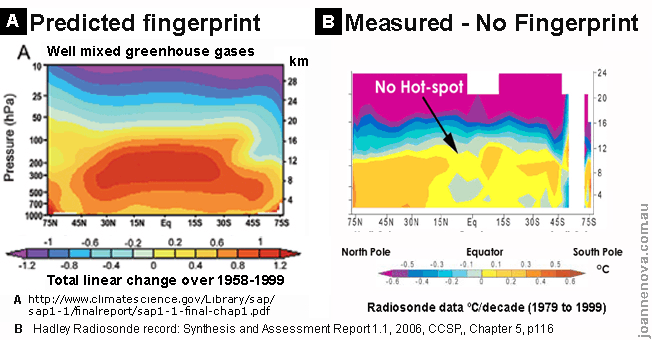
How do I know this is true? Lucky for us we can measure what increasing CO2 in the atmosphere has already accomplished. For a model to have credibility it must be tested with measurements, and pass the test. There is important evidence suggesting the basic story is wrong. All greenhouse gases work by affecting the lapse rate in the tropics. They thus create a “hot spot” in the tropical troposphere. The theorized “hot spot” is shown in the early IPCC publications. (Fig A)

Fig. B shows observations. The hotspot is not there. If the hotspot is not there, the models must be wrong. So what is wrong with the models? This was reported in 2008 and the models still assume the additive nature of greenhouse gases, even to the point when more than 100% of the energy in a given band is absorbed.

How about Methane? Do not worry, it absorbs nearly exclusively in the same bands as water vapor and has no measurable influence on the climate.

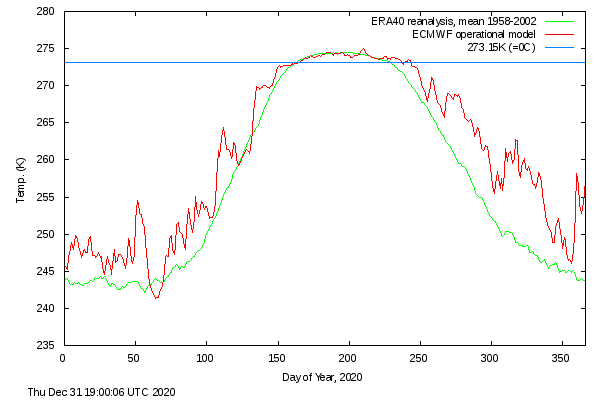
But it will get warmer at the poles. That will cause melting of the ice-caps? Not so fast. When temperature rises the atmosphere can hold more water vapor, so it will snow more at higher latitudes. While winter temperatures will be higher with more snowfall, this will lower the summer temperatures until the extra snow has melted. And that is what is happening in the Arctics

As we can see from this picture, the winters were about 5 degrees warmer, but starting from late May through early August temperatures were lower. It takes time to melt all the extra snow that fell because of the less cold air, able to contain more water vapor.

These are my suggestions

  1. Do not worry about increasing CO2 levels. The major temperature stabilizer is clouds, and they will keep the earth from overheating by reflecting back into space a large amount of incoming solar radiation. Always did, and always will, even when the CO2 concentration was more than 10000 ppm millions of years ago. Ice ages will still come, and this is the next major climate change, maybe 10000 years from now, probably less.
  2. Clean up rivers, lakes and oceans from pollution. This is a priority.
  3. Limit Wind turbine electric energy to areas not populated by large birds to save the birds. Already over 1.3 million birds a year are killed by wind turbines, including the bald and Golden Eagles that like to build their aeries on top of wind turbines.
  4. Do not build large solar concentration farms. They too kill birds.
  5. Solar panels are o.k. not in large farms, but distributed on roofs to provide backup power.
  6. Exploit geothermal energy in geologically stable areas.
  7. Where ever possible add peak power generation and storage capacity to existing hydroelectric power plants by pumping back water into the dams during excess capacity.
  8. Add peak power storage dams, even in wildlife preserves. The birds and animals don’t mind.
  9. Develop Thorium based Nuclear Power. Russia, China, Australia and India are ahead of us in this. Streamline permit processes. Prioritize research. This should be our priority, for when the next ice age starts we will need all the CO2 possible.
  10. Put fusion power as important for the future but do not rush it, let the research and development be scientifically determined. However, hybrid Fusion -Thorium power generation should be developed.
  11. When Thorium power is built up and has replaced coal and gas fired power plants, then is the time to switch to electric cars, not before.
  12. Standard Nuclear Power plants should be replaced by Thorium powered nuclear plants, since they have only 0,01% of the really bad long term nuclear waste.
  13. Start thinking about recovering CO2 directly from the air and produce aviation fuel. This should be done as Thorium power has replaced coal and gas fired power plants.
  14. This is but a start, but the future is not as bleak as all fearmongers state.

The case for Thorium. 3. Thorium based nuclear power produces 0.012 percent as much TRansUranium waste products as traditional nuclear power.

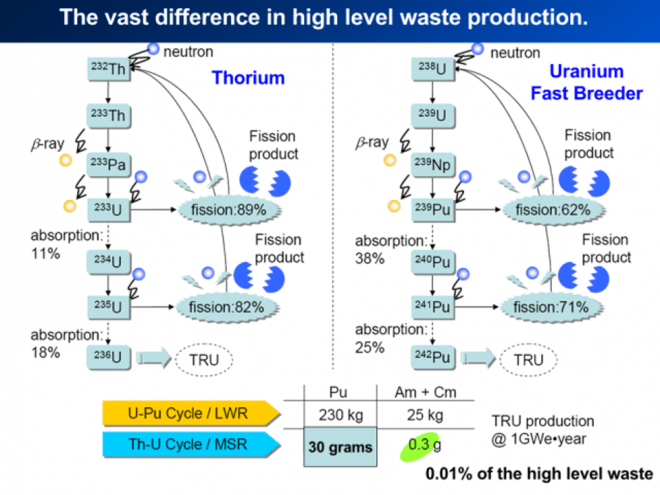
 A Thorium based fast breeder nuclear reactor produces much less TRansUranium waste, 0.012% waste products compared to a Uranium-235/238  fast breeder with between 3 and 8% U235. The Thorium process has a much higher efficiency of fission than  the Uranium process. See the figure below.

Pu = Plutonium, Am = Americum, Cm = Curium, all TRansUraniums, nasty stuff.

With Thorium based Nuclear power, there are few storage problems, with traditional U235 power long tern storage is an immense and urgent problem, and has been since the 1960’s. At that time Sweden had a heavy water  U-238 nuclear power program going using unenriched Uranium, but abandoned it in favor of traditional U-235 enriched nuclear power, because U.S. promised to provide the material and take care of the reprocessing and final storage of all nuclear waste at cost if Sweden joined the nuclear proliferation treaty. Reprocessing was to be done in Washington State, and one of the final storage sites mentioned was Yucca Mountain in Nevada, having the ideal geological properties.

Time went by and in 1982 – Congress passed the Nuclear Waste Policy Act, requiring the establishment of a deep geologic repository for nuclear waste storage and isolation. Yucca Mountain was high on the list out of of 9 possible sites.

Time goes by, and Congress is still not able to decide on a solution. Meanwhile, TRU’s from spent and reprocessed fuel is piling up in less than ideal locations. There is now more than a quarter million metric tons of highly radioactive waste in storage near nuclear power plants and weapons production facilities. Thorium based nuclear power would go a long way to alleviate this problem.

Kente cloth, a royal symbol of power, slave ownership and slave trade. A Limerick

This explains a lot.

The kente cloth stemming from Ghana

A symbol of black africana

Worn by kings who sold slaves

They got guns, even trades,

Pelosi, her slave trade persona.

This helps to explain the strange scene that Nancy Pelosi, Chuck Schumer and 33 other Democrats performed on Monday to commemorate the death of George Floyd

Mandatory Credit: Photo by MICHAEL REYNOLDS/EPA-EFE/Shutterstock (10673442i)
US Speaker of the House Nancy Pelosi (C) and Democratic lawmakers kneel while observing a moment of silence to honor George Floyd and victims of racial injustice, on Capitol Hill in Washington, DC, USA, 08 June 2020. The death of George Floyd while in police custody in Minneapolis has sparked global protests demanding policing reform.
US Speaker of the House Nancy Pelosi and Democratic lawmakers observe a moment of silence for George Floyd, Washington, USA – 08 Jun 2020

eef1ec67c0f2b1dabaeaf7cfca667461148d6925ef46f135886142c9c5607c13


Teaching online at Penn State University. All real breakthroughs occur at the crossroads of science. This is an opportunity!

I have always loved to teach. I especially enjoyed the person to person contact when you tell of something and get a smile back – they got it. One of the objects of teaching the so called Capstone Course for engineers to be is to teach cross-science, for it is in the intersection between different branches of science, crafts and engineering disciplines that real breakthroughs are made. The object is to revolutionize the students thinking. Up to now they have learnt – and learnt it well – do as your teacher have taught you, and you will get an A. Any deviation is a negative – and bothersome for the teacher. This is an attempt for me to change that – even in an online session, but since there is no direct feedback, it is really an offline instruction. see what you think – did it change your thinking?


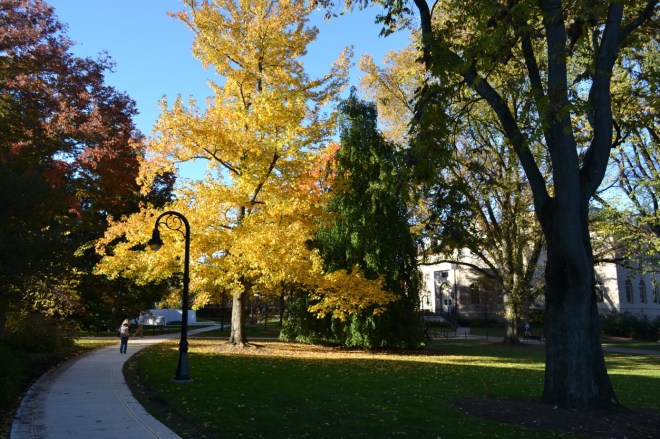
This tree, the green one was planted upside down. The branches became roots, the roots became branches. It is planted just east of  Penn State Main building. Think root cause analysis.

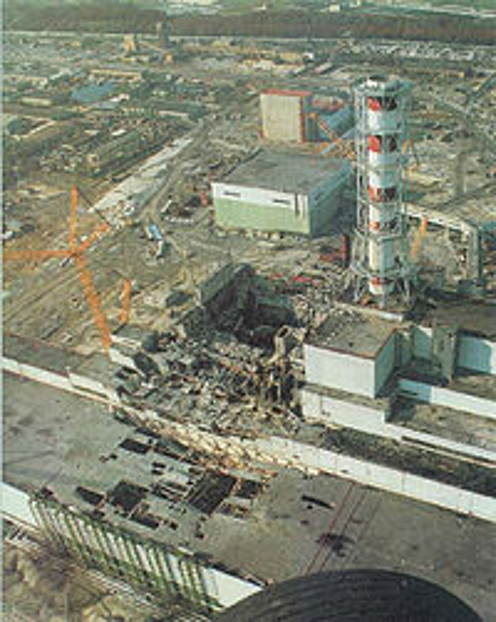
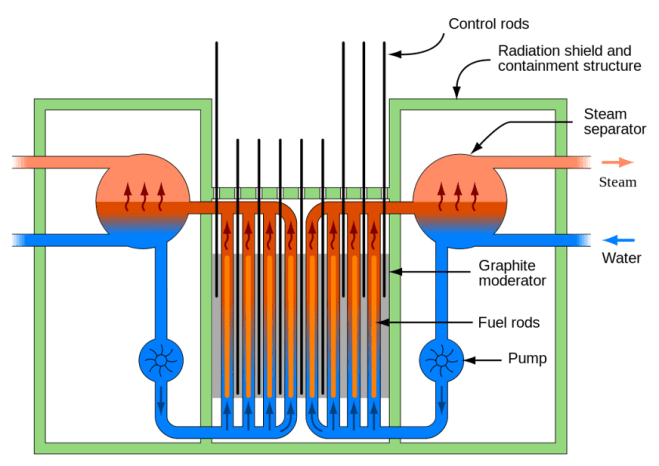
Chernobyl was a carbon moderated Nuclear reactor. Its failure mode was to go prompt critical and splat in an uncontrolled nuclear reaction. No containment vessel could contain the explosion, so why go to the extra expense of building one? Rely instead on multiple safety circuits. The night crew disabled some safety circuits to capture power on an orderly shutdown. They had never been properly trained.

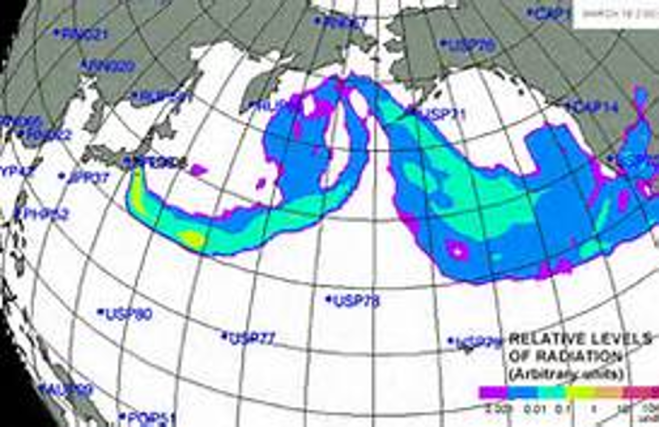
The cloud. Sweden was the first to report on the accident. Two reactors shut down due to excessive radiation in the air outside the plants.

With a Molten Salt Reactor, accidents like Chernobyl are impossible. The Three Mile Island accident was bad. The Chernobyl disaster was ten million times worse. Ah yes, I remember it well.

One morning at work, after the Three Mile Island incident, but before Chernobyl a fellow co-worker, a Ph.D. Chemist working on an Electron Capture Detector containing a small amount of Nickel 63, came with a surprising question: You know nuclear science, how come the reactors in Chernobyl don’t have a containment vessel? Well – I answered, it is because they are carbon moderated and their failure mode is that they go prompt critical, and no containment vessel in the world can hold it in, so they skip it. He turned away in disgust. A few weeks later my wife’s father died, and we went to Denmark to attend the funeral. The day of the return back to the U.S. we heard that there had been a nuclear incident in Sweden, too much radiation had caused two nuclear power stations to close down. The Chernobyl disaster had happened 26 April 1986, and this was the first time anyone outside of Chernobyl has heard about it, two days later. This was still the Soviet Union, and nothing ever did go wrong in it worthy of reporting.

(But the carbon moderated Uranium reactors are the most efficient in producing Pu-239 the preferred nuclear bomb material.)

This has nothing to do with anything, but Chernobyl can be translated wormwood. It is mentioned in the Bible, Revelation 8: 10-11 “ And the third angel sounded, and there fell a great star from heaven, burning as it were a lamp, and it fell upon the third part of the rivers, and upon the fountains of waters; And the name of the star is called Wormwood: and the third part of the waters became wormwood; and many men died of the waters, because they were made bitter.

Molten Salt Thorium reactors cannot be used to supply bomb material, and they are far safer than even Light water Uranium reactors.

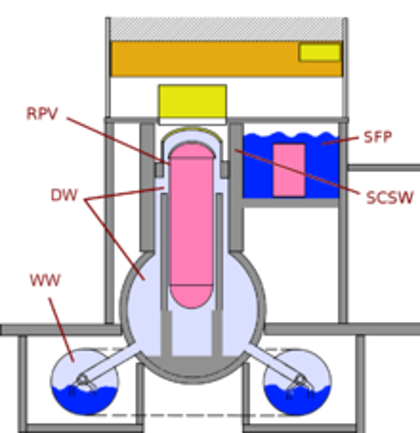
With Molten Salt Reactors, a catastrophe like Fukushima cannot happen.  It began with a magnitude 9.0 earthquake not far from the Fukushima 6 Nuclear reactor complex. The impact was a magnitude 6.8 earthquake and the operators immediately scrammed the safety rods to stop all the reactors. This succeeded! The reactors were designed with earthquakes in mind, and they passed the test. The backup power started up successfully so the cooling pumps could operate. There was one major problem though. The earthquake was so bad that the water in the spent fuel holding tanks splashed out and exposed the spent fuel rods to air making them emit radioactivity into the air.

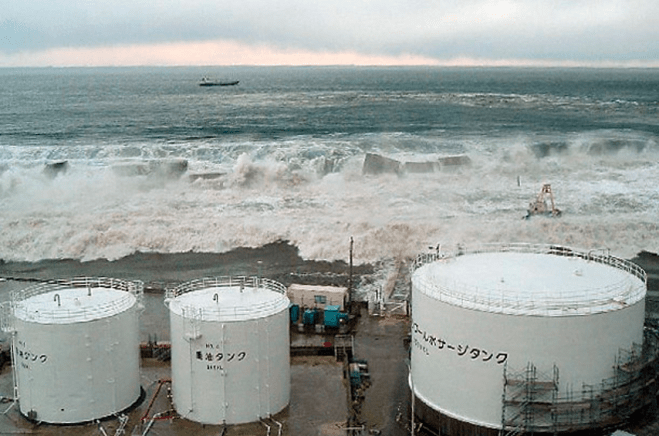
The water pumps worked for a while, but then came the tsunami. All the reactors were inside a tsunami wall, so far, so good

But the fuel storage tanks for the backup power generators were outside the tsunami wall and were washed away. The batteries were only supposed to last until backup power was established, and with water circulation ended the meltdown started.

This disaster was even bigger than Chernobyl and contamination is still spreading.

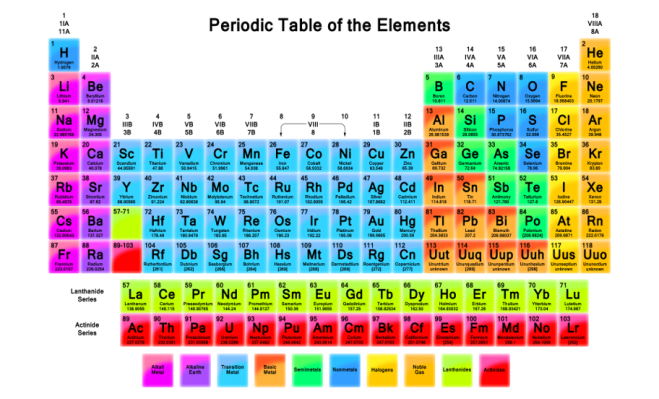
In the periodic table, iron has the densest core. Fusion can occur with elements with a lower atomic number than iron, fission can begin with  with elements after lead. What happens in a supernova?

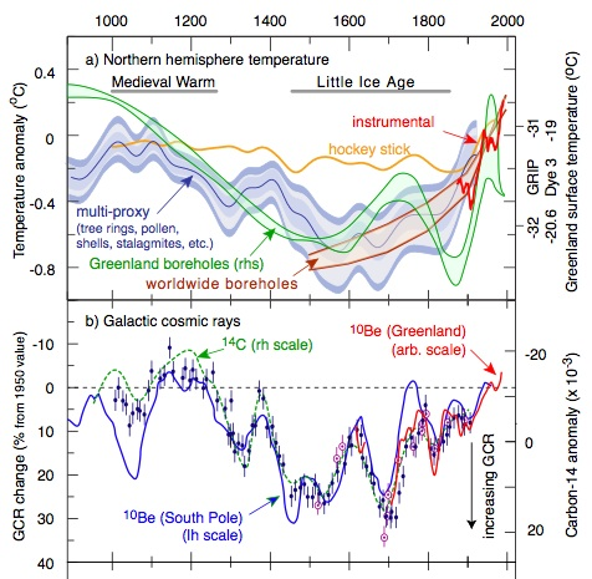
On climate change: Temp records come from boreholes, seashells, and looking at isotope variations among other sources . Of particular interest is the medieval warm period and the little ice age. How did the little ice age happen? There was no decrease in CO2 during that time.

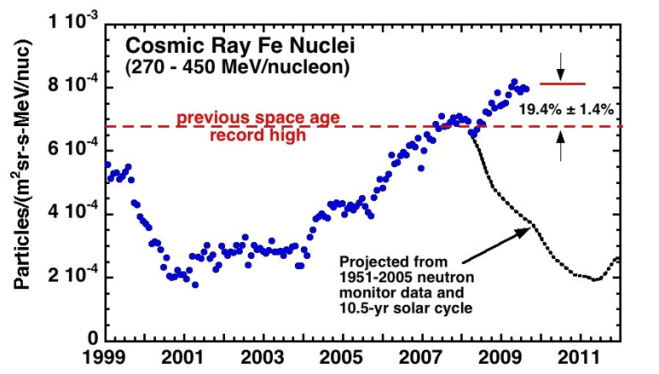
Especially interesting is cosmic radiation that does not come from the sun. It varies a lot, and consists mostly of iron nuclei and comes from distant supernovas. There was two of them, in 1572 and 1604 A.D., both shone brighter in the sky than Venus. Since then we have not seen any supernovas anywhere nearly as bright . Did they trigger the little ice age?

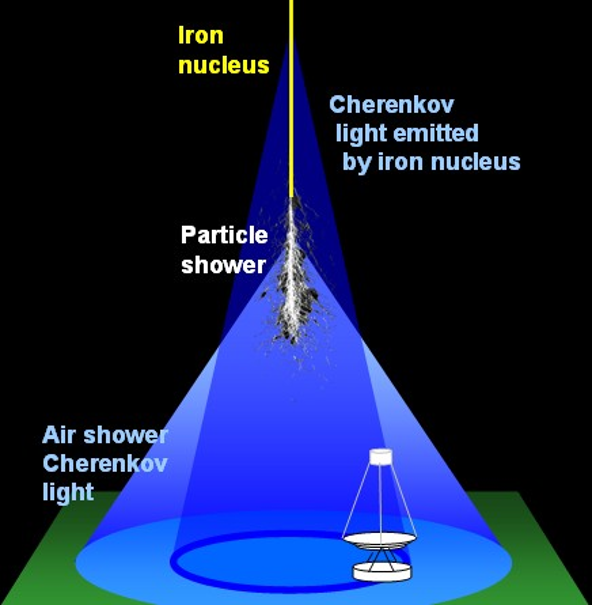
A single iron nucleus can ionize thousands of air molecules, causing condensation and forming the beginning of a cloud.

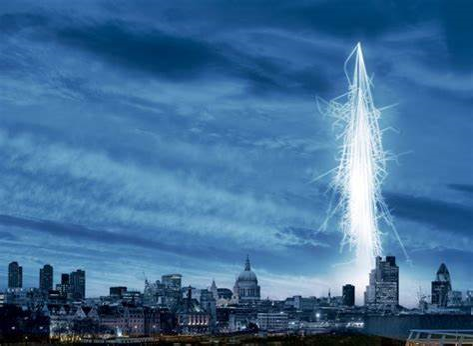
The iron nuclei enter the earth’s atmosphere with a speed that exceeds the speed of light in atmosphere, causing this eerie blue light. It spreads like a sonic boom.

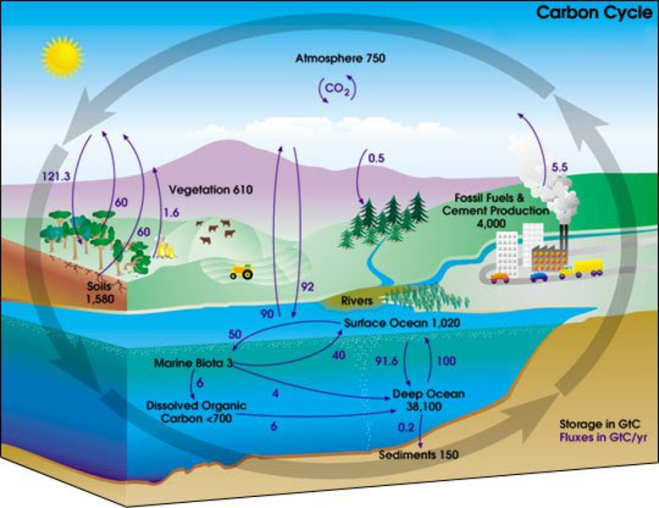
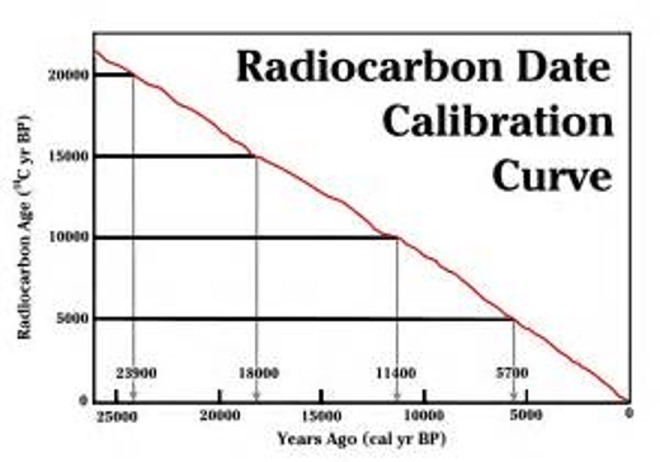
Cosmic radiation in the form of iron nuclei is the major source of the generation of Carbon 14. When fossil fuel is burned there is very little C14 in the CO2 generated, but if it is burned by digestion of food, by fermentation, by burning wood or by wildfire, it contains the same concentration of C14 as was in the air at the time of the generation of the biomass. Since C14 has a half life of  5700 +- 40 years, we could find out the age of that biomass – or could we?

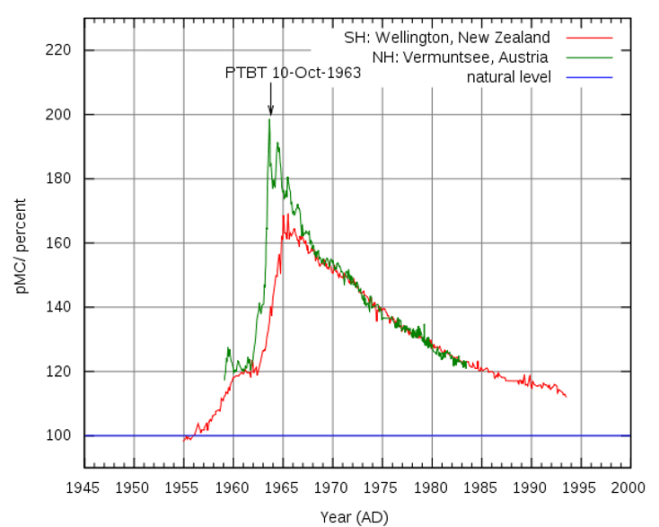
This is one of my very favorite slides. The best way of finding out how a black body responds is by introducing an impulse and see what happens. In this case the impulse was open air Nuclear bomb tests, performed mostly by United States and the Soviet Union, but all in the Northern Hemisphere. Test stations to see the amount of C14 in the air were set up in Austria and New Zealand. What did we learn? We learn that the air mixes between the Northern and the Southern Hemisphere in about 2 years, and because the half-life of C14 shown here is 12.5 years, not 5700 years, it shows the absorption rate in the oceans. Both of these values would have been difficult if not impossible to find out without open air Nuclear tests, Were they bad? You bet, but since they happened, glean what you can from it. What else did we learn? You can no longer use carbon dating if there is any chance of chance of contamination with newer biomass, or if it is newer than 1955 A.D. Is the specimen appearing to be older or younger?

Since we have shown that the amount of C14 in the air has not been constant over time the age curve has to be calibrated. How do we do that? By using artifacts of known age.

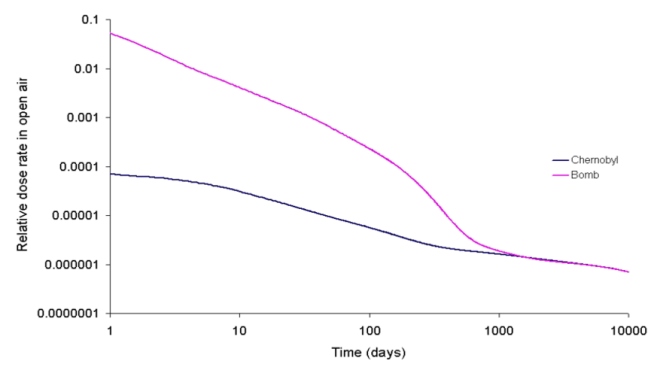
The radioactive fallout decay from a Nuclear test occurs faster than from the Chernobyl disaster. Every nuclear fallout fingerprint is different.

A Liquid Fluoride Thorium based fast breeder nuclear reactor produces much less TRansUranium waste, 0.01% waste products compared to a Uranium-235 fast breeder. The Thorium process has a much higher efficiency of fission than  the Uranium process.

Pu = Plutonium, Am = Americum, Cm = Curium, all TRansUraniums, nasty stuff.

With Thorium based Nuclear power, there are no real problems, with traditional U235 power long tern storage is an immense and urgent problem, and has been since the 1960’s. At that time Sweden had a heavy water  U-238 nuclear power program going, but abandoned it in favor of traditional U-235 power. U.S. promised to provide the material and take care of the reprocessing and final storage of all nuclear waste at cost if Sweden joined the nuclear proliferation treaty. Reprocessing was to be done in Washington State, and one of the final storage sites mentioned was Yucca Mountain in Nevada, having the ideal Geological properties.

Time goes by and in 1982 – Congress passed the Nuclear Waste Policy Act, requiring the establishment of a deep geologic repository for nuclear waste storage and isolation. Yucca Mountain was high on the list out of 9 possible sites.

Time goes by, and Congress is still not able to decide on a solution. Meanwhile, TRU’s from spent and reprocessed fuel is piling up in less than ideal locations. Thorium based nuclear power would go a long way to alleviate this problem.

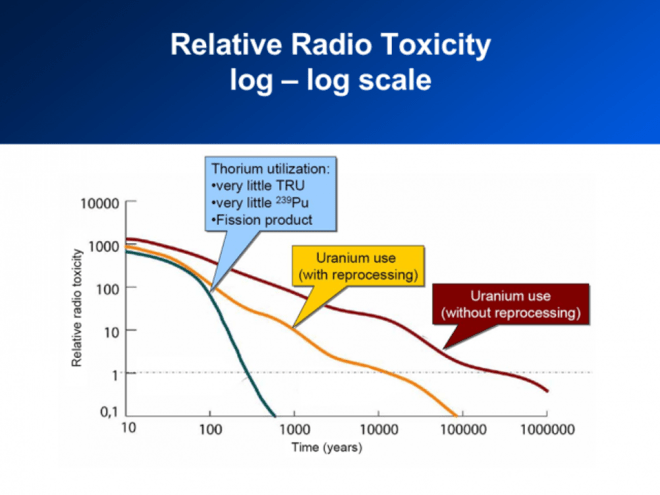
Radioactive waste from an LFTR (Liquid Fluoride Thorium Reactor)  decays down to background radiation in 300 years instead of a million years for U-235 based reactors. Initially LFTRs produce as much radioactivity as an U-235 based nuclear reactor, since fission converts mass to heat, but the decay products have a much shorter half-life.

And Fukushima is still aglow.

The first thing we must realize is that rare earth metals are not all that rare. They are a thousand times or more abundant than gold or platinum in the earth crust and easy to mine, but a little more difficult to refine. Thorium and Uranium will also be mined at the same time as the rare earth metals since they appear together in the ore.

The U.S. used to have a strategic reserve of rare earth metals, but that was sold off in 1998 as being no longer cost effective or necessary. Two years later the one U.S. rare earth metals mine that used to supply nearly the whole world, the Mountain Pass Mine in California closed down, together with its refining capacity. From that day all rare earth metals were imported. In 2010 it started up again together with the refining capacity but went bankrupt in 2015, closed down the refining but continued selling ore to China. They will start up refining again late 2020. Meanwhile China is slapping on a 25% import tariff on imported ore starting July 1 2020. Rare earth metals may be in short supply for a while.

U.S. used to be the major supplier of rare earth metals, which was fine up to around 1984. Then the U.S. regulators determined that Uranium and Thorium contained in the ore made the ore radioactive, so they decided to make rare earth metal ore subject to nuclear regulations with all what that meant for record keeping and control. This made mining in the U.S. unprofitable so in 2001 the last domestic mine closed down. China had no such scruples, such as human and environmental concerns, so they took over the rare earth metals mining and in 2010 controlled over 95% of the world supply, which was according to their long term plan of controlling the world by 2025.


The Iranian nuclear deal null and void! A Limerick.

The Iranian Nuclear appeasement:

For Mullahs was quite an achievement.

In a year, give or take

there’ll be nukes, much at stake.

It’s time for a real peace agreement.

According to an article in Iran Watch (http://www.iranwatch.org/our-publications/articles-reports/irans-nuclear-timetable) Iran has enough Uranium to make a number of Nuclear bombs in a very short time.

Using their 6000+ centrifuges agreed to under this contract they can produce 1 nuclear bomb in 1 year assuming they only use the 5060 Ir-1 centrifuges allowed to be operated under the contract and use only natural Uranium as fuel (0.7% U235).

If they use all 9000 existing separators they can produce 1 bomb in 6.8 months. In fact, they have been running them since negotiations began and have now reached the limit of 300  Kg reactor grade Uranium (3.5% U235), enough to produce one Nuclear bomb.

Since they did break the contract Sunday July 7, they are free after 35 days to use all 9000 centrifuges to produce weapons grade Uranium at the rate of 1 bomb every seven weeks.

They also have 1080 IR-2 centrifuges currently not yet operating, far more efficient than the IR- 1 centrifuges ready to be started up.

In addition they have 20% enriched Uranium in the form of yellow cake. This used to be UraniumHexaFlouride gas, ready for further enrichment. According to the agreement it was “neutralized” into yellow cake so it couldn’t be further enriched. It takes less than two weeks to convert it back to gas, and another two weeks to enrich it to weapons grade Uranium. They have enough of this to make 1 bomb.

So, this is why the Mullahs exclaimed: We Won! Death to America!

After the contract is finally totally broken the first bomb will be ready less than 1 month, after that, 1 bomb every seven weeks!

And then again, who is to say that they do not already have nuclear bombs? Deep down in mountains are their military “research” facilities dug down, impervious to normal bombs, with radiation shielding doors so no external measurements can be made by nuclear inspectors. In a side deal, the Iranians are going to do the inspections themselves to assure all is above board and no cheating occurs.

Quite a negotiating feat for the Obama administration!

No wonder president Trump did not force congress to ratify it as a treaty, but declare it no longer valid!

China is seriously considering restricting rare earth exports to the US. Why is that important?

One week ago, President Xi and Vice Premier Liu He, China’s top trade negotiator, visited a rare earth metals mine in Jiangxi province. This has led to the rumor that China is seriously considering restricting rare earth exports to the US. China may also take other countermeasures in the future. The trade negotiations between U.S. and China got a lot more serious. It extends far beyond tariffs and intellectual property, it now involves strategic materials.

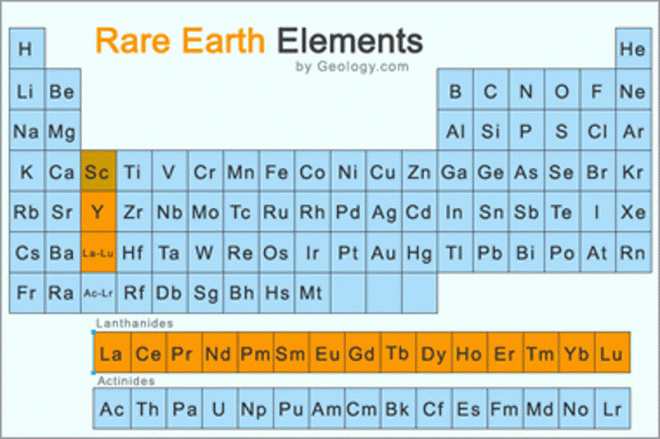
The first thing we must realize is that rare earth metals are not all that rare. They are a thousand times or more abundant than gold or platinum in the earth crust and easy to mine, but a little more difficult to refine. Thorium and Uranium will  also be mined at the same time as the rare earth metals since they appear together in the ore.

Related image

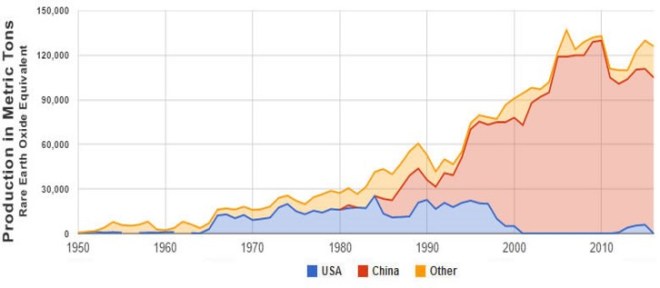
U.S. used to be the major supplier of rare earth metals, which was fine up to around 1984. Then the U.S. regulators determined that Uranium and Thorium contained in the ore made the ore radioactive, so they decided to make rare earth metal ore subject to nuclear regulations with all what that meant for record keeping and control. This made mining in the U.S. unprofitable so in 2001 the last domestic mine closed down. China had no such scruples, such as human and environmental concerns, so they took over the rare earth metals mining and in 2010 controlled over 95% of the world supply, which was according to their long term plan of controlling the world by 2025.

Rare Earth Element Production

The U.S. used to have a strategic reserve of rare earth metals, but that was sold off in 1998 as being no longer cost effective or necessary. Two years later the one U.S. rare earth metals mine that used to supply nearly the whole world, the Mountain Pass Mine in California closed down, together with its refining capacity. From that day all rare earth metals were imported. In 2010 it started up again together with the refining capacity but went bankrupt in 2015, closed down the refining but continued selling ore to China. They just announced they will start up refining again late 2020. Meanwhile China is slapping on a 25% import tariff on imported ore starting July 1. Rare earth metals may be in short supply for a while.

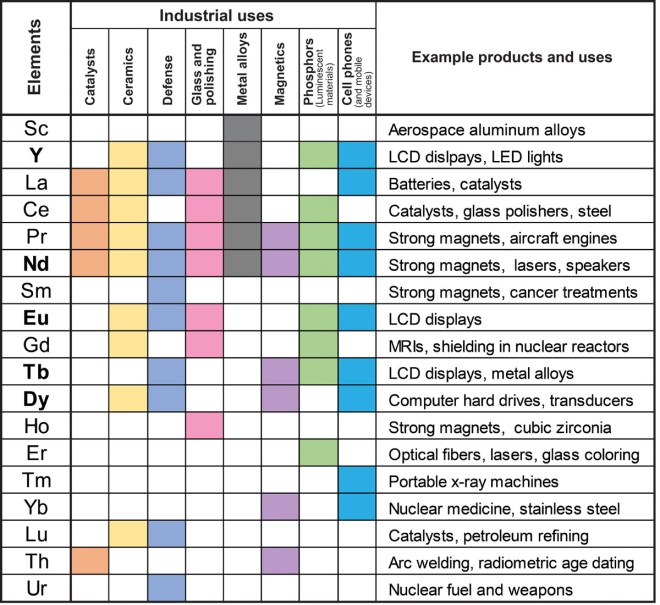
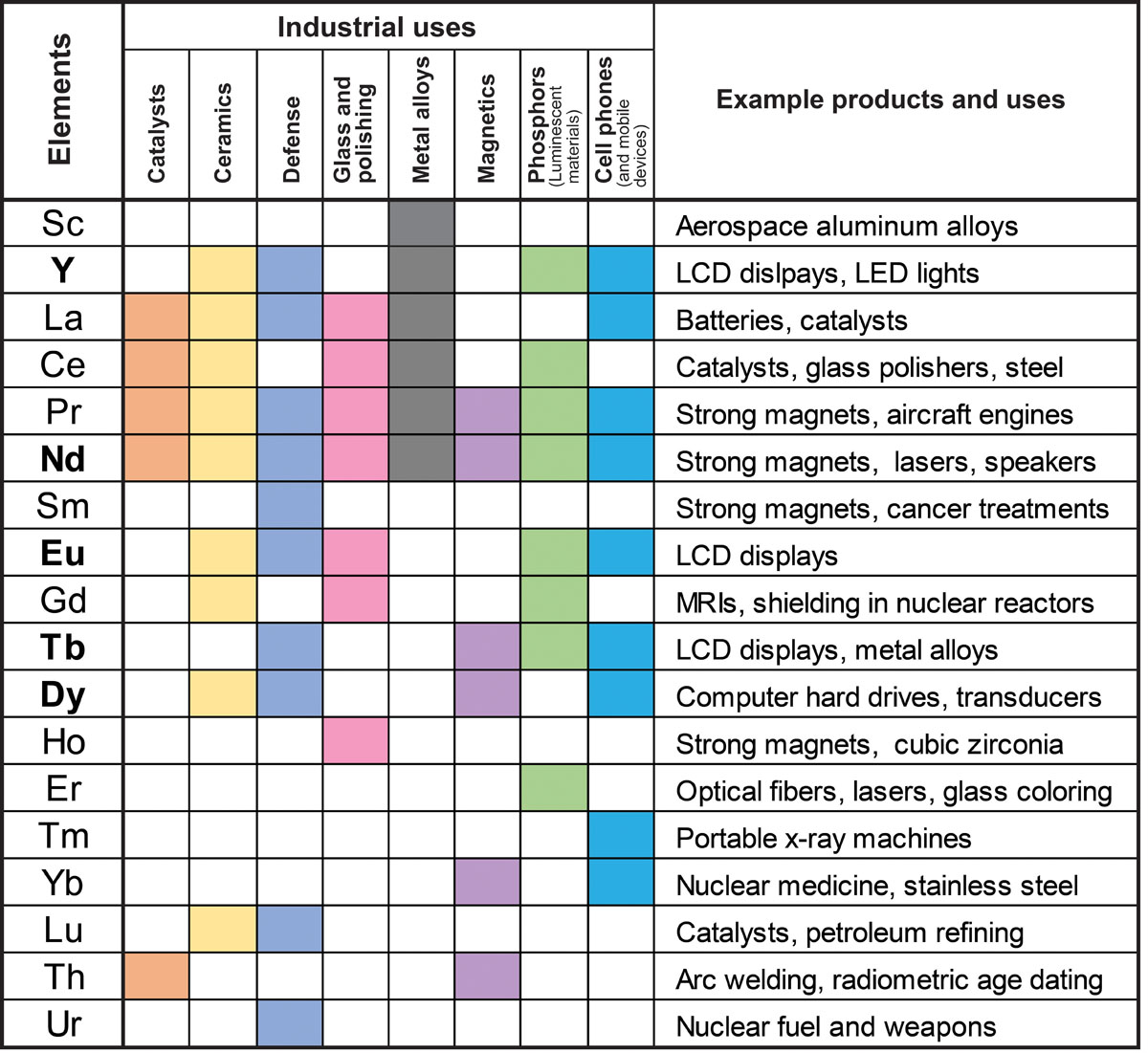
So, why is this important? Just take a look at all the uses for rare earth metals. The most sought after pays all the cost of mining and refining, and the rest are readily available at nominal cost.

The Chinese almost got away with it, and that is but one reason the trade negotiations are so complicated and hard fought, but necessary. Donald Trump fights for reciprocity and fair competition.

The need to develop Thorium based Nuclear Energy as the major electric energy supply. 3. One ten-thousandth of the TRansUranium waste compared to a U-235 based fast breeder reactor.

 A Thorium based fast breeder nucear reactor produces much less TRansUranium waste, 0.01% waste products compared to a Uranium-235 fast breeder. The Thorium process has a much higher efficiency of fission than  the Uranium process. See the figure below.

Pu = Plutonium, Am = Americum, Cm = Curium, all TRansUraniums, nasty stuff.

With Thorium based Nuclear power, there are no real problems, with traditional U235 power long tern storage is an immense and urgent problem, and has been since the 1960’s. At that time Sweden had a heavy water  U-238 nuclear power program going, but abandoned it in favor of traditional U-235 power. U.S. promised to provide the material and take care of the reprocessing and final storage of all nuclear waste at cost if Sweden joined the nuclear proliferation treaty. Reprocessing was to be done in Washington State, and one of the final storage sites mentioned was Yucca Mountain in Nevada, having the ideal Geological properties.

Time goes by and in 1982 – Congress passed the Nuclear Waste Policy Act, requiring the establishment of a deep geologic repository for nuclear waste storage and isolation. Yucca Mountain was high on the list out of of 9 possible sites.

Time goes by, and Congress is still not able to decide on a solution. Meanwhile, TRU’s from spent and reprocessed fuel is piling up in less than ideal locations. Thorium based nuclear power would go a long way to alleviate this problem.