Matthew 4:12-25, the calling of the first disciples, Jesus early ministry.

Matthew 4:12-25, the calling of the first disciples, Jesus early ministry.

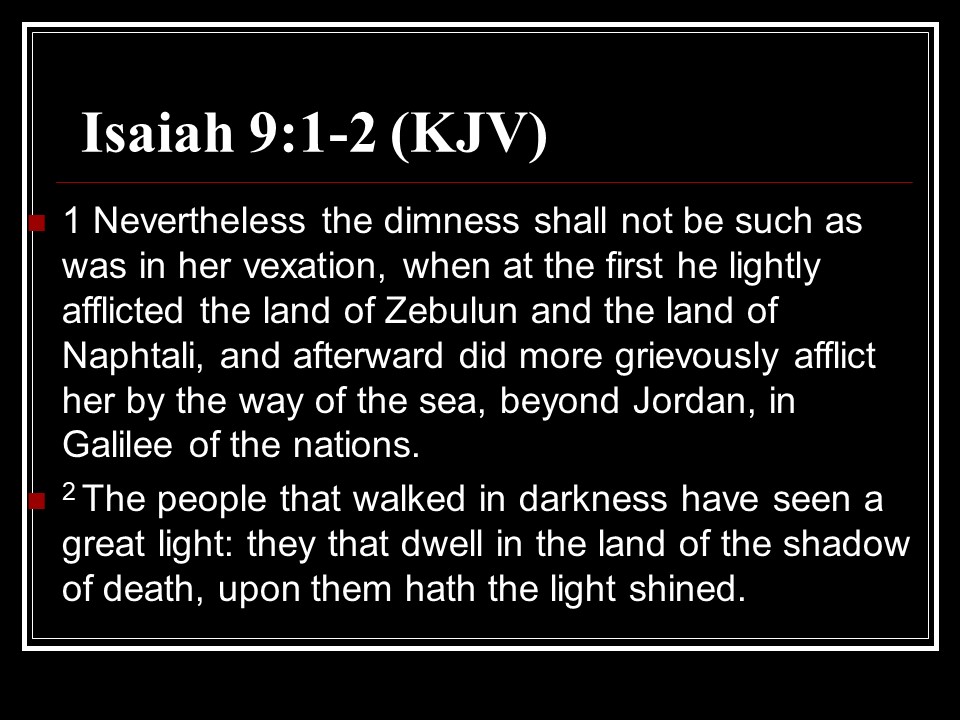
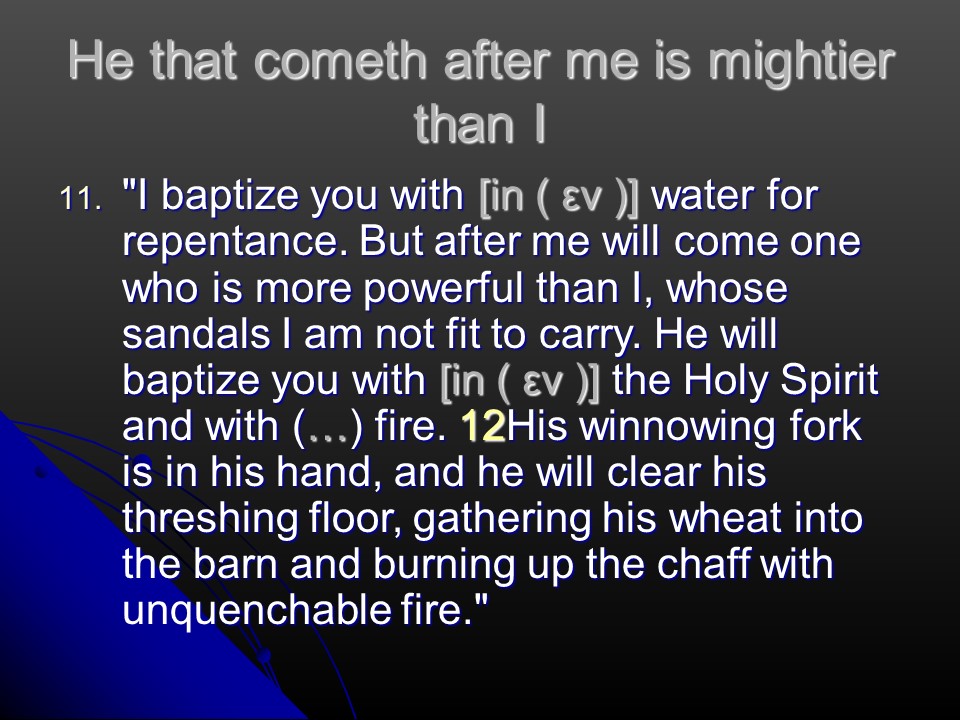
The prophecy in Isaiah 9 begins in doom and gloom, but promises the great light.

And Isaiah 9:6-7 is two of the most wonderful verses in all of scripture.


Matthew calls it “the Kingdom of Heaven, the other Gospels “the Kingdom of God”. It means the same.  “My Kingdom is not of this world”


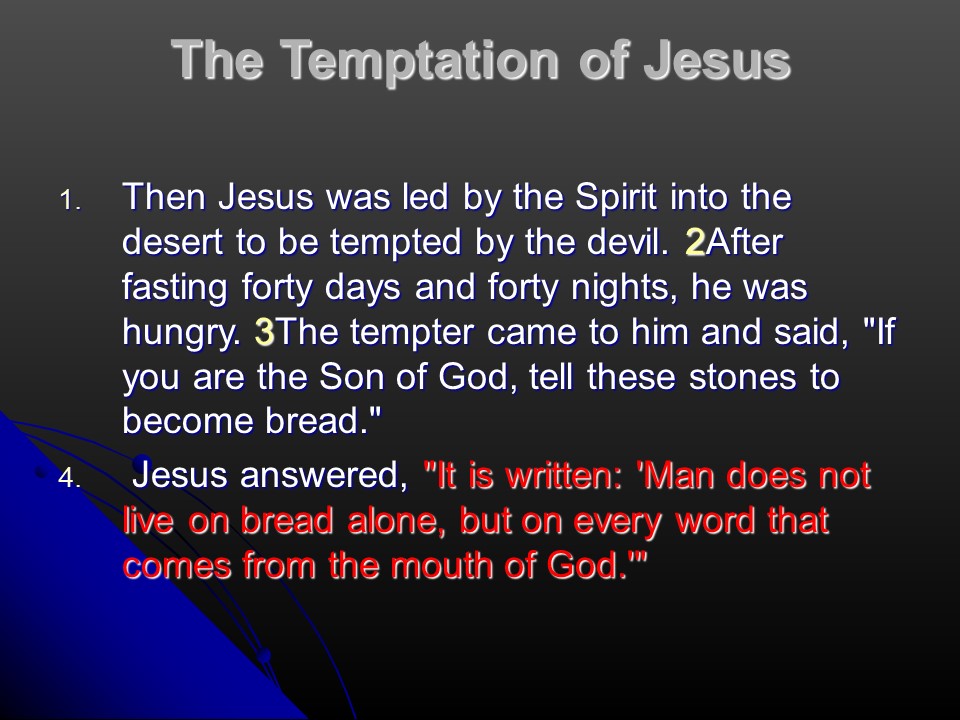
Matthew 4:1-11, the Temptation of Jesus.

Matthew 4:1-11, the Temptation of Jesus.

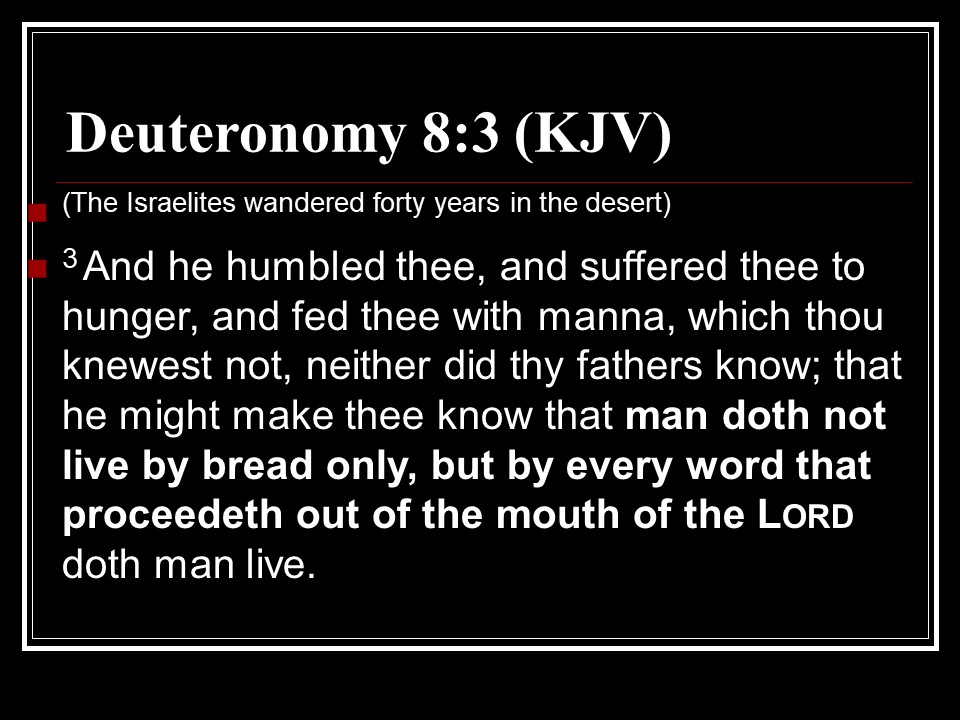
The tempter appeals to Jesus to show His power over the elements, Jesus answers back with scripture.

Matthew4

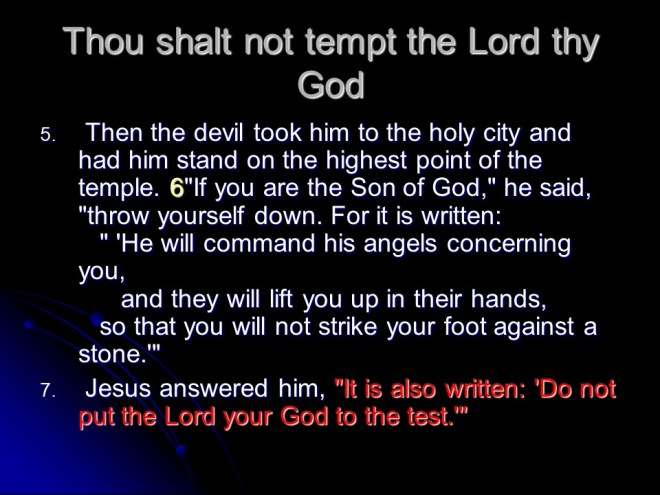
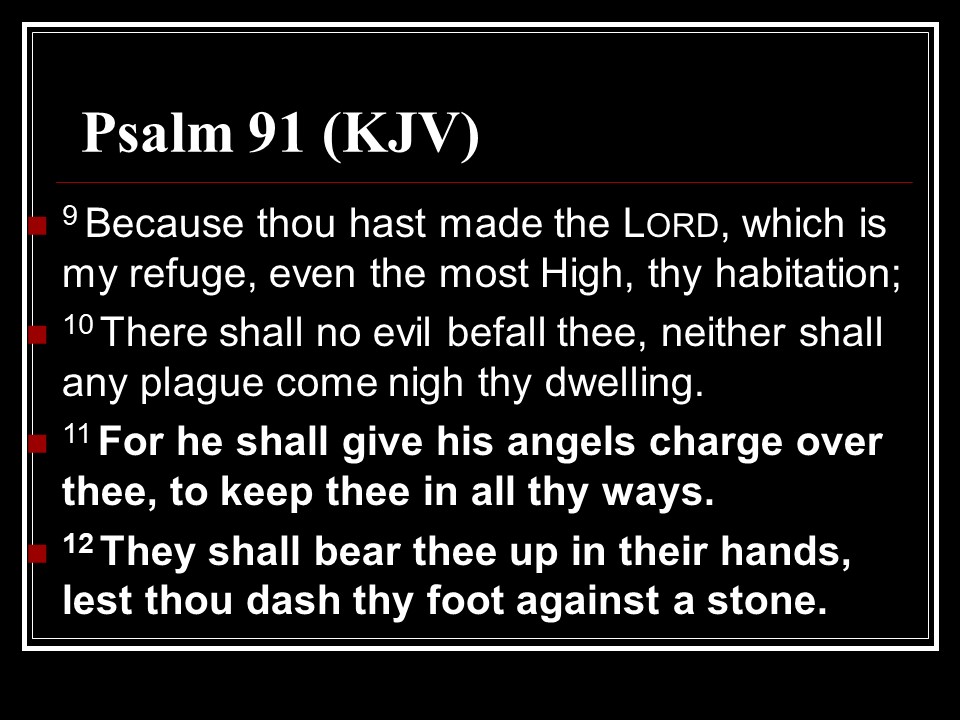
The tempter is wising up. Now he is using scripture to tempt Jesus.


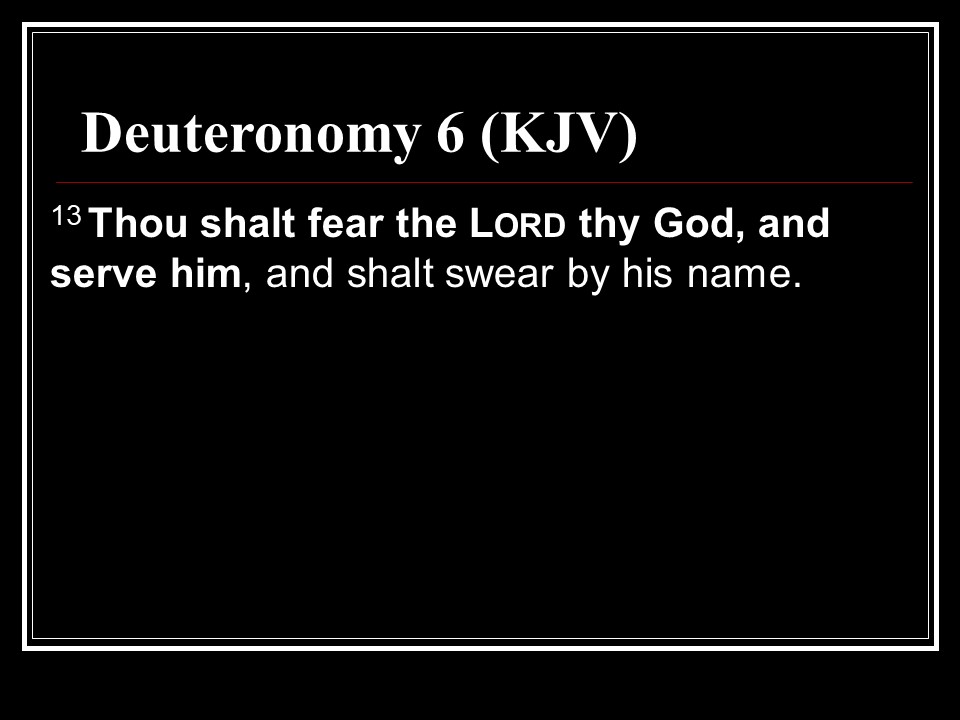
Jesus answers back with scripture.

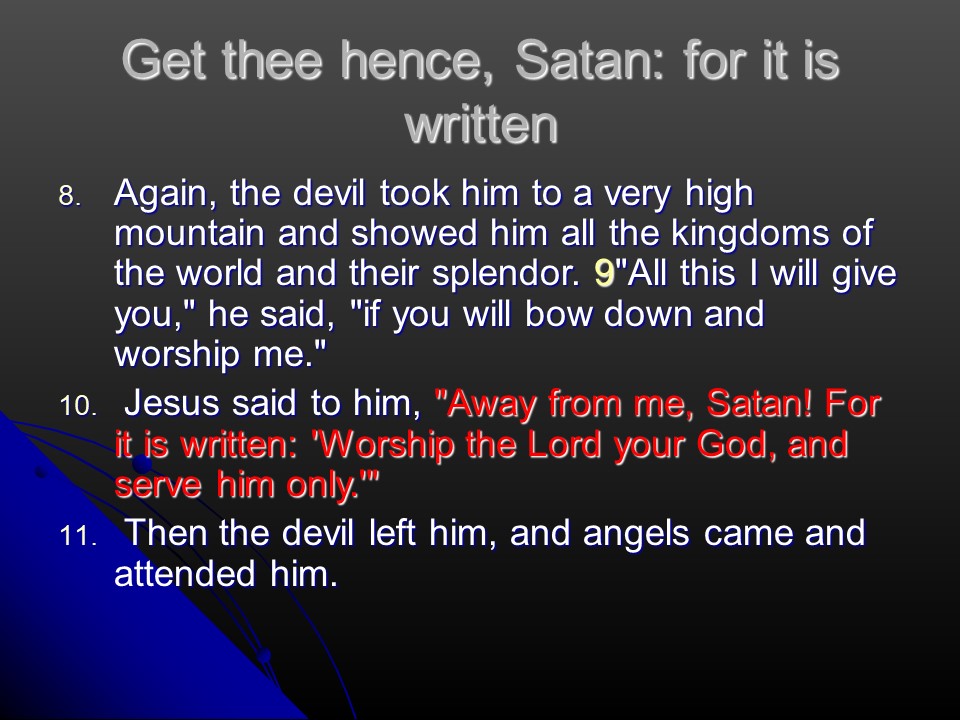
Finally the tempter appeals to Jesus vanity. This always works, except this time. Jesus answers back with scripture.

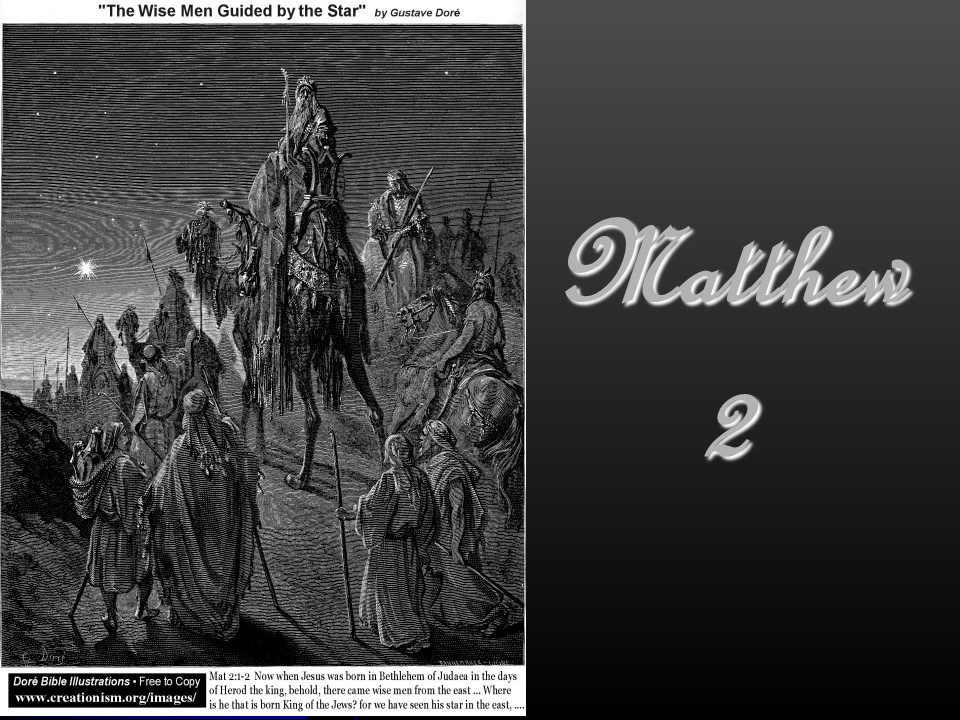
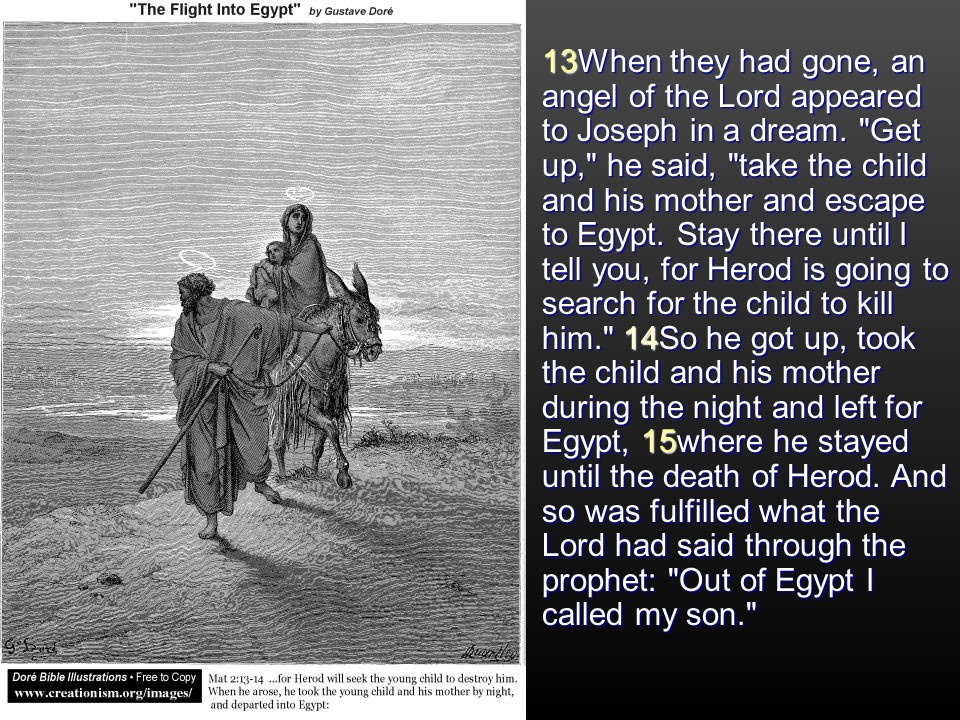
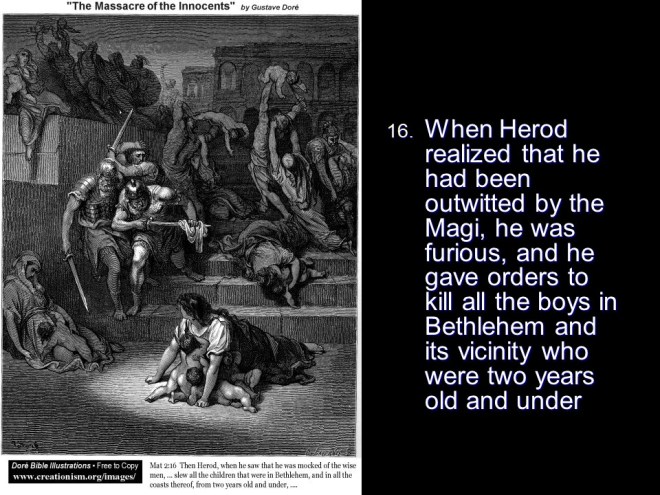
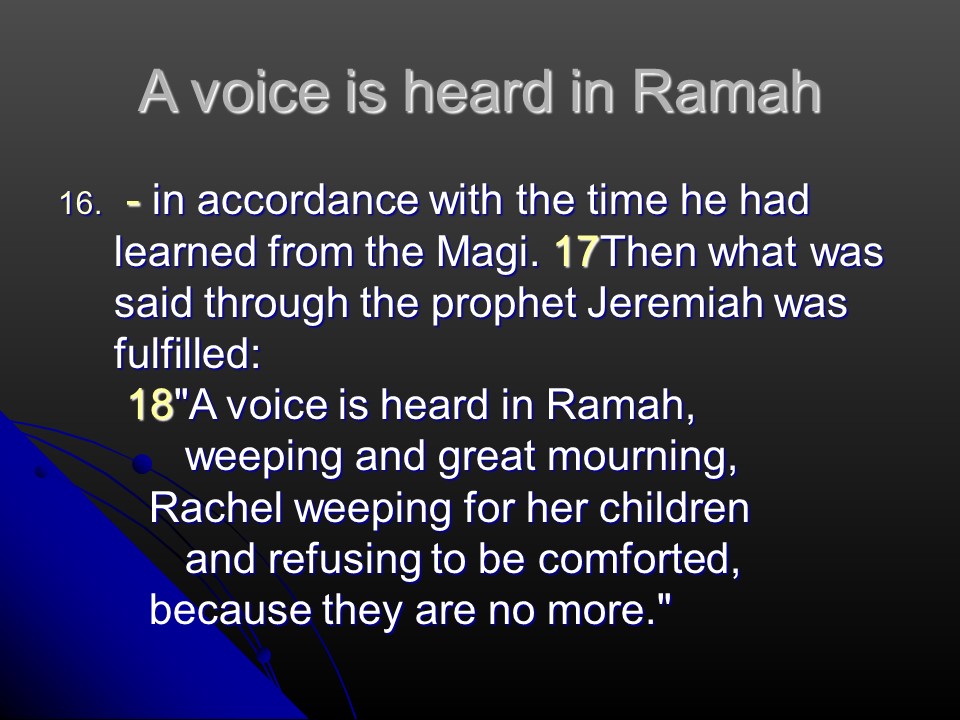
Matthew 2: 13-23, the flight to Egypt, the massacre in Ramah and the return to Nazareth.

Matthew 2: 13-23, the flight to Egypt, the massacre in Ramah and the return to Nazareth.

Matthew27

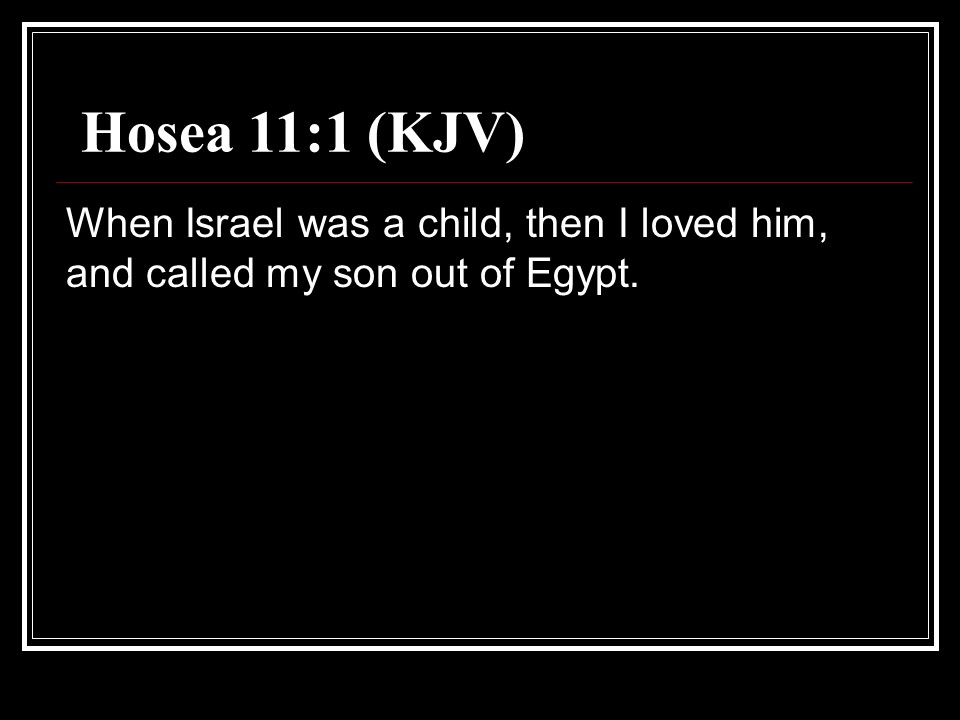
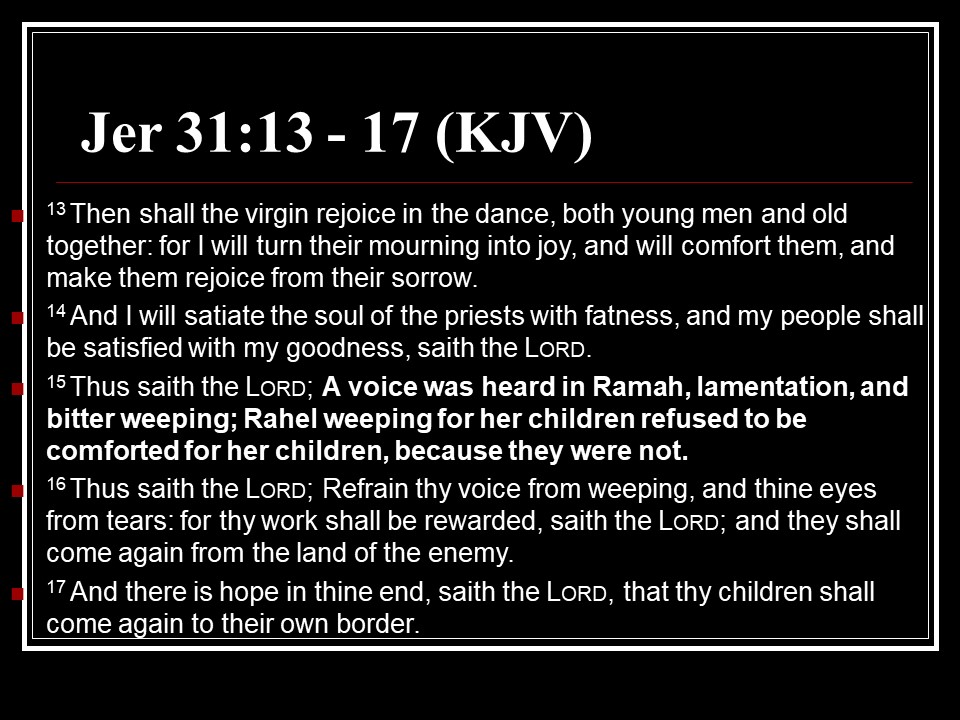
This passage is particularly interesting, with verse 15 put in the middle of a passage full of the most wonderful promises for Israel, ending with “a woman shall encompass a man.”

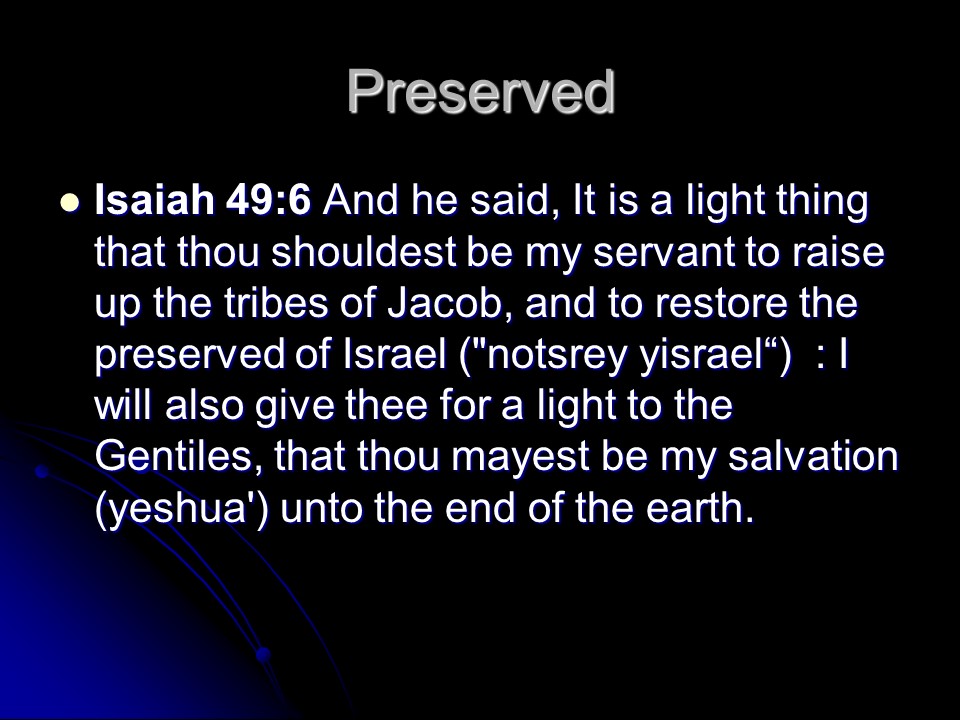
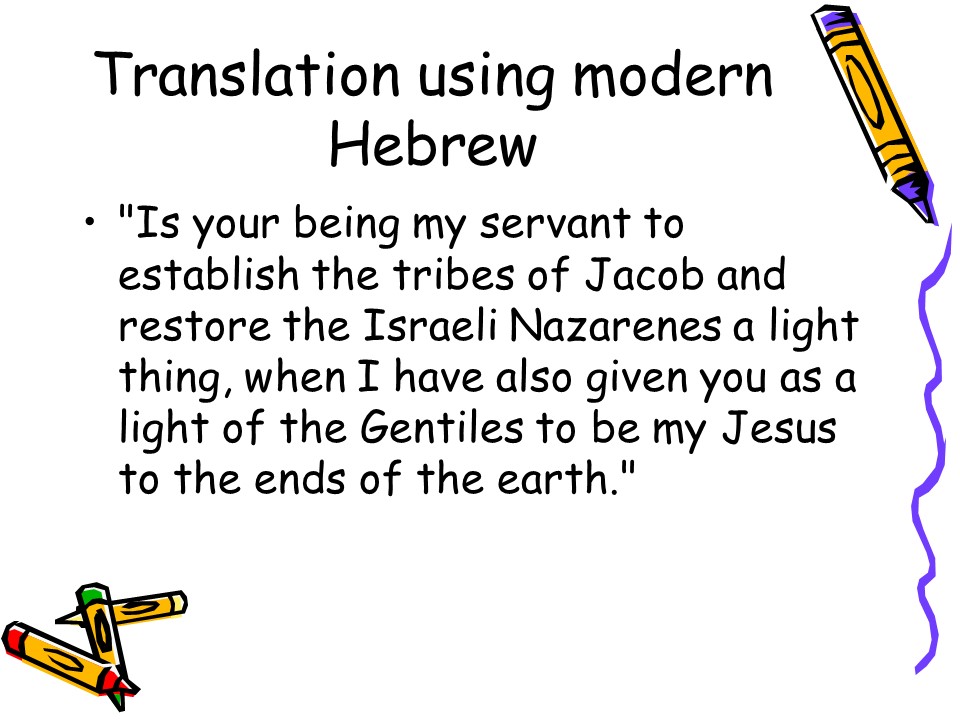
One of the possible sources for the  last quote:

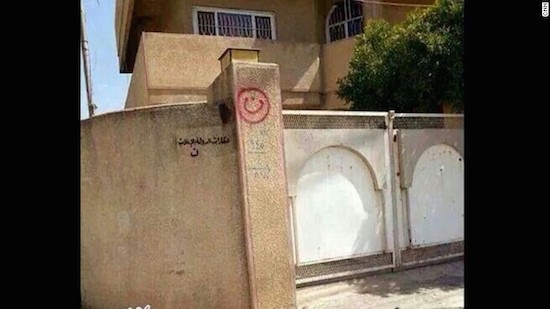
In the Arab world, Christians are named Nazarenes, symbolized with the letter ‘Nun’ .

It was painted on Christian homes in Mosul  during the ISIS occupation, and Christians were systematically removed and some of  them killed.

Exclusive CNN images capturing the homes of Christian families forced to leave the city by ISIS

February 23, read through the Holy Bible in a year in Power-point, with comments.

Today there are four chapters to read, ponder the significance of the resurrection in Matthew 28. The three first chapters in Numbers are interesting for historians.

February 23: Matthew 28, Numbers 2, Numbers 3, Numbers 4 (click on the chapter to begin reading)

Matthew 28 begins with Jesus being in the grave for the two adjoining sabbaths, the first day of unleavened bread followed by the normal sabbath, then there was an earthquake and the stone was rolled away. Jesus was no longer in the grave. The guards were bribed to tell the story that the disciples took the body, but two  women, the two Marys met the resurrected Jesus. He told them to tell the remaining disciples that he was risen from the dead. The Gospel of Matthew ends with Jesus giving the great commission: “All power is given unto me in heaven and in earth.  Go ye therefore, and teach all nations, baptizing them in the name of the Father, and of the Son, and of the Holy Ghost:  Teaching them to observe all things whatsoever I have commanded you: and, lo, I am with you always, even unto the end of the world. Amen.”

Numbers 2 tells how the tribes are to be arranged around the tabernacle, three to the east, three to the south, three to the west and three to the north and the Levites in the middle.

Numbers 3 lists the sons of Aaron and the Levites by clan.

Numbers 4 tells of the duties of the Kohathites, the Gershonites and the Merarites. Then these Levite clans are numbered.

February 22, read through the Holy Bible in a year in Power-point, with comments.

February 22: Matthew 27, Numbers 1 (click on the chapter to begin reading)

Matthew 27 depicts the longest day, beginning with Jesus being handed over to Pilate, the Roman governor; since the Jews did not have right to execute capital punishment. Judas hanged himself and the thirty pieces of silver given him in exchange for the betrayal of Jesus was used to buy the Potter’s field. Pilate tried to wiggle out of his role as a judge, his wife had warned him, so he came up with the idea to release one prisoner at Passover which was the custom. Pilate chose Jesus or Barabbas to be released and of the two the people chose Barabbas to be released and Jesus to be crucified. Pilate acquiesced to the mob and so Jesus was flogged by the soldiers for a public spectacle and then he was led away, but after the flogging Jesus was too weak to carry his own cross, so they forced Simon from Cyrene to carry Jesus cross all the way to the place of the skull, and there Jesus was crucified together  with two criminals. To identify Jesus they put an  inscription on the top of the cross “This is Jesus, the King of the Jews.” A number of prophecies were fulfilled during the crucifixion, and Jesus finally died on the cross. At that very moment the Temple veil was torn in two, from bottom to top and for the first time the holy of holiest was revealed. Jesus, now being dead was taken down from the cross and put in a tomb, a stone was rolled in front of the entrance and the tomb was sealed, and – this is important, they put up a guard to secure the tomb. Why did they do that? Think about that.
Numbers 1 consists of a listing of the heads of the people that left Egypt, the first census.

February 21, read through the Holy Bible in a year in Power-point, with comments.

Today’s reading in the gospel of Matthew deals with the events the two days before Jesus was crucified. In addition we read the last chapter of Leviticus.

February 21: Matthew 26Leviticus 27 (click on the chapter to begin reading)

Matthew 26 is enormous. It begins with the plot against Jesus, continuing with his anointing at Bethany, then Judas agreeing to betray Jesus for thirty pieces of silver, continuing with the Lord’s supper being initiated, Jesus predicting who is going to betray him, moving on to the Mount of Olives, where Jesus prayed in the garden of Gethsemane, where he prayed “Not my will, but yours be done,”after which he predicted Peter’s denial.  Jesus prayed three times and then came the betrayal and arrest of Jesus and he wss taken to the Sanhedrin to be interrogated. The chapter ends with Peter’s denial.

Leviticus 27 deals with redeeming people and property and what is to be dedicated to God.

February 20, read through the Holy Bible in a year in Power-point, with comments.

Today’s chapter in Matthew deals with parables about the kingdom of heaven, and the two chapters in Leviticus deal with the Sabbath year, the Year of the Jubilee, and rewards and punishments.

February 20: Matthew 25, Leviticus 25, Leviticus 26 (click on the chapter to begin reading)

Matthew 25 begins with the parable of the ten virgins, five with oil, five without oil. (Give me oil in my lamp, keep it burning). After that Jesus told the parable of the five, two and one talent given to three different people, the one with five made ten, the one with two doubled his talents, but the one with only one talent buried his. Jesus had his one talent taken away and be given to the one with ten talents. The moral of this parable is: Equal opportunity, not equal outcome. Finally Jesus gives the parable of the sheep and the goats, and the sheep are defined as those who do God’s will “You did it for me.”

Leviticus 25 defines the Sabbath year, a year of rest for the land,  and the year of the jubilee, the year when property is restored, rights redeemed, and slaves are set free. (As far as I know the year of the jubilee was never implemented)

Leviticus 26 tells of blessing for obedience and punishment for disobedience.