Genesis 40, the dreams of the cup bearer and baker, Joseph’s interpretation and their fate.

Joseph is in prison.

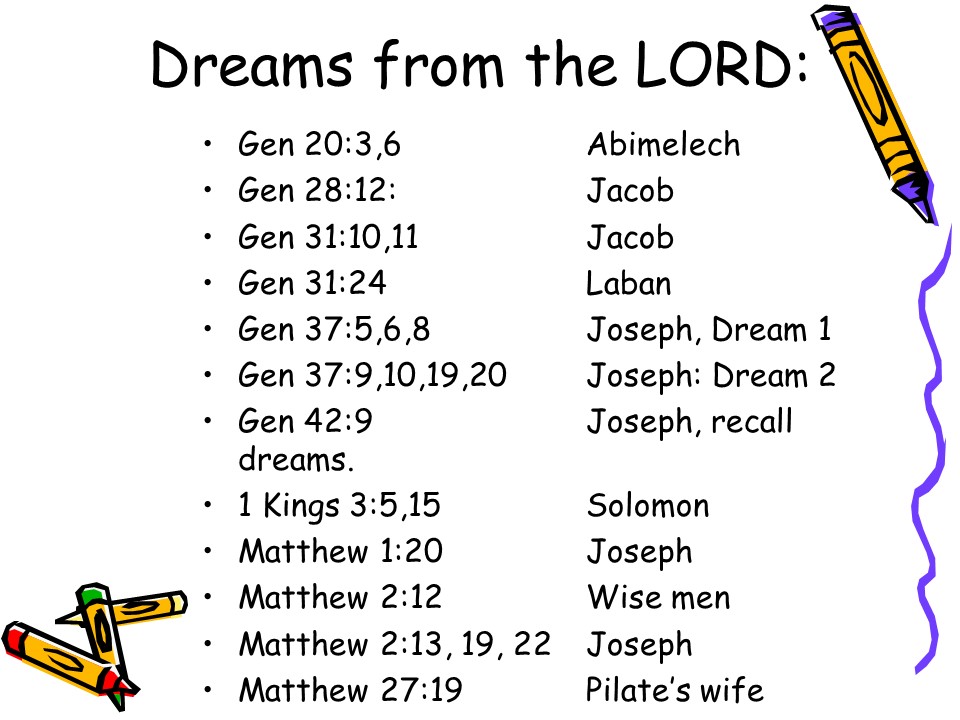
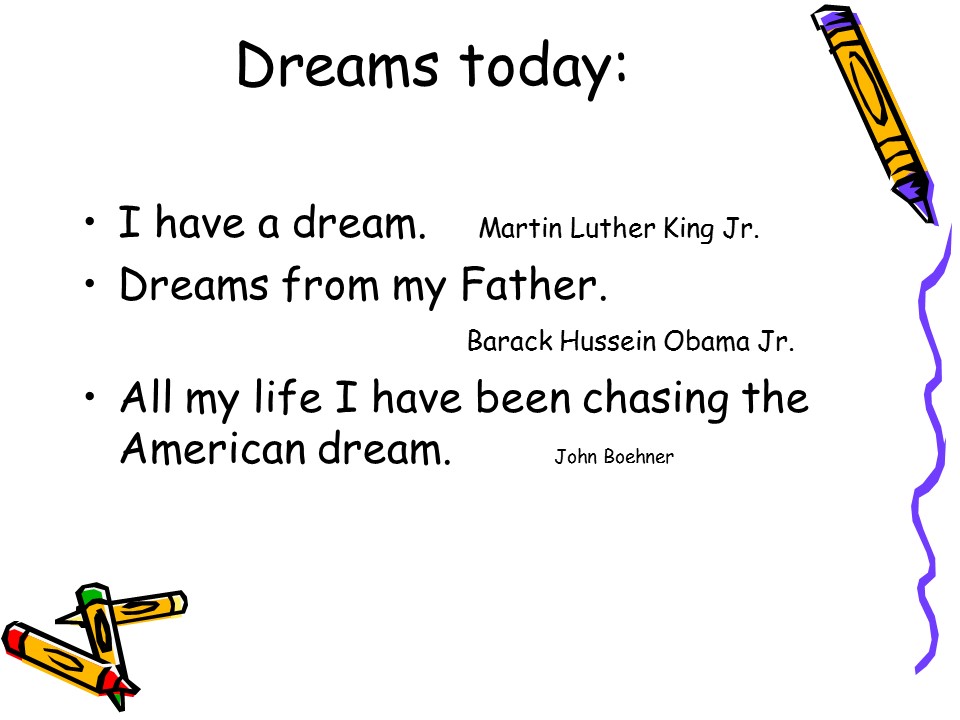
Dreams are prominent in the Old Testament.


In the New Testament the importance of dreams did go away. The reference in Acts is from Joel 2:38 “And afterward, I will pour out my Spirit on all people. Your sons and daughters will prophesy, your old men will dream dreams, your young men will see visions.”  

The reference in Jude is a warning not to trust in dreams: Jude 8: In the very same way, on the strength of their dreams these ungodly people pollute their own bodies, reject authority and heap abuse on celestial beings.

The importance of visions continues through the New testament.

Trances are mentioned three times, all in Acts.


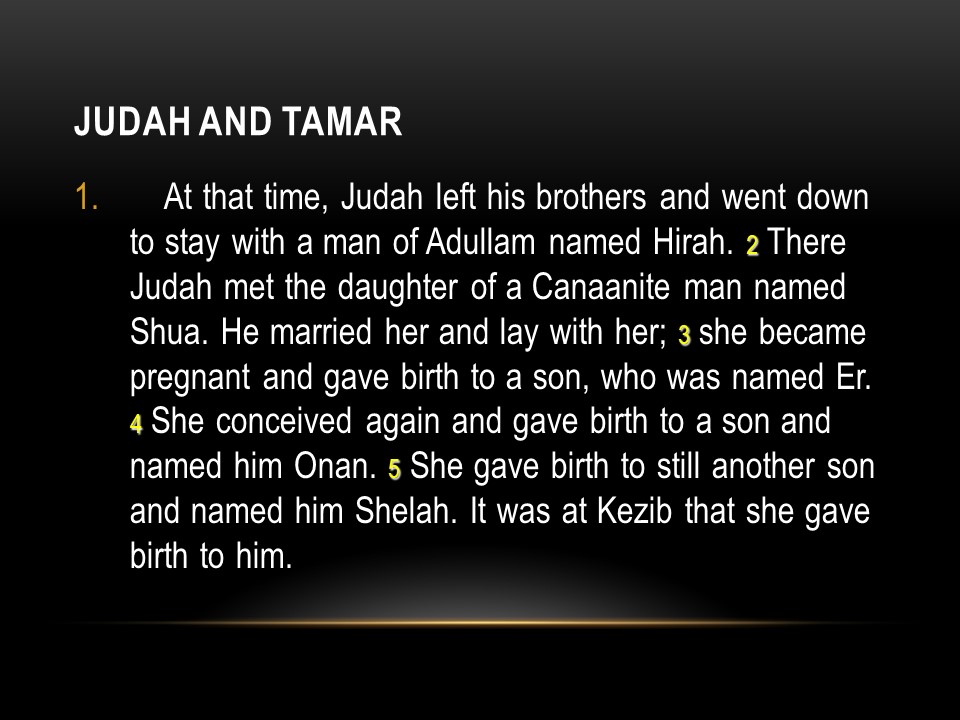
Genesis 38, Judah and Tamar, Onan’s sin, the scarlet thread.

Not the most inviting country setting.

The sin of Onan was not that he spilled his seed on the ground, but that he disobeyed God. It has often been misunderstood.

The scarlet thread is meaningful through the Bible. Another time it was used as a signal was in Joshua 2:21 “Agreed,” she replied. “Let it be as you say.”So she sent them away, and they departed. And she tied the scarlet cord in the window.

Probably the best known Bible passage  is found is Isaiah 1:18 “Come now, let us settle the matter,” says the Lord. “Though your sins are like scarlet, they shall be as white as snow; though they are red as crimson, they shall be like wool.

And the color worn by Roman Catholic Cardinals is scarlet).

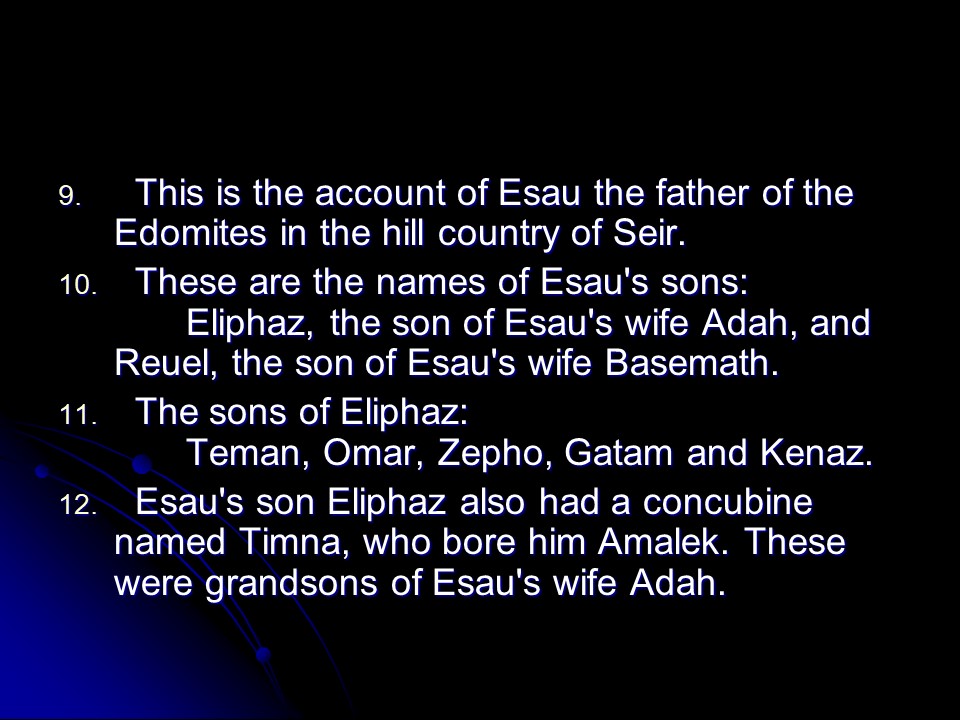
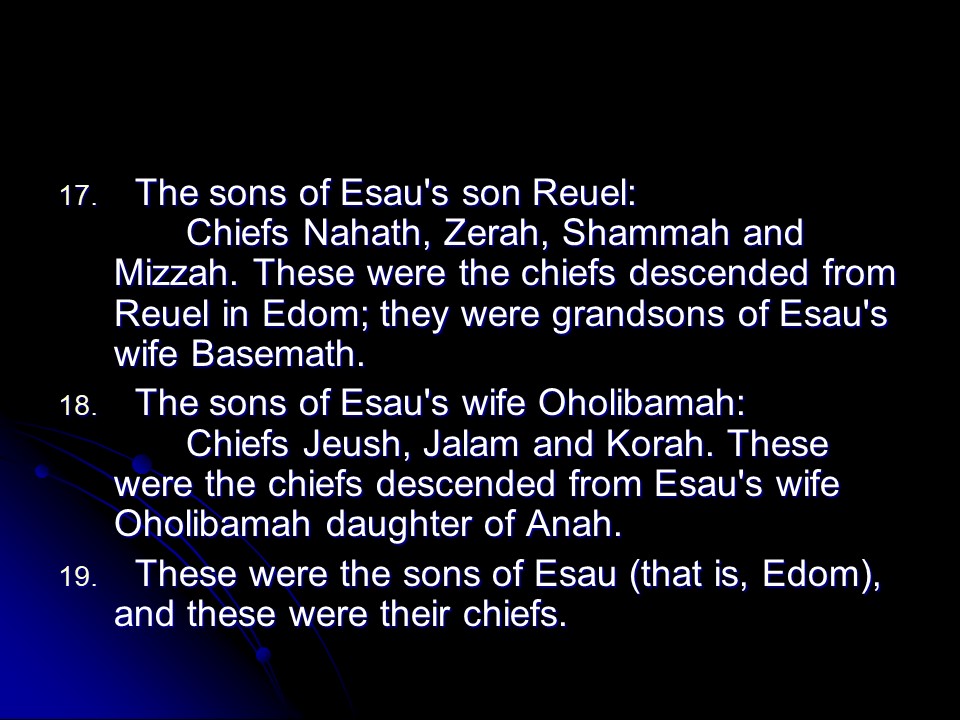
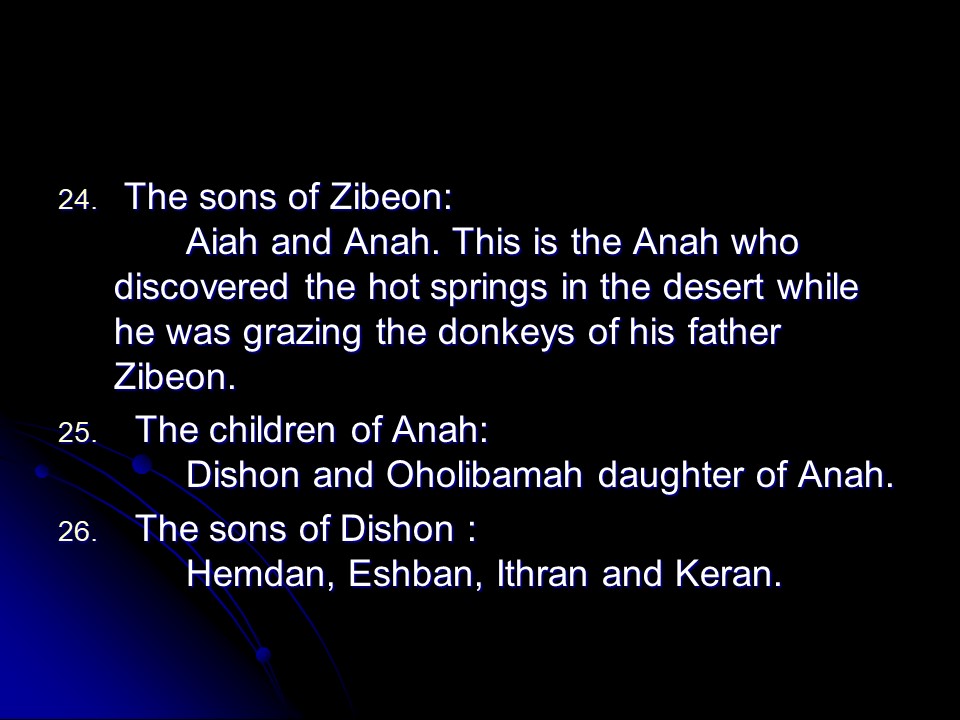
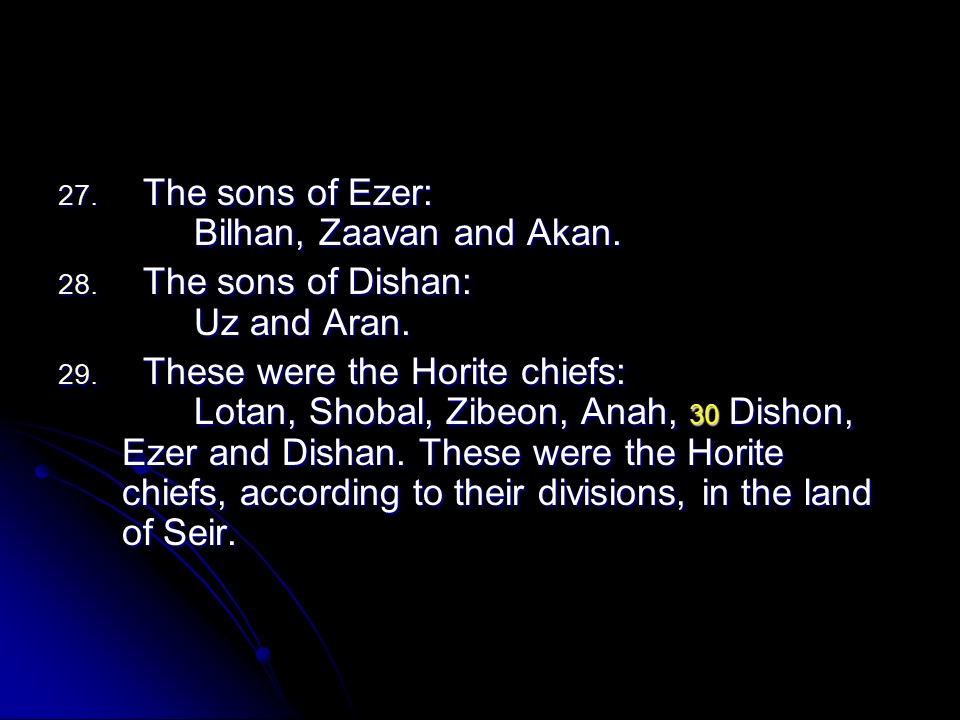
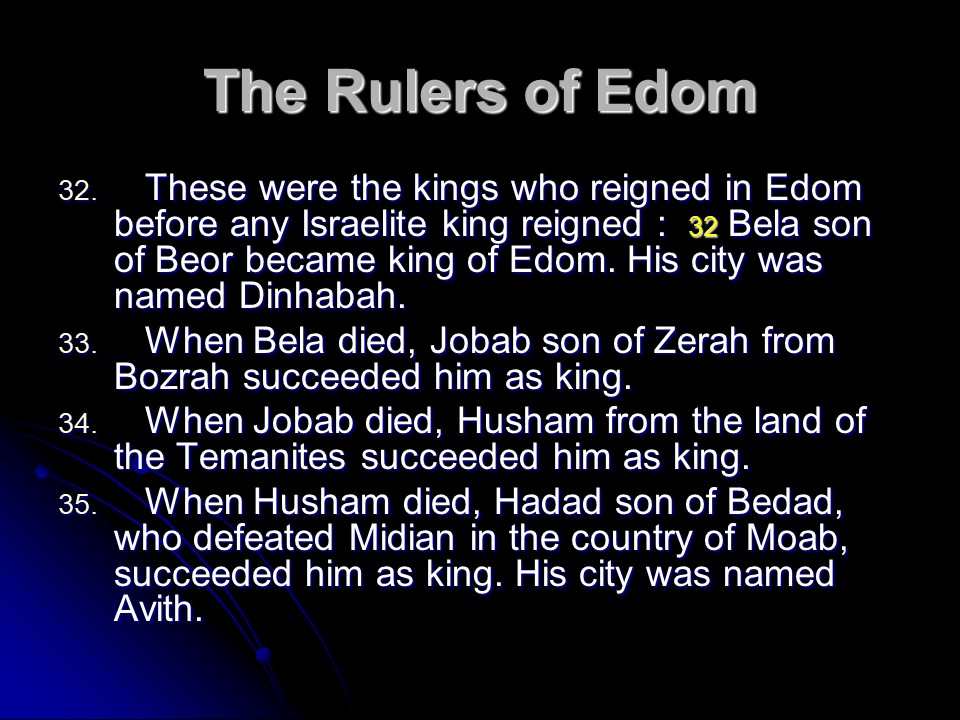
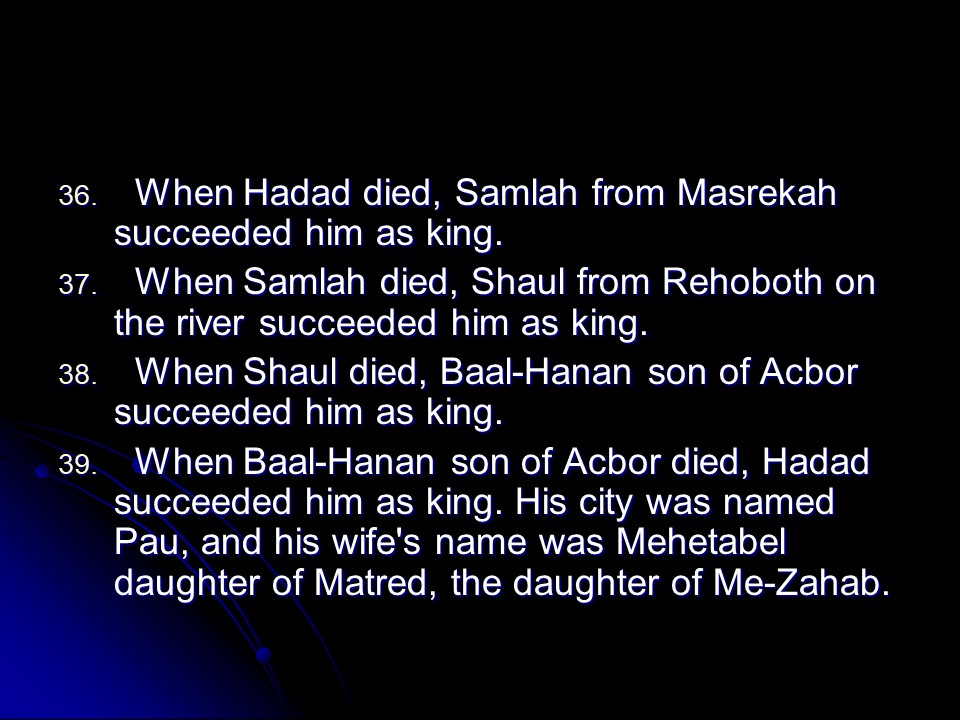
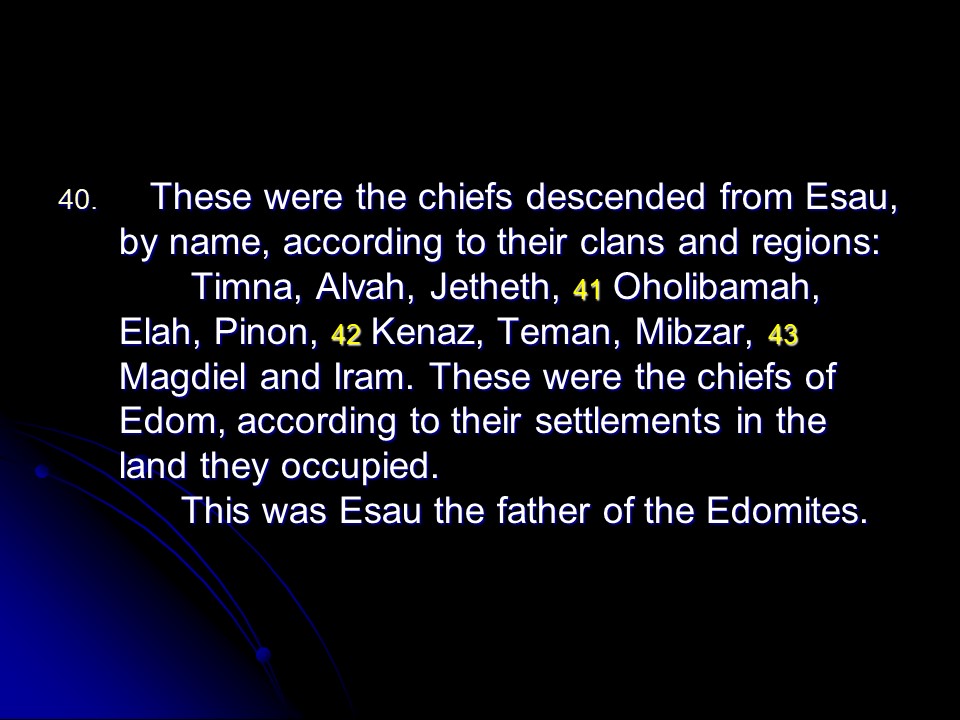
Genesis 36, Esau’s descendants and the rulers of Edom.

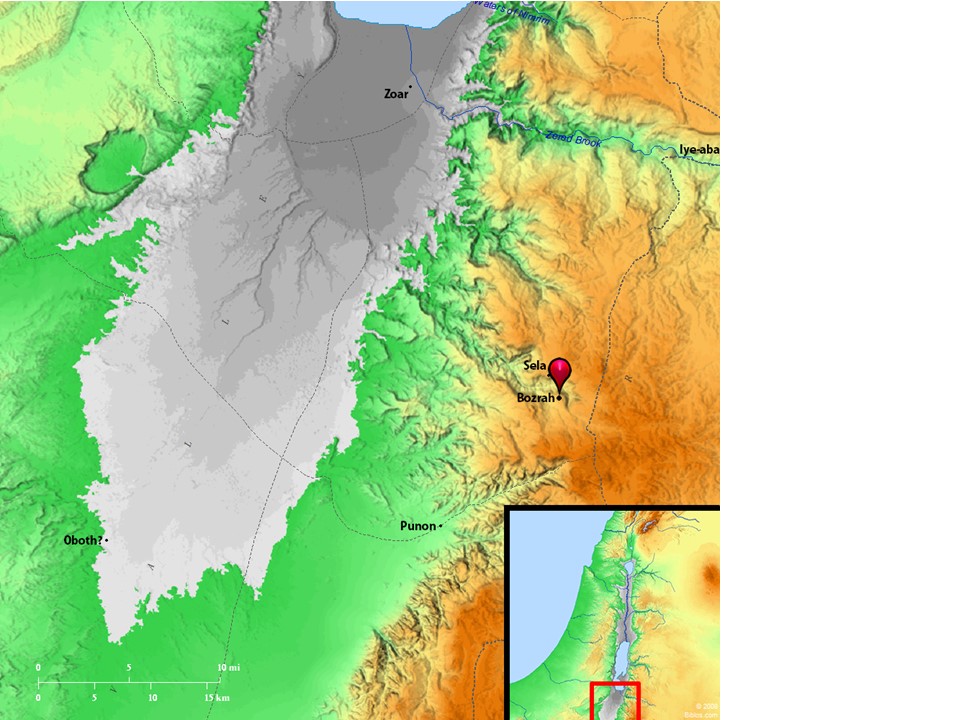
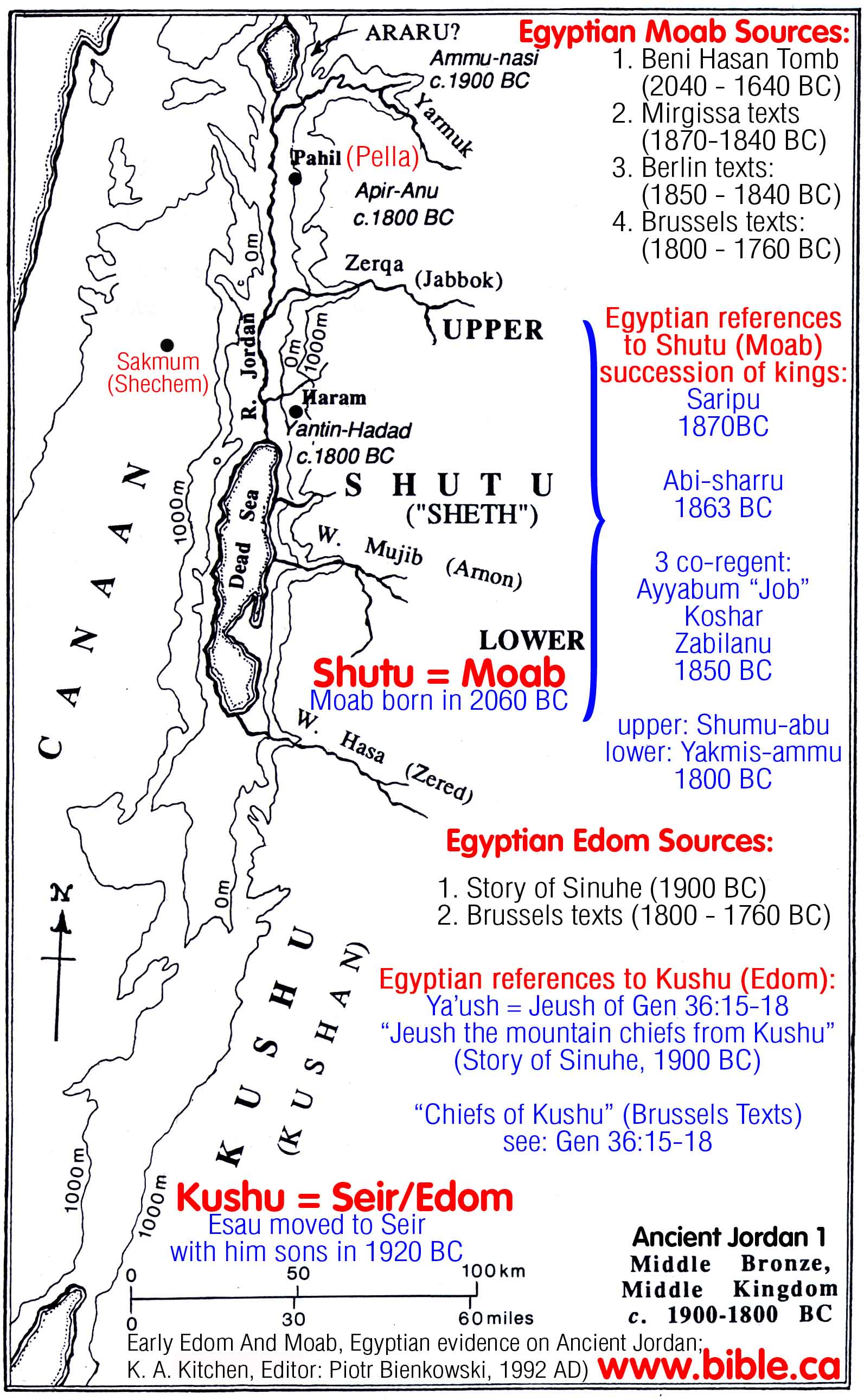
Edom, the hill country of Seir, is Southwest of the Dead sea, a dry near desert like land, but with winter rains and occasional rain at other times.

The descendants of Esau are well documented from Egyptian sources that corroborate the biblical account.


Genesis 35, The birth of Benjamin and Rachel’s death, Altar at Bethel, Jacob’s sons.

1 John 5:21  Dear children, keep yourselves from idols.


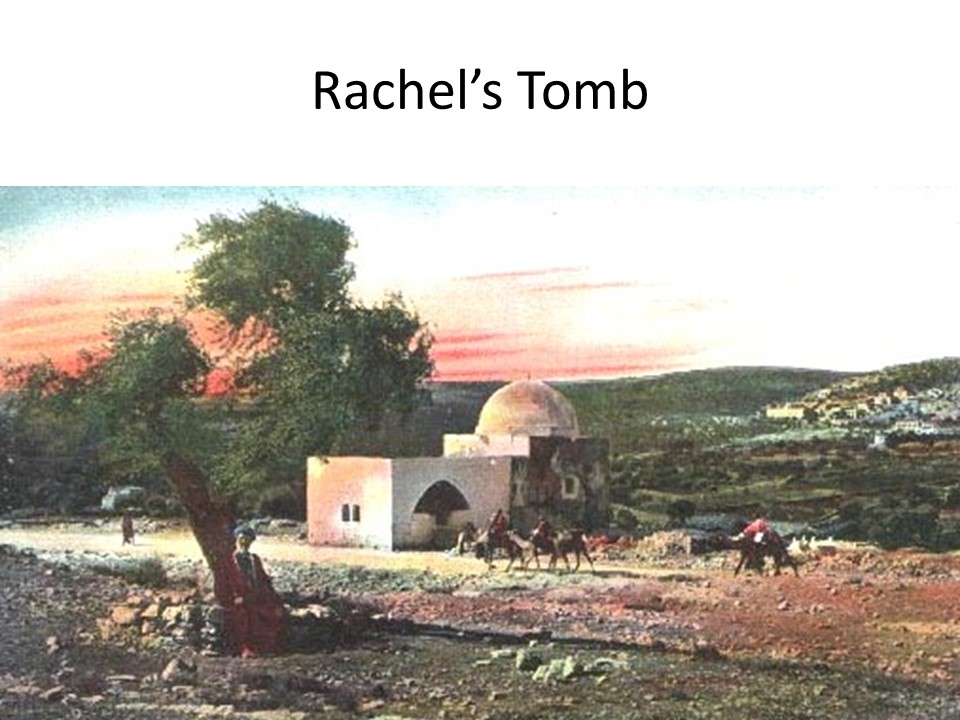
From Wikipedia:  After an attack on Joseph’s Tomb and its subsequent takeover by Arabs ceded to the Palestinian Authority after the Oslo accord, hundreds of residents of Bethlehem and the Aida refugee camp, led by the Palestinian Authority-appointed governor of Bethlehem, Muhammad Rashad al-Jabari, attacked Rachel’s Tomb. They set the scaffolding that had been erected around it on fire and tried to break in. The IDF dispersed the mob with gunfire and stun grenades, and dozens were wounded. In the following years, the Israeli-controlled site became a flashpoint between young Palestinians who hurled stones, bottles and firebombs and IDF troops, who responded with tear gas and rubber bullets.
At the end of 2000, when the second intifada broke out, the tomb came under attack for 41 days. Fatah operatives and members of the Palestinian security services who were responsible for curbing militant activity against Israelis actively participated in it. In May 2001, fifty Jews found themselves trapped inside by a firefight between the IDF and Palestinian Authority gunmen. In March 2002 the IDF returned to Bethlehem as part of Operation Defensive Shield and remained there for an extended period of time. In September 2002, the tomb was incorporated on the Israeli side of the West Bank barrier and surrounded by a concrete wall and watchtowers.