March 16, read the Bible in a year in PowerPoint; with comments.

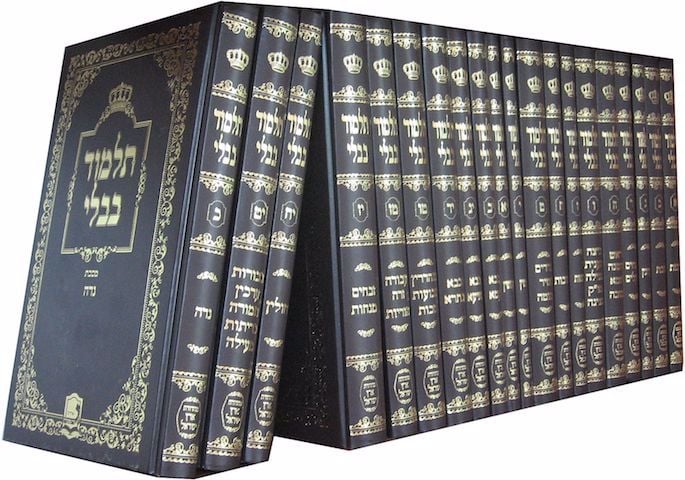
Matthew 23, Jesus warned the people about the teachers of the Law and the Pharisees. At that time they had formulated the Talmud, which regulated every aspect of Jewish life. He did it in the form of telling of seven woes. Read the chapter carefully and draw your own conclusions.

Deuteronomy 11. Love and Obey the LORD, remember all He has done, meditate day and night on it and always teach the same to your children. God set before them a blessing and a curse, it dealt with obedience.

Deuteronomy 12. God proclaimed the One Place of Worship. All other places of worship where false gods have been worshiped must be destroyed. You may eat from all clean animals, but do not drink their blood.

Deuteronomy 13. Apostates must be severely punished.

March 15, read the Bible in a year in PowerPoint; with comments.

Matthew 22:34-46  The Pharisees tried to entrap Jesus by asking him which is the greatest commandment. Jesus answered with the first commandment and added another: “Love your neighbor as yourself.” Once more they tried to entrap him with the question: Whose son is the Christ? Jesus answered: “The Lord said unto my Lord, Sit thou on my right hand, till I make thine enemies thy footstool?  If David then call him Lord, how is he his son?” That shut them up.

Deuteronomy 9, Israel’s rebellion is reviewed, but in spite of being a stiffnecked people doing abominations to the LORD like the Golden Calf orgy, God in His mercy  kept His promises.

Deuteronomy 10, take Two Tablets, Fear the LORD and circumcise your hearts,  that is the Essence of the Law. Remember, you too were aliens in Egypt.

Psalm 22, of David. It is also called “The Crucifixion Psalm”. Read it and ponder.

March 14, read the Bible in a year in PowerPoint; with comments.

In Matthew 22:1-33 Jesus continued to talk in parables. He was in Jerusalem, teaching about the Kingdom of Heaven and told the parable of the wedding banquet, from which we have the expression “many are called but few are chosen.” Continuing on, the Pharisees tried to entrap him with the question “is it legal to pay taxes to Caesar or not?” Jesus answered by the famous quote: “Give unto Caesar what is Caesar’s and to God what is God’s,” an early call to separation of Church and State. Jesus did not say “let the Romans do it”. The Sadducees also tried to entrap him with the riddle “if there is no resurrection and seven brothers have had a woman as his wife on after another, who would marry her in the resurrection?” Jesus answered with another, now made famous, saying: “God is not the God of the dead but of the living.”

Deuteronomy 7 promised that the Israelites would always be a Chosen People. God will drive out the people before them. When entering the land they must completely destroy all idols and false gods.

Deuteronomy 8. Remember the LORD your God, but if not you too will be destroyed.

March 13, read the Bible in a year in PowerPoint; with comments.

Matthew 21:12-46. Jesus cleansed the Temple and threw out the money changers. The spiritual leaders were offended that people sang “Hosanna in the highest” at the triumphal entry, even that little children sang it. As an object lesson Jesus cursed a fig tree, the symbol of Israel, and it withered. The spiritual leaders questioned Jesus authority. Instead of giving an answer Jesus gave two parables, the one about the two sons and the parable about the wicked tenants. Moving on, Jesus quoted scripture by saying :The stone  the builders rejected has become the cornerstone” meaning that the kingdom of God will be inherited by another people.

In Deuteronomy 6 Moses laid out The Greatest Commandment, he recommended the Israelites to wear phylacteries to keep them always in remembrance of the LORD and cautioned against disobedience. It is surprising how many of New Testament references there are to the Old testament Law; some are listed in the slides.

March 12, read the Bible in a year in PowerPoint; with comments.

Matthew 21:1-11 tells of Jesus’ triumphal entry into Jerusalem, which began what is called the “holy week”. Jesus rode in to Jerusalem on an unbroken colt, the prophesied sign of the coming Messiah.

Deuteronomy 5. The Ten Commandments were enumerated a second time, the first time was in Exodus 20. The people were afraid of God’s presence, they were horrified but not in reverential fear.

March 11, read the Bible in a year in PowerPoint; with comments.

Matthew 20:17-34. Jesus predicted his death. After that the mother of Zebedee’s sons asked Jesus to have her sons to be seated with Jesus in the kingdom of heaven, but Jesus answer was that is only for the Father to decide. The other disciples got angry, but Jesus admonished them all that the kingdom of heaven means to be a servant. The chapter ends with Jesus, out of compassion healed two blind men.

In Deuteronomy 4 God promised the people they will enter the promised land, but if they are disobedient they will be scattered all over the earth. Obedience means no idolatry “for the LORD, your God is a consuming fire, even a jealous God”. Three Cities of Refuge are mentioned.

March 10, read the Bible in a year in PowerPoint; with comments.

In Matthew 20:1-16 Jesus told the parable of the workers in the vineyard; God is always fair even when we don’t think so.

Deuteronomy 2 tells of the first 38 years of wandering in the the Desert. The generation entering the desert had died off and with the help of God King Sihon was defeated.

Deuteronomy 3 describes how King Og was defeated and how the Israelites conquered the land East of Jordan, but Moses was forbidden to cross the Jordan and enter the Promised Land.

March 9, read the Bible in a year in PowerPoint; with comments.

Matthew 19:13-30 contains some of the most important aspects of life. Here is a jewel: “Let the little children come to me…” After Jesus gave that lesson, a rich young ruler asked what good thing he must do to get eternal life. Jesus answered: “If thou wilt be perfect, go and sell that thou hast, and give to the poor, and thou shalt have treasure in heaven: and come and follow me.” This he could not do, so he sighed and walked away. Jesus then commented “It is easier for a camel to go through the eye of a needle than for a rich man to enter the Kingdom of God,” in other words, impossible. But cheer up, “with God all things are possible.” And God’s pecking order is not economic or based on power. Instead, sometimes “the first shall be last, and the last shall be first.” There are many idioms in the English language taken from the Bible. Yet the origin of these quotations are not allowed to be taught in public schools. Ponder that.

Deuteronomy 1 starts with the LORD’s command telling the Israelites to leave Horeb and enter Canaan. Leaders were appointed and spies sent out, but Israel refused to enter the land. The penalty for Israel’s rebellion was that no one would enter the promised land except Caleb and Joshua.

March 26, read the Bible in a year; in PowerPoint, with comments.

Mark 1:1-11 starts, not with the birth of Jesus, but with the beginning of Jesus’ ministry. John the Baptist prepared the way for Jesus, baptized many for repentance and the forgiveness of sins, and he also baptized Jesus.

Deuteronomy 33. Moses’ gave his final blessing on each of the tribes of Israel.

Deuteronomy 34. Moses died on Mount Nebo. Epilogue: “And there arose not a prophet since in Israel like unto Moses, whom the Lord knew face to face”. This ends the first five books of the Bible, also called the Torah.

March 25, read the Bible in a year; in PowerPoint, with comments.

Matthew 28 begins with Jesus being in the grave for the two adjoining sabbaths, the first day of unleavened bread followed by the normal sabbath. There was an earthquake and the stone was rolled away. Jesus was no longer in the grave. The guards were bribed to tell the story that the disciples took the body, but two  women, the two Marys met the resurrected Jesus. He told them to tell the remaining disciples that he was risen from the dead. The Gospel of Matthew ends with Jesus giving us the great commission: “All power is given unto me in heaven and in earth.  Go ye therefore, and teach all nations, baptizing them in the name of the Father, and of the Son, and of the Holy Ghost:  Teaching them to observe all things whatsoever I have commanded you: and, lo, I am with you always, even unto the end of the world. Amen.”

Deuteronomy 32 gives us the Song of Moses. At the end of the chapter the LORD told Moses he would only see the promised land from a distance and die on Mount Nebo.