Acts 22. The Apostle Paul gave his salvation testimony to the Jerusalem crowd in the Aramaic language. When Paul mentioned the stoning of Stephen and that he preached to the Gentiles as well, the crowd wanted him killed right away. Paul claimed Roman citizenship, so the next day he was ordered to stand before the Sanhedrin.
2 Chronicles 31 tells of the Reforms of Hezekiah. “He did it with all his heart, and prospered.”
2 Chronicles 32. Sennacherib boasted against the LORD but was defeated and died. Hezekiah humbled himself,so the LORD sent an angel to deliver Judah. Hezekiah grew in wealth and honor, but he too finally died.
Chronicles 33. Manasseh, king of Judah became a sorcerer, repented and was restored but eventually died and was replaced by Amon , who reigned for two years, did evil, was killed and his son Josiah became king.
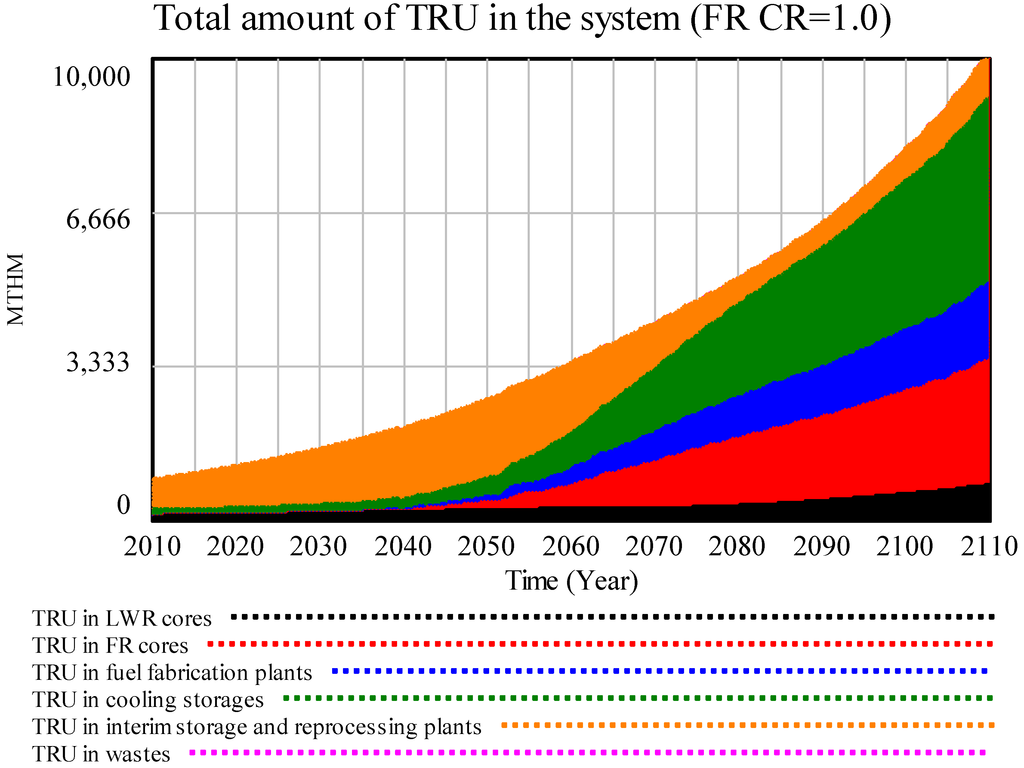
The stockpiles from light water reactor keep growing. The temporary storages are all full and spent nuclear fuel is still coming in with no good place to put it. This is an estimate of future stockpiles:
MTHM: Metric Tons Heavy Metals TRU: TRansUranium metals, a large amount of witch is Plutonium 239
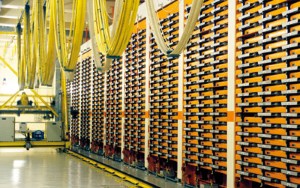
The dry storage is usually very neat and catalogued. After all Plutonium 239 is what you make atomic bombs from, so proliferation security is of utmost importance.
TRU can be reprocessed in a molten salt generator and generate far more energy than was obtained the first time around in the LWR
LFTR is a type of Molten Salt Reactor with equipment to convert plentiful thorium into uranium (U233) to use as fuel. It can also use plutonium from LWR (Light Water Reactor) waste. LFTR is not very efficient at using depleted uranium (need a Fast-Spectrum reactor to fission U-238 effectively; in a thermal-spectrum reactor like LFTR or LWR, would convert some U-238 to plutonium which is fissile). The best solution is a two-fuel molten salt reactor
Because a LFTR fissions 99%+ of the fuel (whether thorium, or plutonium from nuclear waste), it consumes all the uranium and transuraniums leaving little long-term radioactive waste. 83% of the waste products are safely stabilized within 10 years. The remaining 17% need to be stored less than 350 years to become completely benign.
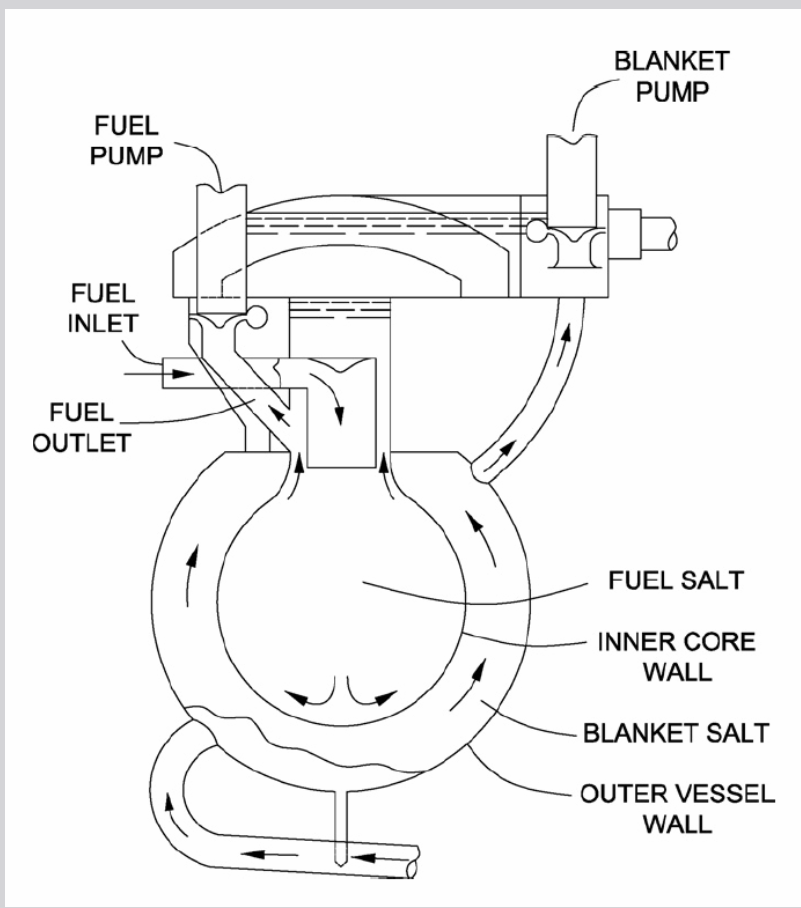
The fuel source would be Trans-Uraniums, mostly Plutonium 239 and some Uranium 233. The blanket would contain Thorium, which when converted to Protactinium would be extracted out and in 28 days half of it would be converted to Uranium 233. The temperature in the fissile core will be around 650C and in the blanker somewhat less, its only purpose is to produce U 233 to be used in other nuclear plants.
“LFTR technology can then be used to reprocess and consume the remaining fissile material in spent nuclear fuel stockpiles around the world and to extract and resell many of the other valuable fission byproducts that are currently deemed hazardous waste in their current spent fuel rod form. The U.S. nuclear industry has already allocated $25 billion for storage or reprocessing of spent nuclear fuel and the world currently has over 340,000 tons of spent LWR fuel with enough usable fissile material to start one 100 MWe LFTR per day for 93 years. (A 100 MW LFTR requires 100 kg of fissile material (U-233, U-235, or Pu-239) to start the chain reaction). LFTR can also be used to consume existing U-233 stockpiles at ORNL ($500 million allocated for stockpile destruction) and plutonium from weapons stockpiles.”
FS-MSRs essentially avoid the entire fuel qualification issue in that they are tolerant of any fissile material composition, with their inherent strong negative thermal reactivity feedback providing the control necessary to accommodate a shifting fuel feed stream. Fast Spectrum Molten Salt Reactor Options,
Some of the pictures are from a slide presentation given by David Archibald in Melbourne Feb 5 2011. He posted it “for the benefit of all” which I have interpreted as waving the copyright of the pictures
Acts 21. On the way to Jerusalem Paul was warned everywhere by the Holy Spirit not to go, but Paul continued unmoved, and people finally gave up, saying ‘The Lord’s will be done’. Paul was urged to make peace and purify himself with four other Jews that had taken a vow, which he did. A mob was stirred up anyway and Paul was arrested in the Temple. Because Paul was a Roman citizen he was allowed to address the Jerusalem mob.
2 Chronicles 30. Hezekiah celebrated the Passover and there was great joy in Jerusalem.
Psalm 49, of the Sons of Korah. This psalm is a teaching Psalm and gives instruction on how to live and about our hope of salvation “But God will redeem my soul from the power of the grave,For He shall receive me”
Acts 20:17-38. From Miletus Paul called the Ephesian Elders and when they arrived he exhorted them, said farewell and told them he would never see them again.
2 Chronicles 27. Jotham, king of Judah followed God, became mighty, reigned sixteen years and died.
2 Chronicles 28. Ahaz, king of Judah did not follow God, was defeated by Syria and Israel. Israel returned the captives taken. After Ahaz committed apostasy, he shut down the temple and died.
2 Chronicles 29. Hezekiah became king of Judah, cleansed the Temple and restored temple worship.
Produces electrical energy at about 5 cents per kWh.
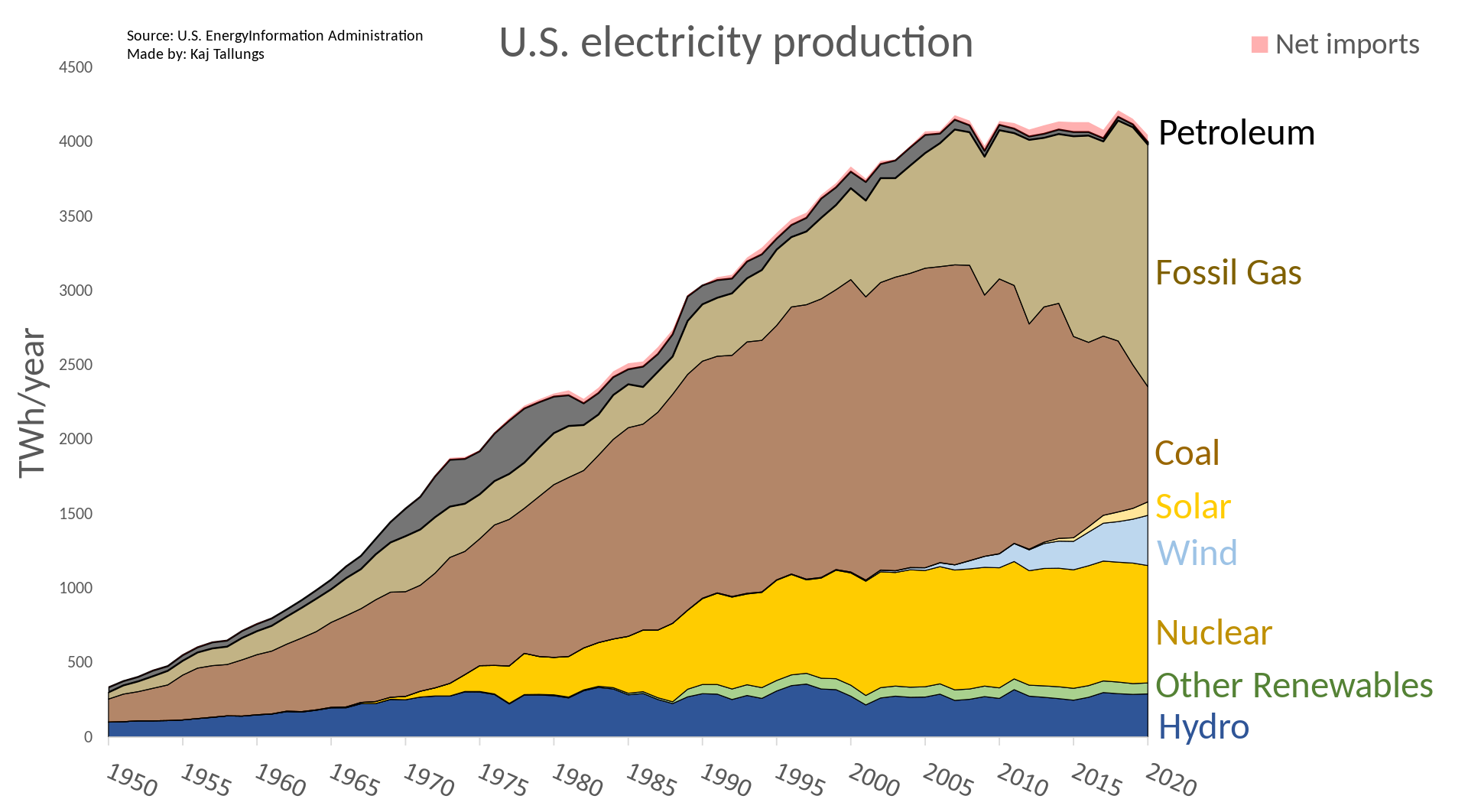
The United States sources of Electricity generation is one third from Natural Gas, one third from Coal and one third from non fossil fuel sources.
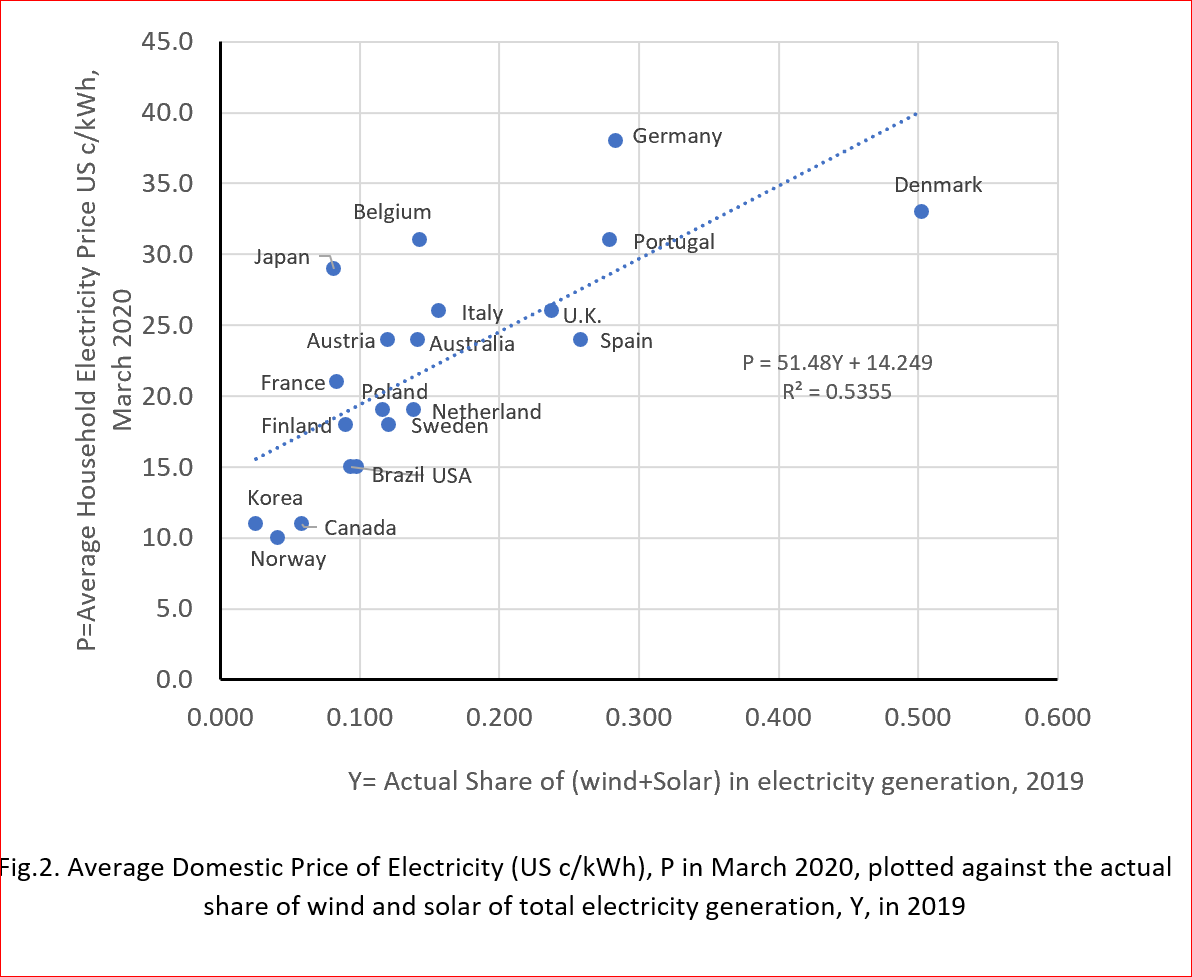
The cost to produce electricity with Thorium nuclear power should be about 40% less than Advanced Nuclear and about 30 % less than from Coal (with scrubbers) Solar generation is about 4 times more expensive (without subsidies) in the North-east, where people live. New Mexico, Arizona and California are suitable for cheap Solar power, but they lack Hydropower storage. Wind power is cheaper when the wind blows, but base generation capacity has to be there even when the wind doesn’t blow, so the only gain from wind power is to lessen the mining or extraction of carbon. In addition, wind power kills birds, the free yearly quota of allowable Bald Eagle kills was upped from 1200 to 4200 during the Obama administration. (https://lenbilen.com/2019/04/12/what-is-more-precious-babies-eagles-or-fighting-climate-change/). Golden Eagles and a few other rare birds has a quarter of a million dollar fine associated with their kills. If wind power is increased without finding a solution to the bird kills, whole species may go extinct. Solar power is, and will be used in special applications such as on roofs for backup and peak power assist. Today’s solar panels are easily destroyed by a single hailstorm. Hydroelectric power is for all practical purpose maxed out, so nearly all future increase must come from Coal, Natural Gas, Petroleum or Nuclear. The world experience on installing wind and solar energy is that it is expensive. See fig:
The residential cost of electricity increases as the proportion of total electricity demand is supplied by wind and solar. Part of the cost is in power distribution. Molten Salt Thorium Nuclear Generators is the way to go. It doesn’t depend on sun, wind and water to produce electricity where the need is.
Acts 20:1-16. Paul left Ephesus and ministered in Greece for 3 months, left Greece and ministered at Troas, where he on the last day theree preached on and on and a young man fell down from a third floor window and died, but was revived by Paul. Undaunted Paul continued preaching until daybreak, then he left and went to Miletus.
2 Chronicles 24. Joash repaired the Temple but then committed apostasy and was finally executed.
2 Chronicles 25. Amaziah reigned in Judah and went to war against Edom. Israel routed Judah and finally Amaziah was killed and buried.
Chronicles 26. Uzziah became the next king of Judah, young and successful and made Judah powerful again, but his pride got the best of him and he became a leper, an outcast. Jotham, his son became de facto regent until Uzziah’s death.
Thr problem with Thorium is that it is classified as source material the same as Uranium. Natural Uranium is fissile in a heavy water moderated reactor, Thorium is only slightly radioactive, and should be regulated like all other radioactive products, like household smoke detectors and medical isotopes.
Congress should immediately declassify Thorium as a source material. This would again enable U.S. to mine rare earth materials like China and the rest of the world.
The video speaks for itself and is well worth watching. Especially listen at 15:30 min why molten salt reactors were abandoned.
Acts 19:23-41. The tradesmen of Ephesus, who made souvenirs in the form of shrines and idols of silver considered Paul and the many believers bad for business. After all, Ephesus was the idol worship center of Artemis (Diana). This led to the riot at Ephesus.
This video catalogs the problems with Thorium, beginning with the regulatory nightmare of seemingly endless regulations that makes no sense from a research perspective, to political bias, and to protect the status quo. It is very informative.
Acts 19:1-22. Paul took the land route to Ephesus, where he met believers that had not even heard of the Holy Spirit. For two years Paul did many miracles there and did defeat evil Spirits, all to glorify Christ.
2 Chronicles 18. The prophet Micaiah warned Ahab of Israel,but Ahab listened to false prophets instead. The result was that Ahab died in battle.
2 Chronicles 19. King Jehoshaphat returned to Jerusalem and instituted a number of reforms.
2 Chronicles 20. Because Jehoshaphat turned to God, Ammon, Moab and Mount Seir were defeated and there was peace until the end of Jehoshaphat’s reign, but he made an alliance with Israel to build trading ships, and they were destroyed.