Psalm 117. The shortest Psalm of them all with only two verses, but they are full of praise.
Psalm 118. This is probably the best example of Hebrew poetry with verses repeated with only small variations. It is quoted in the New Testament in many places, even by Jesus directly.
Psalm 115 through Psalm 118 are part of the Hallel (praise) Psalms and are sung after the Passover meal. Psalm 115 gives praise that the Lord is our help and shield. Not so the heathens, their idols are worthless.
Psalm 116. The Lord heard my prayers, I will pay my vow of gratitude with the sacrifice of praise.
Jeremiah 34, Zedekiah was warned by God to give liberty to the slaves, as commanded by Him, but the slaves were not freed, so bad things were going to happen.
Jeremiah 35 tells of the obedient Recabites.
Jeremiah 36. Jehoiakim burned Jeremiah’s Scroll, did this action result in the end of David’s line?
Psalm 113. This Psalm is part of the “Hallel”, consisting of Psalm 113-118. Two are sung before and three after the Passover meal. It begins and ends with Hallelujah, and praises God how He lifts up the lowly, even the barren woman.
Psalm 114 is the second Psalm of the Hallel. In eight short verses it retells of God’s miracles of delivering them out of Egypt and into the promised land. Short and to the point.
Jeremiah 31 is a most remarkable chapter. Jeremiah in a dream heard God say “Yea, I have loved thee with an everlasting love” and continued by promising that the remnant of Israel will be saved. Then, in verse 15 God provided an abrupt change “A voice was heard in Ramah, lamentation, and bitter weeping; Rachel weeping for her children refused to be comforted for her children, because they were not.” Then,returning to the dream came an even more remarkable statement “O thou backsliding daughter? for the Lord hath created a new thing in the earth, A woman shall compass a man.” After this Jeremiah woke up from his pleasant dream. God continued speaking, promising mercy on Ephraim, future prosperity to Israel, and promised the New Covenant: “But this shall be the covenant that I will make with the house of Israel; After those days, saith the Lord, I will put my law in their inward parts, and write it in their hearts; and will be their God, and they shall be my people. And they shall teach no more every man his neighbour, and every man his brother, saying, Know the Lord: for they shall all know me, from the least of them unto the greatest of them, saith the Lord: for I will forgive their iniquity, and I will remember their sin no more.”
Psalm 112 like Psalm 111 is an acrostic Psalm, meaning that each line (not verse) begins with the next letter in the Hebrew alphabet, starting with Aleph and ending with Taw. It tells of the blessings that follow the man that fears the LORD. Not so the wicked.
Jeremiah 29. Jeremiah sent a letter to the exiles, a letter of hope, and a promise of return “And ye shall seek me, and find me, when ye shall search for me with all your heart.And I will be found of you, saith the Lord: and I will turn away your captivity, and I will gather you from all the nations, and from all the places whither I have driven you, saith the Lord“. Then follows a message to Shemaiah, a not so promising message.
Jeremiah 30, a beautiful chapter promising the restoration of Israel.
Psalm 111. A short, beautiful psalm with this truth: “The fear of the Lord is the beginning of wisdom.”
2 Timothy 1 starts out with a greeting and Paul was encouraged by Timothy’s Faith, which he got from his mother Eunice and grandmother Lois. Paul was not Ashamed of the Gospel “for I know whom I have believed, and am persuaded that he is able to keep that which I have committed unto him against that day.” Then Paul urged Timothy to be loyal to the faith.
Jeremiah 21. Jerusalem was doomed, and God delivered a message to the house of David.
Jeremiah 22 continues God’s messages to the House of David, the Sons of Josiah, and proclaimed the end of the Davidic line with Jehoiachin. This is one reason Jesus had to be adopted by Joseph according to the gospel of Matthew.
Psalm 108, a Psalm, a song of David. Here David repeated parts from Psalm 57 and Psalm 60 and used it to ask for God’s help in his further conquests as he subdued nations around him.
Psalm 109, of David. Leaving vengeance to God, David prayed for the full measure of God’s vengeance to be poured out on his wicked enemies. He is “poor and needy” and vengeance is God’s business.
Psalm 110, of David. Two quotes stand out from this Psalm: “The Lord said unto my Lord, Sit thou at my right hand, until I make thine enemies thy footstool.“, and “The Lord hath sworn, and will not repent, Thou art a priest for ever after the order of Melchizedek.” Who was David talking about? Hint: The book of Hebrews gives the answer.
Jeremiah 20. The chief priest Pashhur heard Jeremiah prophesy bad outcomes, so he punished Jeremiah, which led to the word of God given to Pashhur. Jeremiah gave yet another complaint to God, this time even to the point of complaining he was born.
Psalm 107. God to the rescue. It is a telling of four “saysos” as the Southerners used to say as they called for testimonials in their revival meetings: “Let the redeemed of the LORD say so“. The Israelites kept getting in trouble and finally cried out to the LORD, and He saved them out of their distresses. This is a remarkably positive Psalm.
Jeremiah 17. Judah’s sin was deep and worthy of punishment. Jeremiah gave a profound confession and delivered a beautiful prayer for deliverance. Then he reminded the people to keep the sabbath holy.
Psalm 106 is a follow-on of Psalm 105. While Psalm 105 tells of the story of God’s people from Abraham to Moses, Psalm 106 continues from the crossing of the Red Sea (or Sea of Reeds) to the sins committed ,even to the child sacrifices to the gods of Canaan. The psalmist prayed for deliverance from the heathens and return and restoration of the promised land. The Psalm begins and ends with a Hallelujah (praise the LORD).
Jeremiah 16 tells of the Day of Disaster and ends with the promise that God will restore Israel.
In between the Apostle Paul’s second letter to the Thessalonians and his first letter to Timothy we read two Psalms.
September 14: Psalm 104, Psalm 105 (click on the chapter to begin reading).
Psalm 104. God is Lord of all creation. He is worthy of all praise. Let us count the ways.
Psalm 105. God is faithful to His Covenant people, and retells the account of what He did for the Hebrews from Abraham to the wanderings in the wilderness.
The fool hath said in his heart, There is no God” (Psalm 14:1)
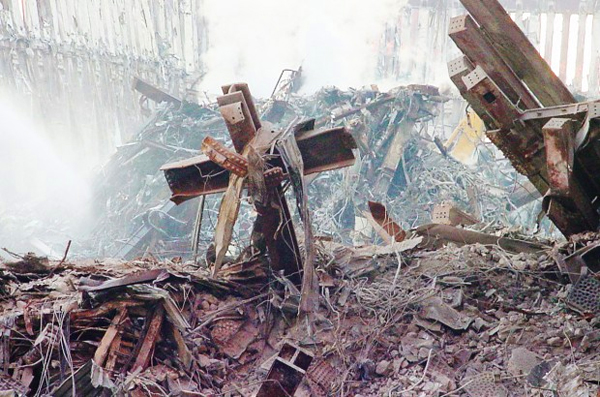
The original location where the iron cross was found.
For Muslims, atheists and humanists the cross is an offense since it is to them the stench of death. But to us who believe it is the symbol of redemption and new and eternal life in Christ. If they were not pricked in their hearts when they see the cross they would not be offended.
He died on the cross at Ground Zero.
We have only one risen hero.
But the fools reject grace,
stay condemned, cannot face
The truth in The Cross at Ground Zero.
For God so loved the world, that he gave his only begotten Son, that whosoever believeth in him should not perish, but have everlasting life. For God sent not his Son into the world to condemn the world; but that the world through him might be saved. (St. John 3:16-17)
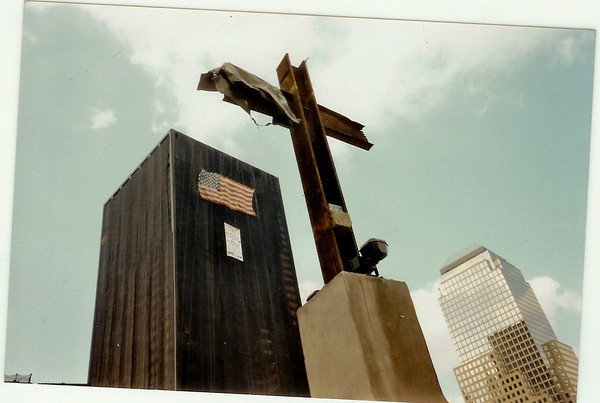
An intermediate location for the cross
The final place for the Iron cross near the 9/11 museum.
These were the final words of Governor Sarah Palin after a successful week anchoring “On Point” with the One America News.
Governor Palin is a true servant. Her parents, Chuck and Sally Heath, worked at the Fresh Kills landfill in Staten Island, New York in January and February 2002 as part of a federal Department of Agriculture program.
In a telephone interview, Mr. Heath said he and his wife had worked to keep sea gulls and rats from scavenging the human remains in the debris. Mr. Heath, then 70, a retired science teacher, and Mrs. Heath, then 68, a retired secretary, had worked for the Agriculture Department for 15 years. They travel around the world dealing with “nuisance” animals like rats and bears.
“A lot of people just didn’t like the job, it was kind of a morbid thing,” he said of the work at the landfill. “But I thought it was part of history.”
This is the attitude of a servant.
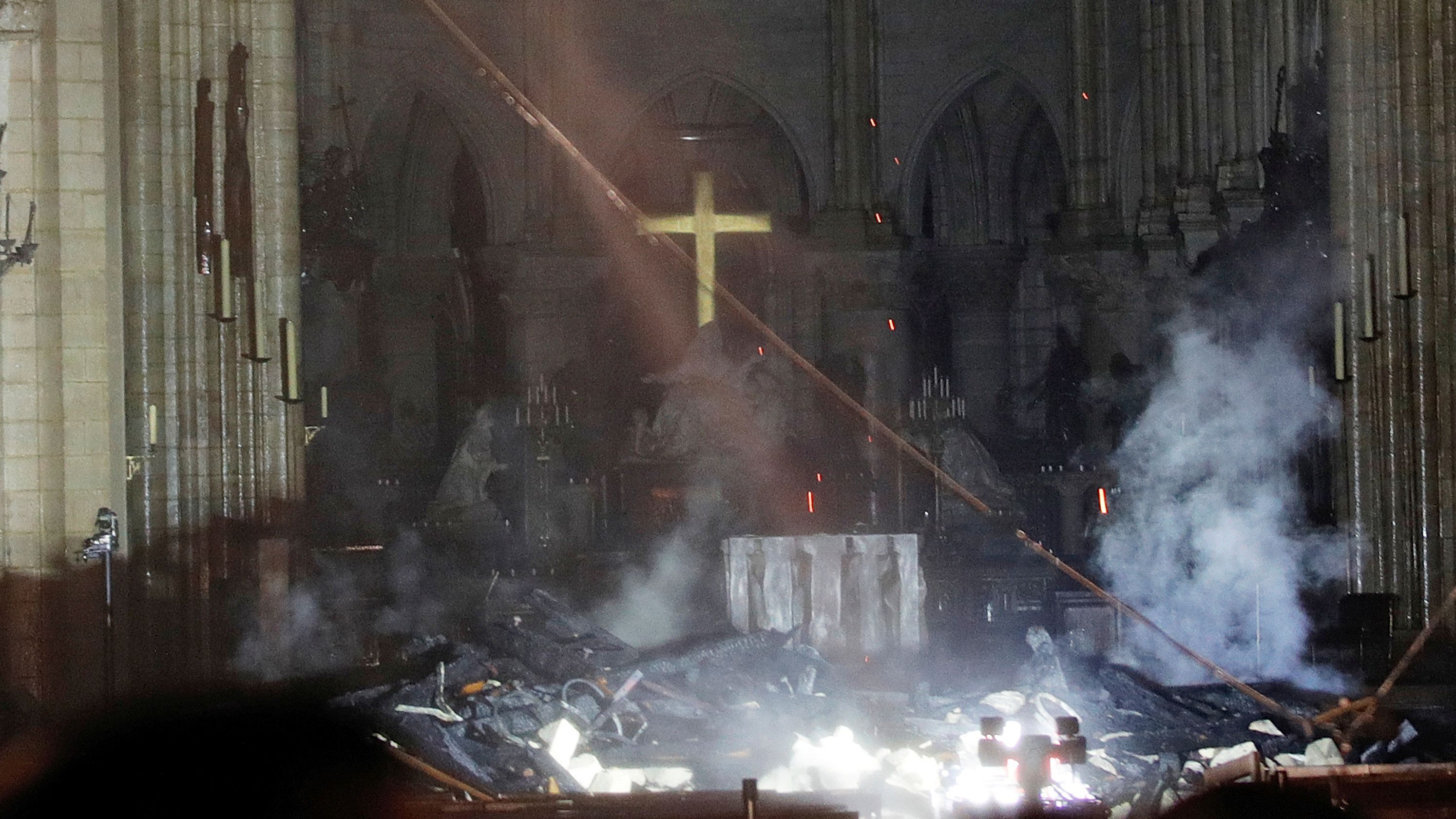
On April 16 2019 at the church of Notre Dame in Paris there was a fire. Much was lost.
“Art and architecture have a unique ability to help us connect across our differences and bring people together in important ways,” posted U.S. Rep. Ilhan Omar. “Thinking of the people of Paris and praying for every first responder trying to save this wonder.”
No, Ms Omar, it is much more than that, rather
What nearly destroyed Notre Dame;
historical artworks for some.
Not the fall of the steeple,
God’s church is the people
the Cross stands for all who will come.
Yes, the fire was spectacular.
Yes, the cross still stands as it did when, as U.S. Rep Ilhan Omar so famously quoted “Somebody did something at 9/11”
“The fool hath said in his heart, There is no God” (Psalm 53:1)