“There are three things I have learned never to discuss with people…religion, politics, and the Great Pumpkin.” Linus from Peanuts.
Author: lenbilen
Retired engineer, graduated from Chalmers Technical University a long time ago with a degree in Technical Physics. Career in Aerospace, Analytical Chemistry, computer chip manufacturing and finally adjunct faculty at Pennsylvania State University, taught just one course in Computer Engineering, the Capstone Course.
1 Corinthians 3. Paul warned the Corinthians that sectarianism is carnal, we are all servants of the Lord Jesus Christ. One is planting, one is watering, but God gives the increase. Paul gave them another warning: Avoid worldly wisdom, “For the wisdom of this world is foolishness with God.”
1 Corinthians 2. The Apostle Paul proclaimed Christ crucified, relying only on God’s power. This is God’s secret wisdom, spiritual wisdom, and in applying this “we have the mind of Christ“.
Job 22. Eliphaz the Temanite accused Job of wickedness.
Job 23. Job proclaimed God’s righteous judgments. Rejoice in the Lord. “But he knoweth the way that I take: when he hath tried me, I shall come forth as gold.“
1 Corinthians 1 begins with greetings and thanksgiving from the Apostle Paul, who admonished the Corinthians their only leader is Christ and sectarianism is Sin, for Christ is the power and wisdom of God. The foolishness of God is wiser than man’s wisdom, so glory only in the Lord.
Job 20. Zophar gave a sermon with regard to the wicked man.
Job 21. In reply Job gave a discourse on the wicked.
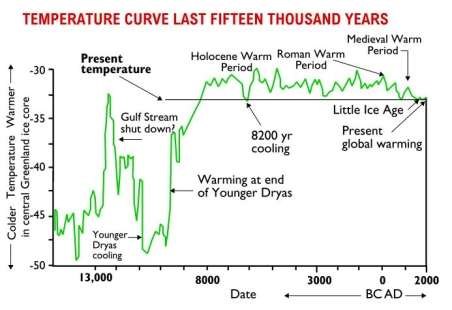
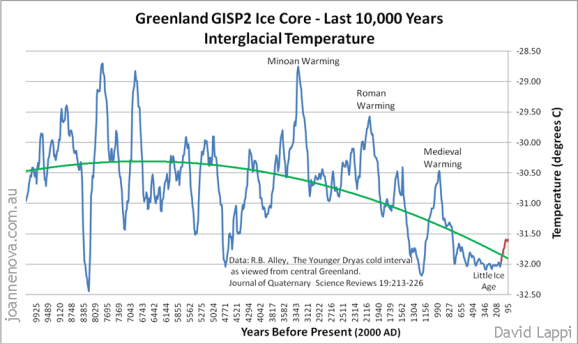
The weather has been warm lately. the earth has set a string of new maximum temperatures in July and will set a new absolute record for the month of July since the beginning of satellite record in 1079. The once reputable Forbes Magazine expressed it this way: July 4 was the warmest day in over 100,000 years! Now wait a minute! Aren’t we still recovering from the little ice age? See chart:
It was warmer for 9,000 of the last 10,000 years than it is now!
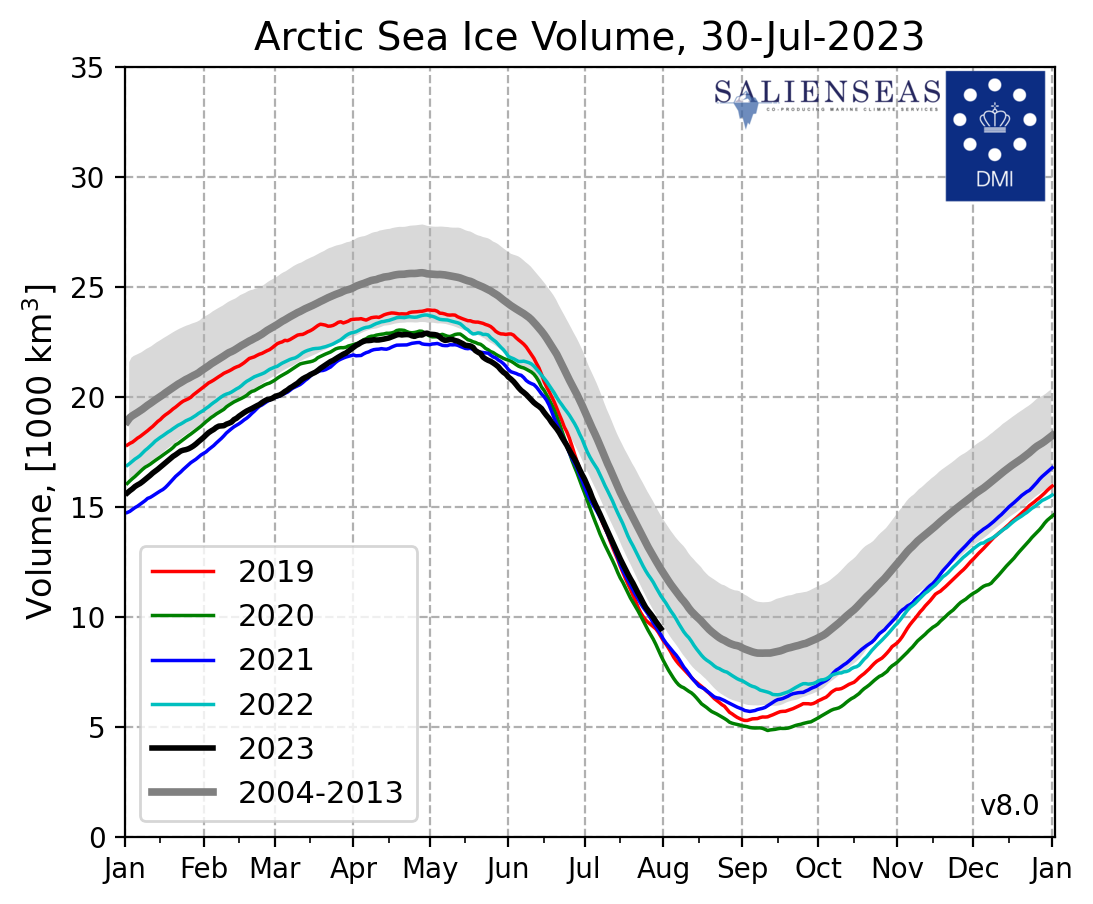
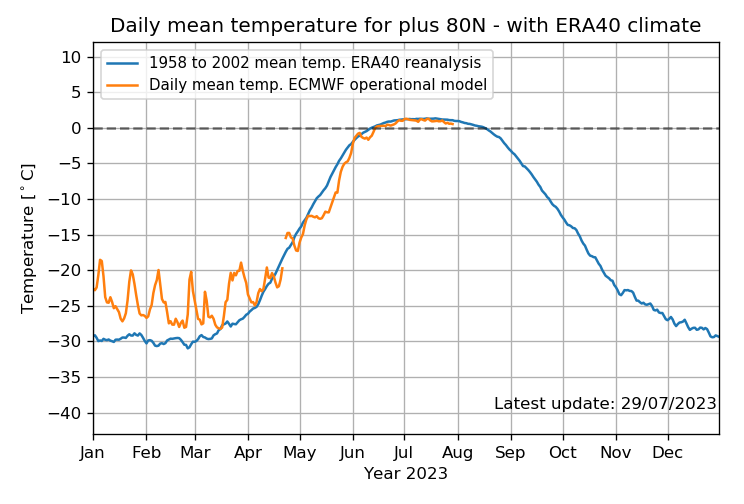
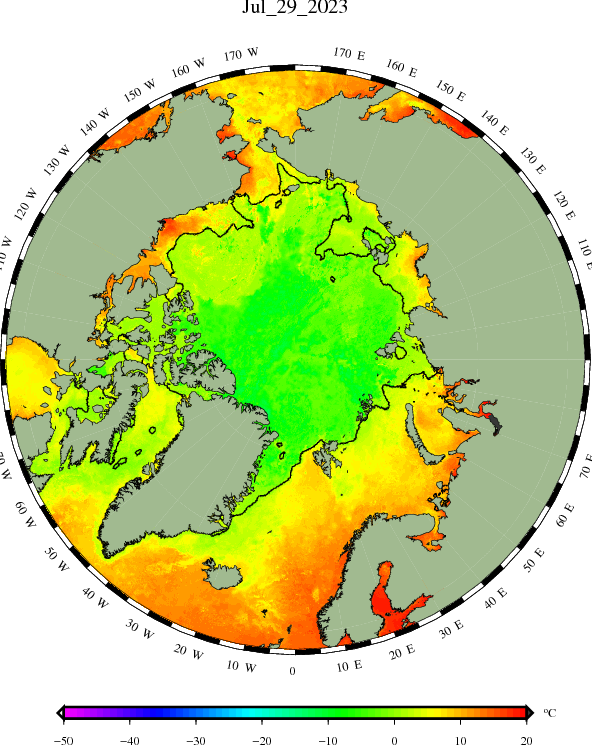
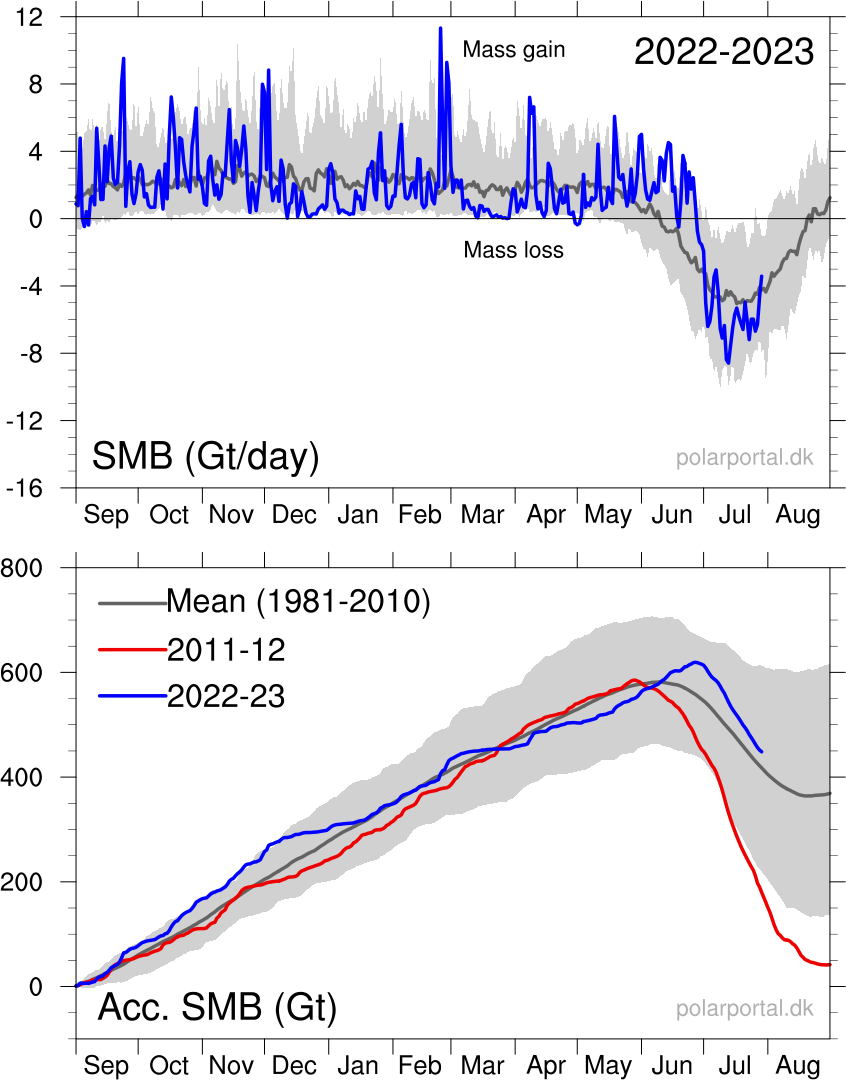
Let us take a look at what is happening to the Arctic ice sheet. Its demise has been predicted to be total well before 2020. How is that going? The Danish Meteorological institute takes daily measurements of the Arctic and Greenland’s ice sheet, volume and temperature.
It seems pretty normal to me, no runaway ice melt the last few years. I fact this year the Arctic temperature above the 80th latitude has been at or below normal since late April. How about the ice on Greenland?
The ice gain, and the summer ice loss over Greenland seem pretty normal to me.Yes the snow melt was delayed by a month,followed bya stronger than normal snow melt. This is all within the boundaries of normal weather.
The heat wave in the south and Southwest of U.S.A. was caused by a blocking high pressure, causing less clouds, less winds and in part less rain than normal. This happens some years, but can still be explained as weather.
Romans 16. Sister Phoebe is commended, the Apostle Paul gave thanks, especially to Priscilla and Aquila, followed by a long list of greetings by name. Paul then warned the Romans to avoid divisive persons, followed by greetings from Paul’s friends, even Tertius the scribe wrote a note. The letter ends with a benediction.
Psalm 65, of David. A Psalm full of thanksgiving for atonement for iniquities, setting things straight in nature and among people, and providing for an abundant harvest, and the response is to burst out in song.
The era of global warming has ended and “the era of global boiling has arrived”, the UN secretary general, António Guterres said after scientists confirmed July was on track to be the world’s hottest month on record since global satellite records began in 1979.
The surface ocean temperature around the Florida Keys soared to 101.19 degrees this week, in what could be a global record as ocean heat around the state reaches unprecedented extremes.
This calls for a Limerick
It’s hot around Florida Keys
the temp is expressed in degrees.
Is it F, is it C?
Makes a difference to me.
It depends whom you want to appease.
This being the U.N.; renaming climate science “Global Boiling” can only mean they do not know the difference between Fahrenheit and Celsius.
Romans 15. Bear each others’ burdens, look at Christ and glorify God together. The Apostle Paul had proclaimed the Gospel from Jerusalem to Illyricum, but he really longed to visit Rome.
Job 15. Eliphaz unloaded on Job, accusing him of folly.
Job 16. Job replied: You pitiless comforters, you call yourself friends.
Romans 14. Some are weak in faith and those who are strong and can eat everything should not look down on vegetarians and vegans. Some observe the Lord’s day on the first day of the week, others still say “Sabbath is Sabbath.” Tolerate each other according too the law of liberty, for whatever is not of faith is sin, and it is not for you to judge. The law of love tells us not to flaunt one’s free drinking in front of an alcoholic among other things, for that could cause him to stumble.
Job 12. Job had heard enough and answered his critics.
Job 13. Job continued answering his three friends, and added a despondent prayer that contains this gem: “Though he slay me, yet will I trust in him.”
Romans 13. Paul reminded the Romans of all people to submit to government, follow the laws, pay their taxes and debts, love their neighbor and put on Christ. Any government, even the Romans,are better than anarchy.
Job 9. Job: There is no mediator, no one is righteous before God, even though I am righteous.
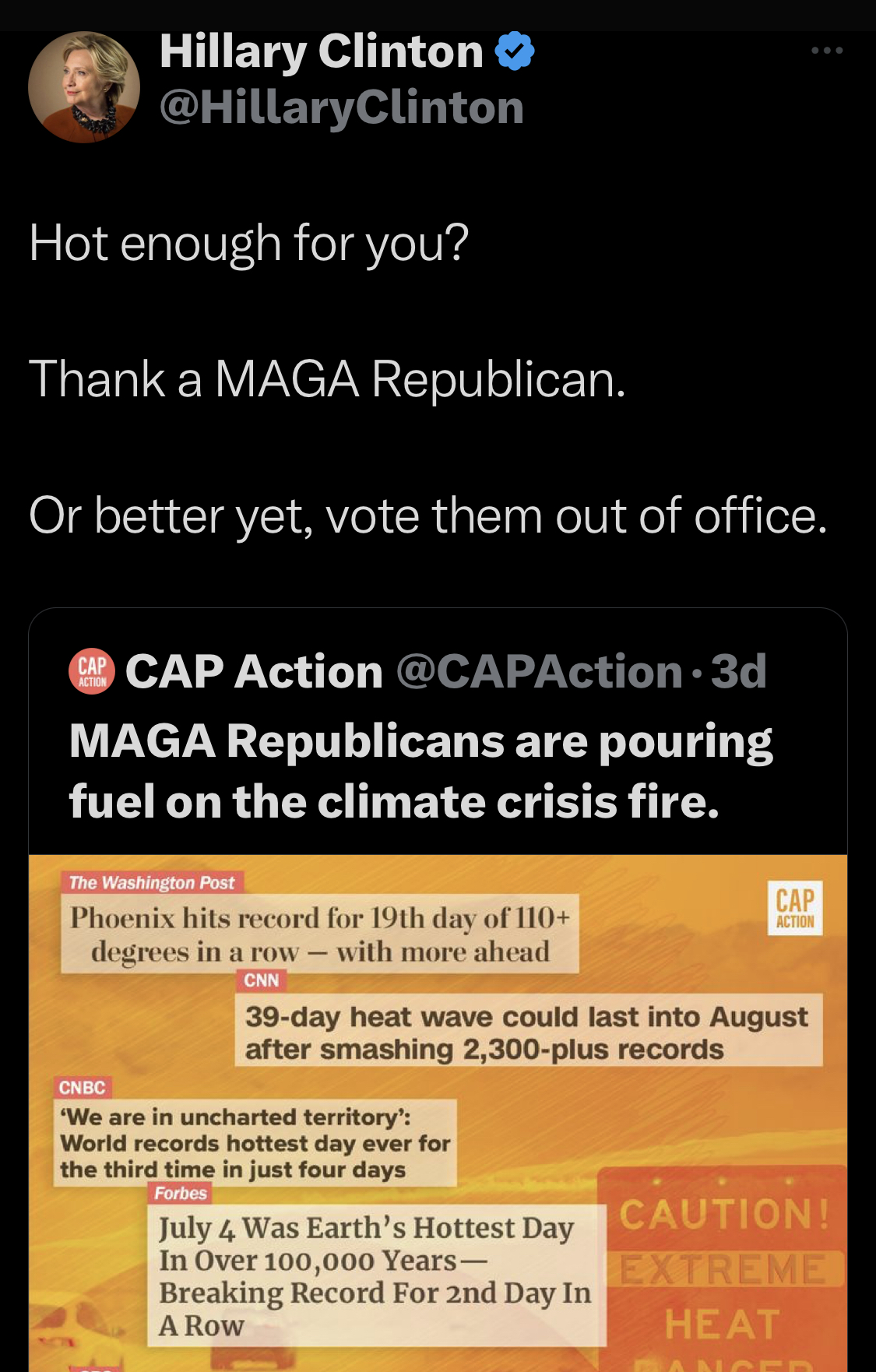
This tweet from the twice defeated presidential candidate and 2016 election denier Hillary Clinton caught my attention for its many factual errors. This is the forwarded tweet:
It begins with factual recording from the Washington Post. It is a record string of very hot days in Phoenix. In fact, today is the 25th day of over 110F, and continuing.
The next headline is from CNN tells of the heat wave all over the south, where nearly every community in the area shows one heat record after another. The count is more than twice as high now. The heat wave continues. About the only record not broken is the maximum temperature in Death Valley, still standing at 134°F (57°C) on July 10, 1913.
Not to be outdone, MSNBC chimes in with “We are in uncharted territory”, which is true since worldwide satellite measurements didn’t start until 1979. So it isn’t very surprising that new records will be set. The time frame is only 44 years.
But Forbes magazine takes the cake: The once serious business publication states that July 4 was the hottest day in over 100,000 years! The real temperature after the little ice age isn’t even back to the medieval warm period, much less the Roman warm period, even less than the Minoan warming
Even more interesting is the temperature in the Holocene Climate optimum:
From this chart we can see, even as there were no global measurements taken it was warmer during 8000 of the last 10,000 years, at least according to the Greenland Ice Cores.
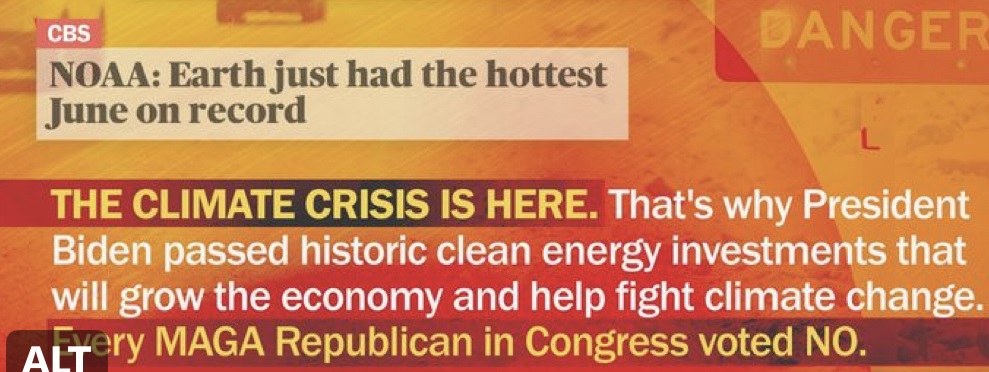
But back to the Hillary tweet: CBS claimed that Earth just had the hottest June on record. What they forgot to mention was “since worldwide satellite records began in 1979”
This calls for a Limerick
The Climate change pace in this plot
shows voting next fall means a lot.
No original sin
if Republicans win
since temperatures will be less hot.
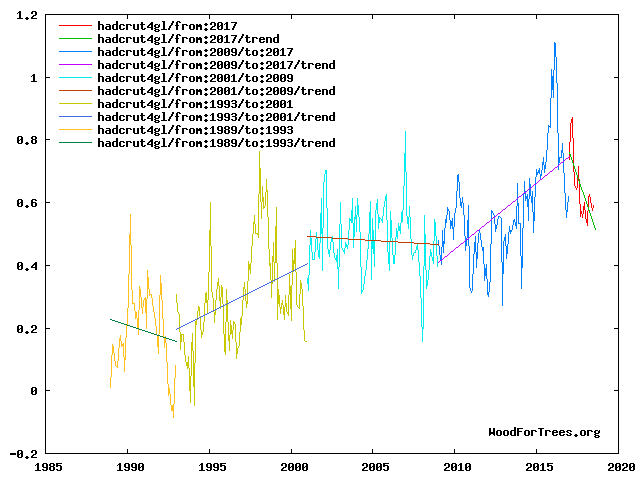
From Wattsupwiththat.com comes this interesting plot: (Thanks, David Middleton)
From this we can see that the global temperature changes according to hadcrut4gl are:
During the presidency of George H W Bush temperatures fell by 0.20 C/decade
During the presidency of Bill Clinton temperatures rose by 0.26 C/decade
During the presidency of George W Bush temperatures fell by 0.04 C/decade
During the presidency of Barack H Obama temperatures rose by 0.42 C/decade
So far , during the Presidency of Donald J Trump global temperatures have receded 0.24 C.
President Donald J Trump ended his presidency with a temperature decline of 0.37C/decade.
So far, during Joe Biden ‘s presidency temperatures are up 0.18C, and that was before the latest heatwave.
It seems the hot air is coming from Democrats, and with Republicans cooler minds prevail
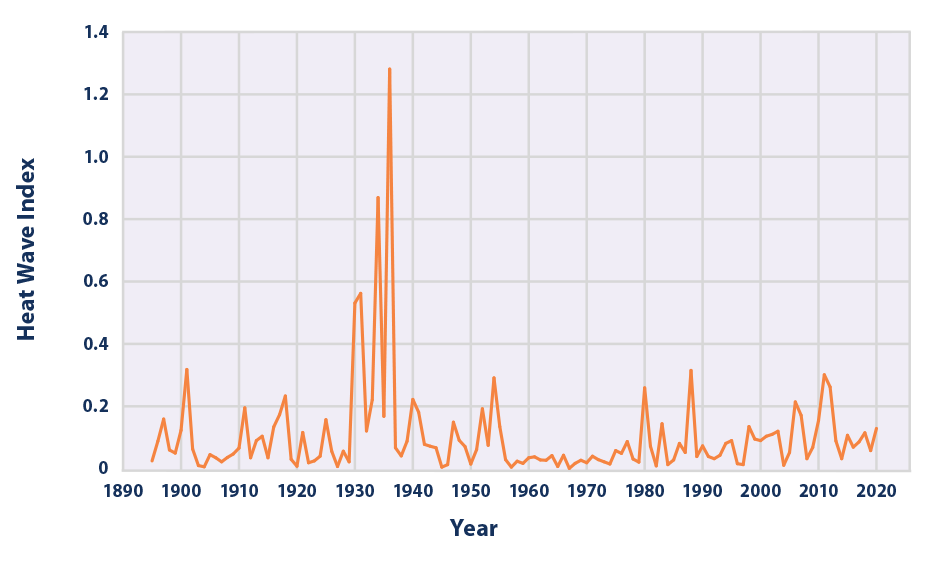
And a bonus question. During the 1930s the number, length and severity of U.S heatwaves was much worse. Who was president for most of that time?
Oh and by the way, in the 1930s the CO2 level was around 300 ppm. It is now 418.4 ppm or 40% higher.