Day 155 of reading the Holy Bible in 365 days.

Acts 2. At the day of Pentecost the Holy Spirit arrived, and that day many languages were spoken by the disciples, at least 15 different tongues that the listeners understood. Peter stood up and delivered his first sermon, a powerful one that led to about 3000 new converts. The following few weeks were good times and the believers were in good fellowship with each other.

2 Kings 20. Hezekiah was ill unto death, but he prayed to the LORD, and got his life extended another fifteen years. From Babylon came envoys, Hezekiah showed them every treasure in his palace, for in doing so he thought “There will be peace for our time” just like Neville Chamberlain did before WWII.

2 Kings 21. Manasseh became King of Judah, doing more evil in the sight of the LORD than even the surrounding countries. After his death Amon reigned and died, followed by his son, Josiah.

Day 154 of reading the Holy Bible in 365 days.

Acts 1 begins with the disciples watching Jesus’ Ascension, but before he left Earth he promised they would receive power when the Holy Spirit came upon them. While waiting for the Holy Spirit to come Matthias was chosen to replace Judas Iscariot as one of the 12 Apostles.

2 Kings 18. Hezekiah reigned in Judah, and was threatened by the Assyrians. Sennacherib boasted against the LORD, but Hezekiah still trusted the LORD and that He would deliver His people. The chapter ends with a standoff.

2 Kings 19. The prophet Isaiah assured deliverance from Sennacherib’s threat. Hezekiah’s prayed for deliverance and Isaiah delivered the word of the LORD concerning Sennacherib. That night the Angel of the Lord slayed 185,000 men, and Sennacherib was defeated and died not long after.

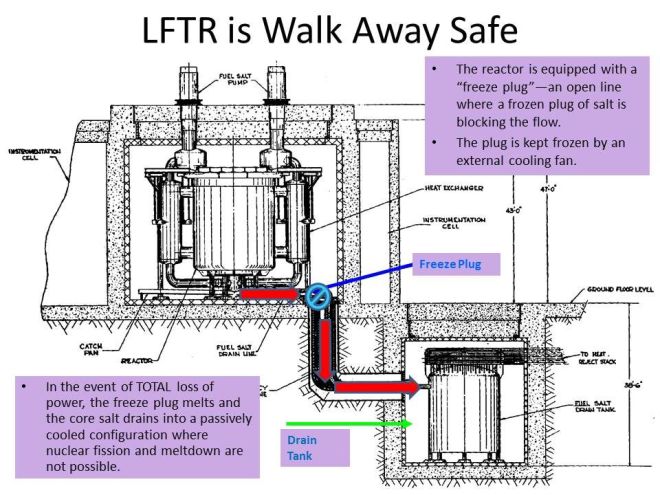
Why Thorium? 7. Thorium nuclear power is the only realistic solution to power space colonies.

Thorium nuclear power is the only realistic solution to power space colonies. To form space colonies, power has to be provided to sustain the colony. This means that Liquid Fluoride Thorium Reactors  (LFTR) have to be fully developed and operational here on earth before serious space colony development can even begin. It need to get started in earnest NOW!

Kirk Sorensen has provided an intriguing teaser on the case for Thorium nuclear energy.

Watch it and enjoy!

Day 153 of reading the Holy Bible in 365 days.

Luke 24:32-53. Jesus appeared to the Disciples back in Jerusalem and even ate a piece of broiled fish in their presence. He then explained the Scriptures written about him, and they understood for the first time, but they still had to wait for the power from the Holy Spirit. The Gospel of Luke ends with the Ascension, but that event is even better described in the Acts of the Apostles, also authored by Dr. Luke.

2 Kings 16. This is a short chapter and deals with Ahaz , king of Judah and his dealings with the king of Assyria. 

2 Kings 17. Hoshea was the last King over Israel, the defeated people of Israel were carried captive to Assyria, and Assyria then resettled Samaria with their own people.

Why Thorium? 6. Thorium based nuclear power will produce Plutonium-238, needed for space exploration.

A Thorium based nuclear power generator produces Pu-238 as one of the final TRansUranium products, which is in short supply and much in demand for space exploration nuclear power.

NASA relies on pu-238 to power long-lasting spacecraft batteries that transform heat into electricity. With foreign and domestic supplies dwindling, NASA officials are worried the shortage will prevent the agency from sending spacecraft to the outer planets and other destinations where sunlight is scarce. Thorium reactors produce PU-238 as a “free” byproduct.  In 2009 Congress denied a request to produce more Pu-238 by traditional means, instead relying on Russia to sell us the plutonium. (Remember the Russian reset?) Russia made their last delivery in 2010. PU-238 production has since been restarted by converting Ne-237 to Pu-238 at a cost of over 8 million dollars per kilogram. The Ceres-Dawn spacecraft used over 22 Kg of Pu-238 as electricity generator.

To get the best efficiency of generating Pu-238 out of a molten salt Liquid Fluoride Thorium Reactor, the excess U-233 and TRansUranium products have to be extracted continuously while the reactor is running, and this technology is not yet implemented, but is necessary to implement before we can also have Thorium power on the moon, and Thorium Power is the only viable solution if we are ever going to have a moon colony, so we should rapidly develop the technology privately and with the cooperation of the Space Force and NASA.

Day 152 of reading the Holy Bible in 365 days.

Luke 24:1-31. We call the first day of the week “The Lord’s day” to celebrate the Resurrection of Jesus Christ, the most important event in the Christian calendar! Later on the Resurrection day two dejected disciples met someone on the Road to Emmaus and finally realized they had met Jesus when he did break bread with them.

2 Kings 14. Amaziah ruled firmly in Judah and followed the law of Moses: “every man shall be put to death for his own sin.” But after a victory over the Edomites he became proud and tried to conquer Israel. This failed completely, and instead Israel broke down part of the wall of Jerusalem and raided the Temple. Finally,  Jeroboam II became king of Israel, died and his son Zechariah succeeded him.

2 Kings 15. The parade of Kings of Israel and Judah continues. Azariah reigned in Judah, Zachariah reigned in Israel, Shallum reigned in Israel, Menahem reigned in Israel, Pekahiah reigned in Israel, Pekah reigned in Israel, Jotham reigned in Judah, all recorded in chronological order.

Why Thorium? 5. Thorium based nuclear power produces 0.012 percent as much TRansUranium waste products as traditional nuclear power.

 A Thorium based fast breeder nuclear reactor produces much less TRansUranium waste, 0.012% waste products compared to a Uranium-235/238  fast breeder with between 3 and 8% U235. The Thorium process has a much higher efficiency of fission than  the Uranium process. See the figure below.

Pu = Plutonium, Am = Americum, Cm = Curium, all TRansUraniums, nasty stuff.

With Thorium based Nuclear power, there are few storage problems, with traditional U235 power long tern storage is an immense and urgent problem, and has been since the 1960’s. At that time Sweden had a heavy water  U-238 nuclear power program going using unenriched Uranium, but abandoned it in favor of traditional U-235 enriched nuclear power, because U.S. promised to provide the material and take care of the reprocessing and final storage of all nuclear waste at cost if Sweden joined the nuclear proliferation treaty. Reprocessing was to be done in Washington State, and one of the final storage sites mentioned was Yucca Mountain in Nevada, having the ideal geological properties.

Time went by and in 1982 – Congress passed the Nuclear Waste Policy Act, requiring the establishment of a deep geologic repository for nuclear waste storage and isolation. Yucca Mountain was high on the list out of of 9 possible sites.

Time goes by, and Congress is still not able to decide on a solution. Meanwhile, TRU’s from spent and reprocessed fuel is piling up in less than ideal locations. There is now more than a quarter million metric tons of highly radioactive waste in storage near nuclear power plants and weapons production facilities. Thorium based nuclear power would go a long way to alleviate this problem.

There is one challenge with Thorium nuclear Power. When Th 232 is irradiated, it will invariably produce some U 232. When in continuous power production it is not much of a problem, but when stopped, the U 232 will 36% of the time produce Thallium 208, that will decay into stable Pb 208 with a 2.6 MeV gamma ray. The half life of U232 is 69 years, so the need for shielding of the nuclear waste in transportation and storage is great. It is spoken of as an insurmountable obstacle by Thorium opponents, but is very solvable.

Why Thorium? 4. Thorium is much less radioactive than Uranium and should not be considered ‘Source Material’ at the same level as Uranium.

What is Source Material according to NRC?

Uranium or thorium, or any combination thereof, in any physical or chemical form, or ores that contain, by weight, one-twentieth of one percent (0.05 percent) or more of (1) uranium, (2) thorium, or (3) any combination thereof. Source material does not include special nuclear material. For additional detail, see Source Material.

Thorium 232 has a half life of 14 billion years, about the same as the generally accepted age of the universe until the dell telescope discovered much more than was known

Uranium 238 has a half life of 4.5 billion years and Uranium 235 has a half life of 700 million years.

In addition Uranium has as its first transition Thorium generation on its path down to the final stable state, Lead. This means that Uranium is at least four times as radioactive as Thorium.

It is interesting to observe that in the decay path of both Uranium and Thorium they pass through Radon and emit two alpha particles on the way.

The definition for Source material should therefore be changed to:

Uranium or thorium, or any combination thereof, in any physical or chemical form, or ores that contain, by weight, one-twentieth of one percent (0.05 percent) or more of (1) uranium, 0.2 percent of (2) thorium, or (3) any proportional combination thereof.

Why is this important? The U.S. used to be world leader in rare earth metals production. Then when the regulation on Source Material was instituted, mining rare earth metals with a small amount of Thorium became unprofitable and China took over, and developed a near monopoly on the market, in effect making rare earth metals single sourced. Rare earth metals, as well as Thorium is of great strategic value.

Here is an example:

This is the Mount Weld Rare Earth Mine in Western Australia. It is owned by Lynas Corporation. The mined ore, after concentration is shipped to Malaysia for final refining. The concentrated ore contains 30% rare earth metals ready for separation, but the ore also contains 0.16% Thorium. For the moment, only the most sought after rare earth metals are refined, the rest are left on the slag heap, which includes Thorium. This makes it nuclear waste according to a multitude of protestors, after all it is source material. To complicate matters further, China is looking to grab the mine, so they stir up as much trouble as possible

Day 151 of reading the Holy Bible in 365 days.

Luke 23:26-56, . On the second most important day in the Christian calendar Jesus was sentenced to be crucified, was forced to carry his own cross but was too exhausted from the floggings. On the cross Jesus said the famous “Seven Last Words”, (taken from the four gospels), then he died and was buried before sundown.

2 Kings 12. The Temple had fallen in disrepair, so Jehoash repaired the Temple. Hazael, king of Aram threatened Jerusalem but withdrew after Joash paid the ransom. After forty years reign Joash died and was succeeded by Amaziah.

2 Kings 13. The Scripture gives us one more history chapter. Jehoahaz reigned in Judah, Jehoash reigned in Israel, Elisha died and Israel recaptured some cities from Syria.

Why Thorium? 3. The best way to produce clean energy. Pass SB 4242.

This is insanity. In 2011 the Oak Ridge Laboratories had a stockpile of 1400 kg U 233. They have been busy downblending it into depleted uranium to render it useless, and there is now only about 450 kg left. Unless this insanity is stopped asap Thorium nuclear power will be set back immensely, since U233 is used as the startplug for the cleanest Thorium nuclear power production

The bill is introduced. It should be immediately passed in the Senate, and be passed in the house without amendments. Any delay is critical. It is that important. We gave the technology to the Chinese so they can build up their naval fleet with molten salt Thorium nuclear power. Meanwhile we still have some u-233 left, worth billions as a National Security asset. At the very least, we must stop downblending immediately, even before the bill is passed.

Here is the bill itself.

Status

Spectrum: Partisan Bill (Republican 2-0)
Status: Introduced on May 18 2022 – 25% progression, died in committee
Action: 2022-05-18 – Read twice and referred to the Committee on Energy and Natural Resources.
Pending: Senate Energy And Natural Resources Committee
Text: Latest bill text (Introduced) [PDF]

Summary

A bill to provide for the preservation and storage of uranium-233 to foster development of thorium molten-salt reactors, and for other purposes.
Tracking Information

Register now for our free OneVote public service or GAITS Pro trial account and you can begin tracking this and other legislation, all driven by the real-time data of the LegiScan API. Providing tools allowing you to research pending legislation, stay informed with email alerts, content feeds, and share dynamic reports. Use our new PolitiCorps to join with friends and collegaues to monitor & discuss bills through the process.

Monitor Legislation or view this same bill number from multiple sessions or take advantage of our national legislative search.

Title

Thorium Energy Security Act of 2022

Sponsors

Sen. Tommy Tuberville [R-AL]Sen. Roger Marshall [R-KS]

History

DateChamberAction
2022-05-18SenateRead twice and referred to the Committee on Energy and Natural Resources.

Subjects

Energy

US Congress State Sources

TypeSource
Summaryhttps://www.congress.gov/bill/117th-congress/senate-bill/4242/all-info
Texthttps://www.congress.gov/117/bills/s4242/BILLS-117s4242is.pdf
117th CONGRESS
2d Session

S. 4242

To provide for the preservation and storage of uranium-233 to foster development of thorium molten-salt reactors, and for other purposes.


IN THE SENATE OF THE UNITED STATES

May 18 (legislative day, May 17), 2022

Mr. Tuberville (for himself and Mr. Marshall) introduced the following bill; which was read twice and referred to the Committee on Energy and Natural Resources


A BILL

To provide for the preservation and storage of uranium-233 to foster development of thorium molten-salt reactors, and for other purposes.

Be it enacted by the Senate and House of Representatives of the United States of America in Congress assembled,

SECTION 1. Short title.

This Act may be cited as the “Thorium Energy Security Act of 2022”.

SEC. 2. Findings.

Congress makes the following findings:

(1) Thorium molten-salt reactor technology was originally developed in the United States, primarily at the Oak Ridge National Laboratory in the State of Tennessee under the Molten-Salt Reactor Program.

(2) Before the cancellation of that program in 1976, the technology developed at the Oak Ridge National Laboratory was moving steadily toward efficient utilization of the natural thorium energy resource, which exists in substantial amounts in many parts of the United States, and requires no isotopic enrichment.

(3) The People’s Republic of China is known to be pursuing the development of molten-salt reactor technology based on a thorium fuel cycle.

(4) Thorium itself is not fissile, but fertile, and requires fissile material to begin a nuclear chain reaction. This largely accounts for its exclusion for nuclear weapons developments.

(5) Uranium-233, derived from neutron absorption by natural thorium, is the ideal candidate for the fissile material to start a thorium reactor, and is the only fissile material candidate that can minimize the production of long-lived transuranic elements like plutonium, which have proven a great challenge to the management of existing spent nuclear fuel.

(6) Geologic disposal of spent nuclear fuel from conventional nuclear reactors continues to pose severe political and technical challenges, and costs United States taxpayers more than $500,000,000 annually in court-mandated payments to electrical utilities operating nuclear reactors.

(7) The United States possesses the largest known inventory of separated uranium-233 in the world, aggregated at the Oak Ridge National Laboratory.

(8) Oak Ridge National Laboratory building 3019 was designated in 1962 as the national repository for uranium-233 storage, and its inventory eventually grew to about 450 kilograms of separated uranium-233, along with approximately 1,000 kilograms of mixed fissile uranium from the Consolidated Edison Uranium Solidification Program (commonly referred to as “CEUSP”), divided into approximately 1,100 containers.

(9) The Defense Nuclear Facilities Safety Board issued Recommendation 97–1 (relating to safe storage of uranium-233) in 1997 because of the possibility of corrosion or other degradation around the storage of uranium-233 in a building that was built in 1943.

(10) In response, the Department of Energy published Decision Memorandum No. 2 in 2001 concluding that no Department of Energy programs needed uranium-233 and directed that a contract be placed for disposition of the uranium-233 inventory and decommissioning of its storage facility.

(11) The Department of Energy awarded a contract for the irreversible downblending of uranium-233 with uranium-238 and its geologic disposal in Nevada, which downblending would create a waste form that would pose radiological hazards for hundreds of thousands of years, rather than to consider uranium-233 as a useful national asset.

(12) All 1,000 kilograms of CEUSP uranium-233-based material have been dispositioned (but not downblended) but those containers had little useful uranium-233 in them. The majority of separated and valuable uranium-233 remains uncontaminated by uranium-238 and suitable for thorium fuel cycle research and development. That remaining inventory constitutes the largest supply of uranium-233 known to exist in the world today.

(13) The United States has significant domestic reserves of thorium in accessible high-grade deposits, which can provide thousands of years of clean energy if used efficiently in a liquid-fluoride reactor initially started with uranium-233.

(14) Recently (as of the date of the enactment of this Act), the Department of Energy has chosen to fund a series of advanced reactors that are all dependent on initial inventories and regular resupplies of high-assay, low-enriched uranium.

(15) There is no domestic source of high-assay, low-enriched uranium fuel, and there are no available estimates as to how long the development of a domestic supply of that fuel would take or how expensive such development would be.

(16) The only viable source of high-assay, low-enriched uranium fuel is through continuous import from sources in the Russian Federation.

(17) The political situation with the Russian Federation as of the date of the enactment of this Act is sufficiently uncertain that it would be unwise for United States-funded advanced reactor development to rely on high-assay, low-enriched uranium since the Russian Federation would be the primary source and can be expected to undercut any future United States production, resulting in a dependency on high-assay, low-enriched uranium from the Russian Federation.

(18) The United States has abandoned the development of a geologic repository at Yucca Mountain and is seeking a consenting community to allow interim storage of spent nuclear fuel, but valid concerns persist that an interim storage facility will become a permanent storage facility.

(19) Without a closed fuel cycle, high-assay, low-enriched uranium-fueled reactors inevitably will produce long-lived wastes that presently have no disposition pathway.

(20) The United States possesses enough uranium-233 to support further research and development as well as fuel the startup of several thorium reactors. Thorium reactors do not require additional fuel or high-assay, low-enriched uranium from the Russian Federation.

(21) Continuing the irreversible destruction of uranium-233 precludes privately funded development of the thorium fuel cycle, which would have long term national and economic security implications.

SEC. 3. Sense of Congress.

It is the sense of Congress that—

(1) it is in the best economic and national security interests of the United States to resume development of thorium molten-salt reactors that can minimize long-lived waste production, in consideration of—

(A) the pursuit by the People’s Republic of China of thorium molten-salt reactors and associated cooperative research agreements with United States national laboratories; and

(B) the present impasse around the geological disposal of nuclear waste;

(2) that the development of thorium molten-salt reactors is consistent with section 1261 of the John S. McCain National Defense Authorization Act for Fiscal Year 2019 (Public Law 115–232; 132 Stat. 2060), which declared long-term strategic competition with the People’s Republic of China as “a principal priority for the United States”; and

(3) to resume such development, it is necessary to relocate as much of the uranium-233 remaining at Oak Ridge National Laboratory as possible to new secure storage.

SEC. 4. Definitions.

In this Act:

(1) CONGRESSIONAL DEFENSE COMMITTEES.—The term “congressional defense committees” has the meaning given that term in section 101(a) of title 10, United States Code.

(2) DOWNBLEND.—The term “downblend” means the process of adding a chemically identical isotope to an inventory of fissile material in order to degrade its nuclear value.

(3) FISSILE MATERIAL.—The term “fissile material” refers to uranium-233, uranium-235, plutonium-239, or plutonium-241.

(4) HIGH-ASSAY, LOW-ENRICHED URANIUM.—The term “high-assay, low-enriched uranium” (commonly referred to as “HALEU”) means a mixture of uranium isotopes very nearly but not equaling or exceeding 20 percent of the isotope uranium-235.

(5) TRANSURANIC ELEMENT.—The term “transuranic element” means an element with an atomic number greater than the atomic number of uranium (92), such as neptunium, plutonium, americium, or curium.

SEC. 5. Preservation of uranium-233 to foster development of thorium molten-salt reactors.

The Secretary of Energy shall preserve uranium-233 inventories that have not been contaminated with uranium-238, with the goal of fostering development of thorium molten-salt reactors by United States industry.

SEC. 6. Storage of uranium-233.

(a) Report on long-Term storage of uranium-233.—Not later than 120 days after the date of the enactment of this Act, the Secretary of Energy, in consultation with the heads of other relevant agencies, shall submit to Congress a report identifying a suitable location for, or a location that can be modified for, secure long-term storage of uranium-233.

(b) Report on interim storage of uranium-233.—Not later than 120 days after the date of the enactment of this Act, the Chief of Engineers shall submit to Congress a report identifying a suitable location for secure interim storage of uranium-233.

(c) Report on construction of uranium-233 storage facility at Redstone Arsenal.—Not later than 240 days after the date of the enactment of this Act, the Chief of Engineers shall submit to Congress a report on the costs of constructing a permanent, secure storage facility for uranium-233 at Redstone Arsenal, Alabama, that is also suitable for chemical processing of uranium-233 pursuant to a public-private partnership with thorium reactor developers.

(d) Funding.—Notwithstanding any other provision of law, amounts authorized to be appropriated or otherwise made available for the U233 Disposition Program for fiscal year 2022 or 2023 shall be made available for the transfer of the inventory of uranium-233 to the interim or permanent storage facilities identified under this section.

SEC. 7. Interagency cooperation on preservation and transfer of uranium-233.

The Secretary of Energy, the Secretary of the Army (including the head of the Army Reactor Office), the Secretary of Transportation, the Tennessee Valley Authority, and other relevant agencies shall—

(1) work together to preserve uranium-233 inventories and expedite transfers of uranium-233 to interim and permanent storage facilities; and

(2) in expediting such transfers, seek the assistance of appropriate industrial entities.

SEC. 8. Report on use of thorium reactors by People’s Republic of China.

Not later than 180 days after the date of the enactment of this Act, the Comptroller General of the United States, in consultation with the Secretary of State, the Secretary of Defense, and the Administrator for Nuclear Security, shall submit to Congress a report that—

(1) evaluates the progress the People’s Republic of China has made in the development of thorium-based reactors;

(2) describes the extent to which that progress was based on United States technology;

(3) details the actions the Department of Energy took in transferring uranium-233 technology to the People’s Republic of China; and

(4) assesses the likelihood that the People’s Republic of China may employ thorium reactors in its future navy plans.

SEC. 9. Report on medical market for isotopes of uranium-233.

Not later than 180 days after the date of the enactment of this Act, the Director of the Congressional Budget Office, after consultation with institutions of higher education and private industry conducting medical research and the public, shall submit to Congress a report that estimates the medical market value, during the 10-year period after the date of the enactment of this Act, of actinium, bismuth, and other grandchildren isotopes of uranium-233 that can be harvested without downblending and destroying the uranium-233 source material.

SEC. 10. Report on costs to United States nuclear enterprise.

Not later than 180 days after the date of the enactment of this Act, the Director of the Congressional Budget Office, after consultation with relevant industry groups and nuclear regulatory agencies, shall submit to Congress a report that estimates, for the 10-year period after the date of the enactment of this Act, the costs to the United States nuclear enterprise with respect to—

(1) disposition of uranium-233;

(2) payments to nuclear facilities to store nuclear waste; and

(3) restarting the manufacturing the United States of high-assay, low-enriched uranium.